
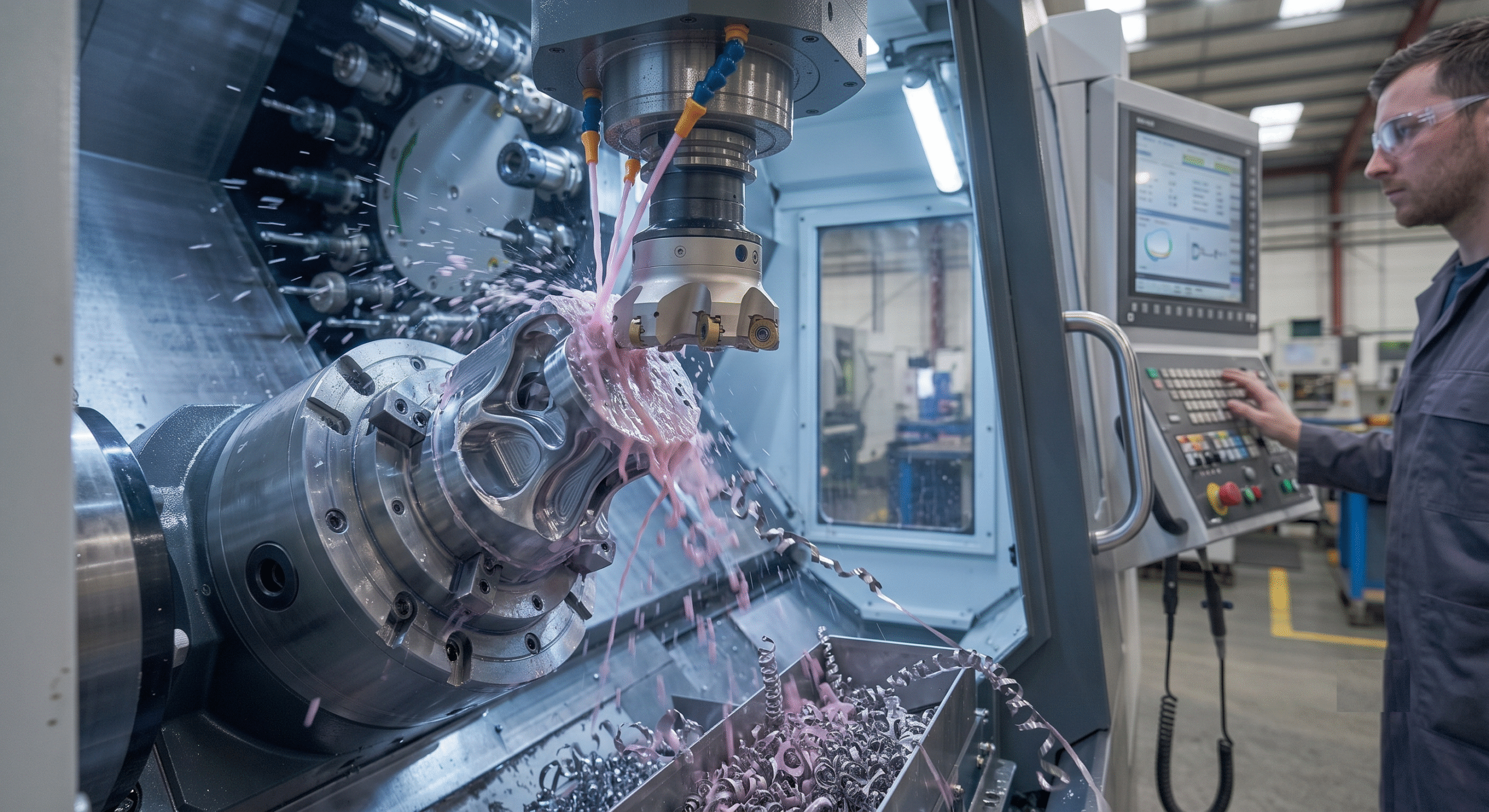
Few industries punish a bad part as harshly as oil and gas. A valve body that leaks, a threaded connection that galls, a downhole component that fractures under pressure — the consequences range from lost production to genuine safety hazards, often thousands of feet underground or miles offshore where nothing can be quickly fixed. That is why CNC machining sits at the heart of oil and gas manufacturing. When a component absolutely has to seal, hold pressure, and survive years of corrosion, machined precision is not a luxury. It is the requirement.
This guide covers what CNC machining actually produces for the oil and gas sector, the demanding materials involved, the standards that govern the work, and why tolerance and traceability matter more here than almost anywhere else.
Why Oil and Gas Demands CNC Machining
Oilfield equipment operates in some of the harshest conditions in industry: high pressure, high temperature, corrosive fluids, abrasive sand, and sour gas containing hydrogen sulfide. Parts must perform reliably for years with little or no maintenance. That combination rules out loose tolerances and inconsistent quality.
CNC machining answers this because it delivers three things the industry cannot do without: tight, repeatable tolerances so parts seal and mate correctly; the ability to cut tough, corrosion-resistant alloys; and full traceability so every critical part can be documented and verified. When a single failed component can shut down a well, that repeatability is worth everything.
Quick answer: CNC machining produces oil and gas components — valve bodies, flanges, drilling tools, and pump parts — from tough corrosion-resistant alloys to tight, repeatable tolerances with full traceability, because failures underground or offshore are costly and dangerous.
Common Oil and Gas Components Made by CNC Machining
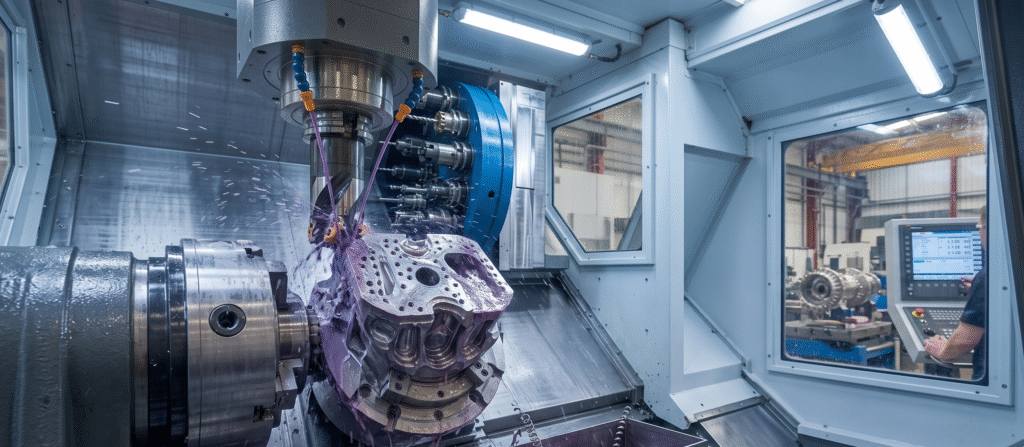
The range is broad, spanning surface equipment, subsea systems, and downhole tools. Many combine turning and ミーリング, and the hardest features often need ワイヤー放電加工機.
| Component | Function | Typical process |
| Valve bodies and gates | Control flow and pressure | Turning + milling |
| Flanges and connectors | Join high-pressure lines | Turning, drilling |
| Drill bit bodies | Cut rock downhole | 5-axis milling, EDM |
| Pump and compressor parts | Move fluids and gas | Turning + milling |
| Wellhead components | Seal and control the well | Turning + milling |
| Threaded couplings | Connect tubing and casing | Precision turning |
| Instrumentation housings | Protect sensors and electronics | ミーリング |
Threaded connections deserve special mention. Oilfield threads must seal under enormous pressure and resist galling, which demands exceptional turning accuracy — the kind of work covered in our CNC turning foundation guide. A thread that is even slightly out of tolerance can leak or seize during makeup.
The Materials Behind Oilfield Parts
Material selection in oil and gas is driven by corrosion and pressure. Standard steels rarely survive sour service, so the industry leans on specialized alloys that are tough to machine but essential for reliability.
- Stainless steels (316, duplex, super duplex): Corrosion resistance for wetted parts and subsea equipment.
- Nickel alloys (Inconel, Monel, Hastelloy): Extreme resistance to sour gas and high temperature — expensive and slow to cut, but unavoidable in the harshest wells.
- Alloy steels (4130, 4140, 4340): High strength for structural and pressure-containing parts. Our 4340 steel guide covers how these grades machine and heat-treat.
- Brass and bronze alloys: Used in specific fittings and bearings; for lead-free options see our bismuth bronze guide.
- Titanium: Where weight and corrosion resistance both matter, particularly subsea.
These materials are chosen precisely because they resist the environment — which is the same reason they resist the cutting tool. Machining them well takes rigid setups, the right tooling, and experience, or you invite the defects that ruin critical parts.
The table below maps common oilfield materials to why they are chosen and how they machine:
| 素材 | Key property | 加工性 | Typical application |
| 316 / duplex stainless | Corrosion resistance | 中程度 | Wetted parts, subsea |
| Inconel / Monel | Sour-gas + heat resistance | Difficult, slow | Harsh downhole wells |
| 4130 / 4140 alloy steel | High strength | グッド | Pressure-containing bodies |
| チタン | Light + corrosion-resistant | Difficult | Subsea, weight-critical |
| Bronze alloys | Bearing + anti-galling | グッド | Fittings, bushings |
Standards and Certification That Govern the Work
Oil and gas machining is heavily regulated, and for good reason. A supplier working in this space should be fluent in the relevant standards:
- API (American Petroleum Institute) specifications such as API 6A for wellhead equipment, which set strict material, testing, and traceability requirements.
- NACE MR0175 / ISO 15156 governing materials for sour (H₂S) service to prevent stress cracking.
- ISO 9001 as the baseline quality management system.
- Full material traceability with mill certificates, so every part can be tracked back to its heat of material.
Traceability is the quiet hero here. If a component ever fails, the operator must be able to trace exactly what it was made from and how it was inspected. A machining partner without rigorous documentation simply cannot serve this industry credibly — a standard we hold to at ルーウェイ精密.
Why Tolerance and Finish Matter More Here
In many industries a slightly loose tolerance is cosmetic. In oil and gas it can be catastrophic. Sealing surfaces on valves and flanges must be machined and finished so precisely that they hold pressure without a gasket failing. Threaded connections must mate perfectly to avoid leaks and galling. Even surface finish plays a role, because a rough sealing face invites leaks and corrosion.
This is where matching the process to the feature pays off. Round pressure-containing parts favor turning; complex valve internals need milling; and the hardest alloys with the sharpest internal features often require Wire EDM, which cuts hardened metal without the tool wear that would defeat a conventional cutter.
The Cost of Getting It Right
Oilfield parts are not cheap, and the reasons trace straight back to the fundamentals: expensive corrosion-resistant materials, slow machining of tough alloys, tight tolerances, and extensive inspection and certification. But the alternative — a failure downhole or a leak offshore — costs orders of magnitude more in lost production, environmental risk, and safety exposure. In this industry, the value of a well-made part is measured against the enormous cost of a bad one, which is exactly why precision machining is treated as an investment rather than an expense.
よくある質問
What materials are most common in oil and gas CNC machining?
Corrosion resistance and strength dominate material choice, so stainless steels like 316 and duplex grades, nickel alloys such as Inconel and Monel, and high-strength alloy steels like 4130 and 4140 are the workhorses. Nickel alloys are reserved for the most aggressive sour-service and high-temperature wells because they resist hydrogen sulfide and heat exceptionally well. Titanium appears where both light weight and corrosion resistance matter, particularly in subsea applications. These materials are deliberately tough, which makes them demanding to machine but essential for long-term reliability.
What is sour service and why does it affect machining?
Sour service refers to environments containing hydrogen sulfide (H₂S), which can cause certain metals to crack and fail under stress. Standards like NACE MR0175 and ISO 15156 restrict which materials and hardness levels are acceptable in these conditions to prevent sulfide stress cracking. This affects machining because heat treatment, hardness, and material selection must all comply with the standard, not just the drawing. A supplier serving this sector must understand these requirements and document compliance for every critical part.
Why are oil and gas machined parts so expensive?
Several factors stack up: the corrosion-resistant alloys are costly and slow to cut, tolerances are tight, and every critical part undergoes rigorous inspection and certification. Full traceability with mill certificates and compliance to API and NACE standards adds documentation and testing overhead that other industries rarely require. While the parts cost more, that price protects against failures that could shut down a well or create a safety incident. In this context, precision and certification are viewed as essential risk reduction rather than optional extras.
Which CNC processes are used for oilfield components?
Most oilfield parts use a combination of processes matched to their features. CNC turning produces round, pressure-containing parts like couplings, flanges, and valve stems with the accuracy their seals demand. CNC milling handles complex valve internals and instrumentation housings, while 5-axis machining tackles intricate drilling tools. Wire EDM is called upon for hardened alloys and sharp internal features that conventional cutters cannot achieve. The right combination depends on the specific component and the toughness of its material.
How important is traceability in oil and gas machining?
Traceability is critical and often mandatory in this industry. Operators must be able to trace every pressure-containing or safety-critical part back to its exact material heat, machining records, and inspection results in case of a failure investigation. This is achieved through mill certificates, documented inspection reports, and compliance records tied to each batch. A machining partner that cannot provide complete traceability cannot credibly serve oil and gas, because accountability is as important as the physical quality of the part.
About the Author
Hasib Iftikhar writes about the corner of manufacturing where a bad part is not just a warranty claim — it is a well shut down or a leak nobody can reach. For Lewei Precision he covers CNC machining for oil and gas, energy, and other industries that live and die by traceability. He has a healthy respect for anyone who can turn a sealing thread in Inconel and prove it with a paper trail. In this world, he likes to say, the mill certificate matters almost as much as the metal.
 English
  简体中文
简体中文  Español
  Deutsch (Sie)
  日本語
日本語  Português