 コンテンツへスキップ

Have you ever wondered why some parts come out perfect while others don’t? It often boils down to the right CNC milling tooling. In this guide, you’ll learn about different cutter types and how they work.
You’ll see why choosing the correct tool matters for your CNC milling service. We’ll cover types, 材料, and tips to help you succeed. By the end, you’ll know how to pick tools that save time and money in your CNC milling service projects.
CNCフライス加工 shapes metal and other 材料 with spinning cutters. It’s key in making precise parts. The global CNC machine tools market is set to grow by USD 21.9 billion from 2024 to 2029 at a CAGR of 5.4%. This growth shows how important good tooling is today.
Whether you’re new or experienced, this post helps you understand cutters better. Let’s dive in and make your milling easier.

What Is CNC Milling Tooling?
CNC milling tooling refers to the specialized tools used in CNCフライス盤 to remove material from workpieces. These tools are designed to cut, shape, and finish parts with high precision. In a CNCフライス盤, these tools are attached to the spindle and rotate at high speeds, allowing them to remove 材料 in precise amounts and create complex geometries.
Proper tooling is essential in CNCフライス加工 because it directly influences the quality of the finished part, the speed of the operation, and the overall efficiency of the machining process. Good tooling minimizes tool wear, reduces the risk of breakage, and ensures a smoother finish with minimal 材料 waste. The right tooling not only extends the life of the tool itself but also reduces the likelihood of errors, improving the accuracy そして repeatability of each job.
Basic Parts of a Milling Cutter
A milling cutter is a cutting tool used in CNCフライス加工 that consists of several parts, each of which serves an important function in the cutting process:
- Flutes:
- Function: These are the spiral or straight grooves on the cutting tool. The flutes serve to carry chips away from the cutting area during the machining process. More flutes generally mean smoother cuts, but they also leave less space for chips to escape, which can lead to heat buildup and tool wear.
- Function: These are the spiral or straight grooves on the cutting tool. The flutes serve to carry chips away from the cutting area during the machining process. More flutes generally mean smoother cuts, but they also leave less space for chips to escape, which can lead to heat buildup and tool wear.
- Shank:
- Function: The shank is the part of the cutter that is held in place by the machine’s spindle. It ensures the cutter is firmly positioned for accurate cutting. The size and shape of the shank determine which machines the cutter can be used with.
- Function: The shank is the part of the cutter that is held in place by the machine’s spindle. It ensures the cutter is firmly positioned for accurate cutting. The size and shape of the shank determine which machines the cutter can be used with.
- Teeth:
- Number of Flutes:
- もっと見る flutes generally result in smoother cuts but less space for chips. Fewer flutes create more room for chip evacuation but can result in rougher cuts. The choice depends on the 材料 being cut and the type of operation.
- もっと見る flutes generally result in smoother cuts but less space for chips. Fewer flutes create more room for chip evacuation but can result in rougher cuts. The choice depends on the 材料 being cut and the type of operation.
Common Types of End Mills

End mills are a category of CNCフライス加工 cutters used in various applications, particularly for creating slots, pocketsそして contours. They can cut along the sides as well as the end of the tool, making them versatile in multi-axis machining. Here are the most common types:
- Flat End Mills:
- Shape: These mills have a square end and are primarily used for cutting flat surfaces または roughing.
- メリット: Ideal for creating sharp corners または flat areas in parts.
- 材料: These mills are highly effective when cutting 材料 like steel そして aluminum.
- アプリケーション: Used extensively for roughing, finishing flat surfaces, and creating sharp contours.
- Shape: These mills have a square end and are primarily used for cutting flat surfaces または roughing.
- Ball Nose End Mills:
- Shape: These tools have a rounded tip, making them perfect for smooth curves.
- メリット: Excellent for creating complex 3D shapes, such as those used in molds または curved features.
- Pro Tip: Ball nose end mills are ideal for finishing operations as they help avoid marks and tool lines on curved surfaces.
- Shape: These tools have a rounded tip, making them perfect for smooth curves.
- Roughing End Mills:
- Shape: Roughing cutters typically have wavy teeth that remove large amounts of 材料 quickly.
- メリット: Used primarily for bulk 材料 removal. The roughing operation is followed by a finishing operation to achieve the desired dimensions.
- アプリケーション: Primarily used in the initial stages of a milling operation, where speed そして 材料 removal rate are the main priorities.
- Shape: Roughing cutters typically have wavy teeth that remove large amounts of 材料 quickly.
- Face Mills and Shell Mills:
- Face Mills: Cut on the face of the tool rather than the sides. Face mills are used for wide flat surfaces, giving a smooth finish to large areas.
- Shell Mills: Similar to face mills but are typically larger in size and can use replaceable inserts for cutting.
- アプリケーション: Ideal for preparing parts before more detailed operations. Shell mills are particularly effective for heavy cutting in tough 材料.
- Face Mills: Cut on the face of the tool rather than the sides. Face mills are used for wide flat surfaces, giving a smooth finish to large areas.
- Pro Tip: Regularly rotate the inserts in shell mills to extend tool life and reduce wear.
Specialty Milling Cutters
Certain milling cutters are designed for specialized tasks, improving both efficiency そして accuracy for specific operations:
- Slot Drills and T-Slot Cutters:
- Slot Drills: These cutters are designed to plunge directly into the 材料 to create slots.
- T-Slot Cutters: Used to create T-shaped grooves to accommodate bolts or other fasteners.
- アプリケーション: Slot drills are used for cutting slots, while T-slot cutters are critical for machining T-shaped grooves for bolted assemblies.
- Slot Drills: These cutters are designed to plunge directly into the 材料 to create slots.
- Dovetail and Chamfer Mills:
- Dovetail Cutters: Used to create angled slots that are typically required in joins or assembly parts.
- Chamfer Mills: Used to create beveled edges on parts for both safety そして aesthetic purposes.
- アプリケーション: Dovetail cutters are used in creating dovetail joints, while chamfer mills are used for creating safety edges or preparing parts for assembly.
- Dovetail Cutters: Used to create angled slots that are typically required in joins or assembly parts.
- Thread Mills:
- Thread Milling: This cutter is used to create threads inside a hole, typically more efficient than traditional tapping in hard materials.
- メリット: Thread mills are highly effective for creating precise threads in 材料 that are difficult to tap. They allow for greater flexibility in thread geometry and depth.
- Thread Milling: This cutter is used to create threads inside a hole, typically more efficient than traditional tapping in hard materials.
Materials for CNC Milling Cutters
CNCフライス加工 cutters are made from various 材料, each designed to handle specific types of jobs and 材料. Choosing the right material for a cutter can impact its durability, performance, and cost-effectiveness. Here’s an overview of some of the most common materials used for CNC milling cutters:
1. High-Speed Steel (HSS)
Properties:
- Tough そして cost-effective.
- Can withstand high temperatures and moderate shock loads.
- Resistant to wear at moderate cutting speeds.
Best Use:
- Soft materials (e.g., aluminum, brass, soft steel).
- Low-volume machining または prototype work where cost is a major factor.
メリット:
- Affordable compared to other 材料.
- グッド versatility for a wide range of materials.
- Can handle intermittent cutting with moderate speeds.
デメリット:
- Not suitable for high-speed operations または harder materials like titanium.
- Limited heat resistance compared to carbide, leading to quicker wear at high speeds.
2. Carbide
Properties:
- Extremely hard そして wear-resistant.
- Handles high cutting speeds and temperatures well.
- Brittle, making it less suitable for applications with high shock or impact.
Best Use:
- High-speed machining for 材料 like steel, stainless steel, and titanium.
- High-volume operations that require precision and long tool life.
メリット:
- Longer tool life due to high wear resistance.
- Excellent performance at high speeds and temperatures.
- Maintains sharp edges for longer periods.
デメリット:
- Brittleness means it can fracture under heavy shock or vibration.
- Expensive compared to HSS.
3. Cobalt (Coated or Uncoated)
Properties:
- Harder and more wear-resistant than HSS.
- Improved heat resistance, making it suitable for high-speed machining.
- Tougher than carbide, though not as wear-resistant at extreme speeds.
Best Use:
- Harder materials (e.g., stainless steel, high-temperature alloys).
- Medium to high-speed operations.
メリット:
- もっと見る toughness than carbide, making it better for tough cuts.
- Higher resistance to heat than HSS.
デメリット:
- Not as wear-resistant as carbide in high-speed applications.
- More expensive than HSS.
4. Ceramic
Properties:
- Extremely hard そして heat-resistant.
- Suitable for high-speed cutting of very hard 材料.
- Brittle, like carbide, so it’s more prone to cracking under shock or impact.
Best Use:
- Hard materials (e.g., cast iron, hardened steel, high-temperature alloys) at high speeds.
メリット:
- Outstanding heat resistance, ideal for high-speed machining.
- Longer tool life in high-temperature operations.
デメリット:
- Brittle nature makes it unsuitable for applications with vibrations or shock loads.
- Costly compared to other 材料.
5. Polycrystalline Diamond (PCD)

Properties:
- Extremely wear-resistant そして hard.
- Excellent for non-ferrous 材料 like aluminum, brass, copper, and composites.
- Very costly due to its diamond-like properties.
Best Use:
- Non-ferrous materials, particularly aluminum, brassそして composite materials.
- High-precision applications requiring excellent surface finishes and wear resistance.
メリット:
- Incredibly long tool life in non-ferrous machining.
- Can handle high-speed cutting without wear.
デメリット:
- Extremely expensive, limiting its use to specialized applications.
- Brittle and susceptible to damage from hard materials or impacts.
6. High-Performance Alloys
Properties:
- Mixture of tungsten, cobalt, and other hard 材料 designed for specific tasks.
- Designed for tough cutting conditions そして hard materials.
Best Use:
- Tough 材料 like titanium そして high-alloy steels.
- High-performance, high-precision machining environments.
メリット:
- Optimized for specific tough applications.
- 高い performance そして precision.
デメリット:
- Expensive compared to HSS.
- May not be as versatile as carbide in terms of 材料 compatibility.
Carbide Cutters
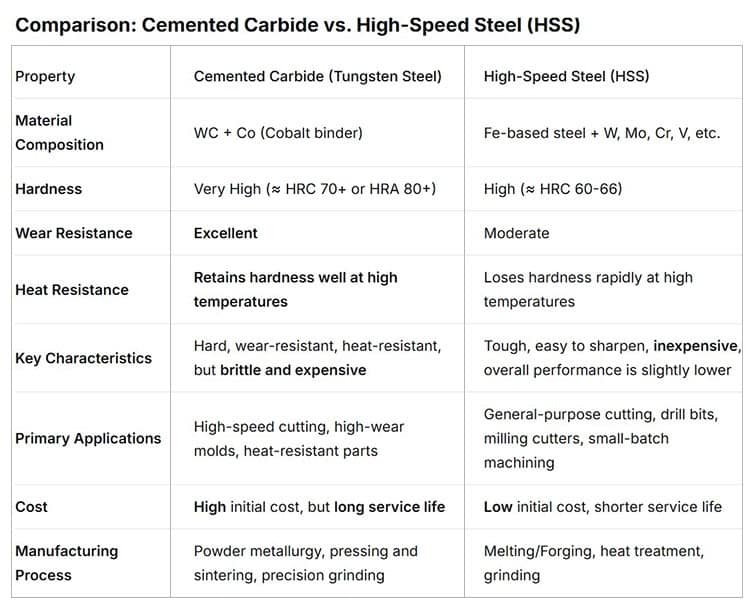
Carbide is hard and lasts longer. It cuts faster than HSS. Studies show carbide boosts productivity by up to 40% in CNC operations.
| 素材 | 長所 | 短所 |
| HSS | Affordable, tough | Slower, wears faster |
| Carbide | Fast, durable | Brittle, costly |
Other Materials Like Ceramics
Ceramics cut at high speeds on hard metals. They resist heat but can crack easily.
Coatings for Enhanced Performance
Coatings protect cutters and improve cuts.
Titanium Nitride (TiN)
TiN reduces friction. It helps tools last longer in aluminum.
Other Common Coatings
TiAlN works for high-heat jobs. Diamond coatings excel on non-metals like graphite.
Pro Tip: Match coating to your 材料 for best results.
How to Choose the Right Milling Cutter
Choosing the right milling cutter is crucial to save time and money, and to ensure a high-quality finish on your workpiece. Below is a guide on how to select the best milling cutter for your project.
Factors to Consider:
- Material Type: The material you’re working with plays a critical role in cutter selection. Harder materials like steel require carbide tools, while softer materials like aluminum may be fine with high-speed steel.
- Machine Power: Ensure that your machine has enough power to handle the cutter you select. Larger cutters may require more power to operate effectively.
- Desired Finish: If you’re aiming for a smooth finish, you’ll want to consider a cutter designed for finishing operations, with more flutes for better surface quality.
Step-by-Step Selection Guide:
- Identify Your Material:
- Determine whether you’re working with steel, aluminum, titanium, or another 材料. This will help you choose the right material for the cutter itself (e.g., carbide, HSS, coated).
- Determine whether you’re working with steel, aluminum, titanium, or another 材料. This will help you choose the right material for the cutter itself (e.g., carbide, HSS, coated).
- Decide on the Operation Type:
- Are you performing roughing or finishing? Roughing cutters remove large amounts of 材料 quickly, while finishing cutters provide a smoother surface.
- Are you performing roughing or finishing? Roughing cutters remove large amounts of 材料 quickly, while finishing cutters provide a smoother surface.
- Choose the Flute Count Based on Chip Removal:
- Roughing typically uses cutters with fewer flutes for better chip removal, while finishing uses cutters with more flutes for smoother cuts.
- Roughing typically uses cutters with fewer flutes for better chip removal, while finishing uses cutters with more flutes for smoother cuts.
- Pick Coating If Needed:
- A coating like TiN (Titanium Nitride) can enhance cutter life and reduce friction, especially for hard-to-machine 材料.
- A coating like TiN (Titanium Nitride) can enhance cutter life and reduce friction, especially for hard-to-machine 材料.
- Check Tool Diameter for Stability:
- Larger diameter cutters provide more stability but require more power, while smaller diameter cutters are used for intricate or detailed cuts.
- Larger diameter cutters provide more stability but require more power, while smaller diameter cutters are used for intricate or detailed cuts.
クイックリファレンス・チェックリスト
- Material Hardness: What material are you cutting? Carbide for harder 材料, HSS for softer ones.
- Required Precision: Is it a rough cut or a fine finish? Choose accordingly.
- Batch Size: Large batches may require more durable, efficient cutters.
- Machine RPM Limit: Ensure the cutter is suitable for your machine’s speed capabilities.
- Budget: Higher-end cutters (like carbide) tend to be pricier, but offer better performance and longer lifespan.
By considering these factors, you can make an informed decision that aligns with your machining needs.
Common Mistakes to Avoid in CNC Milling
Don’t let simple errors ruin your work.
- Using wrong speed: Too fast breaks tools.
- Ignoring chip load: Causes poor finishes.
- Skipping coolant: Overheats cutters.
- Poor tool holding: Leads to vibration.
- Not inspecting tools: Worn cutters make bad parts.
Expert Advice: Always measure tool wear before long runs.
主要産業におけるアプリケーション
CNC milling serves many fields.
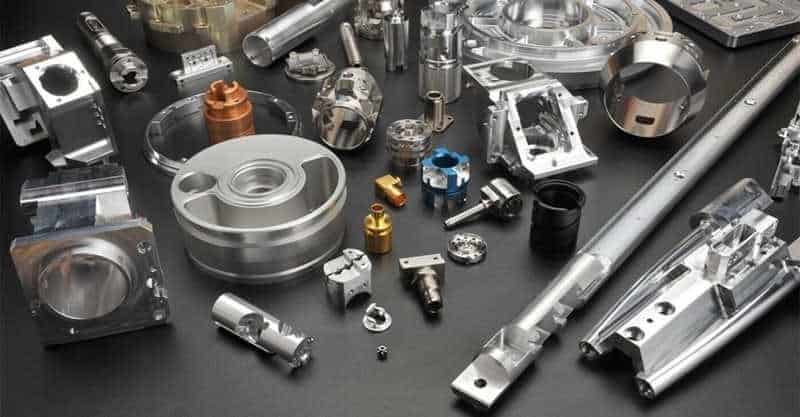
航空宇宙産業
In aerospace, precision is key. Ball nose mills shape turbine blades. Companies like Boeing use CNC for lightweight parts.
自動車部門
Automotive needs strong parts fast. Face mills flatten engine blocks. Ford relies on carbide tools for efficiency.
Medical and Electronics
メディカル uses small end mills for implants. Electronics need precise slots for circuits.
Maintenance Tips for Longevity
Keep tools sharp for best results.
Cleaning and Storage
Clean cutters after use. Store in dry places to avoid rust.
When to Replace Cutters
Replace when you see chipping or poor finishes. Regular checks prevent downtime.
Cost Breakdown of Milling Tools
Costs vary by type and 材料.
Initial vs. Long-Term Costs
HSS costs less upfront but wears faster. Carbide costs more but lasts longer, saving money over time.
| Tool Type | Average Cost | Lifespan |
| HSS End Mill | $20-50 | 1-3 months |
| Carbide End Mill | $50-150 | 6-12 months |
Pro Tip: Calculate total cost per part for better decisions.
要点
- End mills are versatile for many cuts.
- Face mills excel at flattening large areas.
- Carbide offers speed; HSS provides toughness.
- Match tools to 材料 for best results.
- Avoid common mistakes like wrong speeds.
- Industries like aerospace demand precision tools.
- Proper maintenance extends tool life.
結論
You’ve now got the basics on CNC milling tooling and cutter types. Use this knowledge to pick better tools for your projects. Remember, the right cutter makes all the difference in quality and speed.
Think about your needs and test options. With practice, you’ll master milling.
Ready to upgrade your CNCフライス加工 service? Contact us for expert advice on tools that fit your work. Let’s make your next project a success.
よくある質問
What is the difference between end mills and face mills?
End mills cut sides and ends, ideal for slots, while face mills focus on creating flat surfaces with side cutting.
How do I know if I need a coated cutter?
Use coatings for sticky materials or high heat, as they reduce wear and improve surface finishes.
What flute count should I choose?
Fewer flutes are best for soft materials like aluminum, and more for hard materials like steel.
How often should I replace milling cutters?
Inspect cutters after each job and replace them if there’s noticeable wear to maintain quality.
What industries benefit most from CNC milling?
Industries like aerospace, automotive, medical, and electronics rely on CNC milling for precise part production
 English
  简体中文
简体中文  Español
  Deutsch (Sie)
  日本語
日本語  Português