
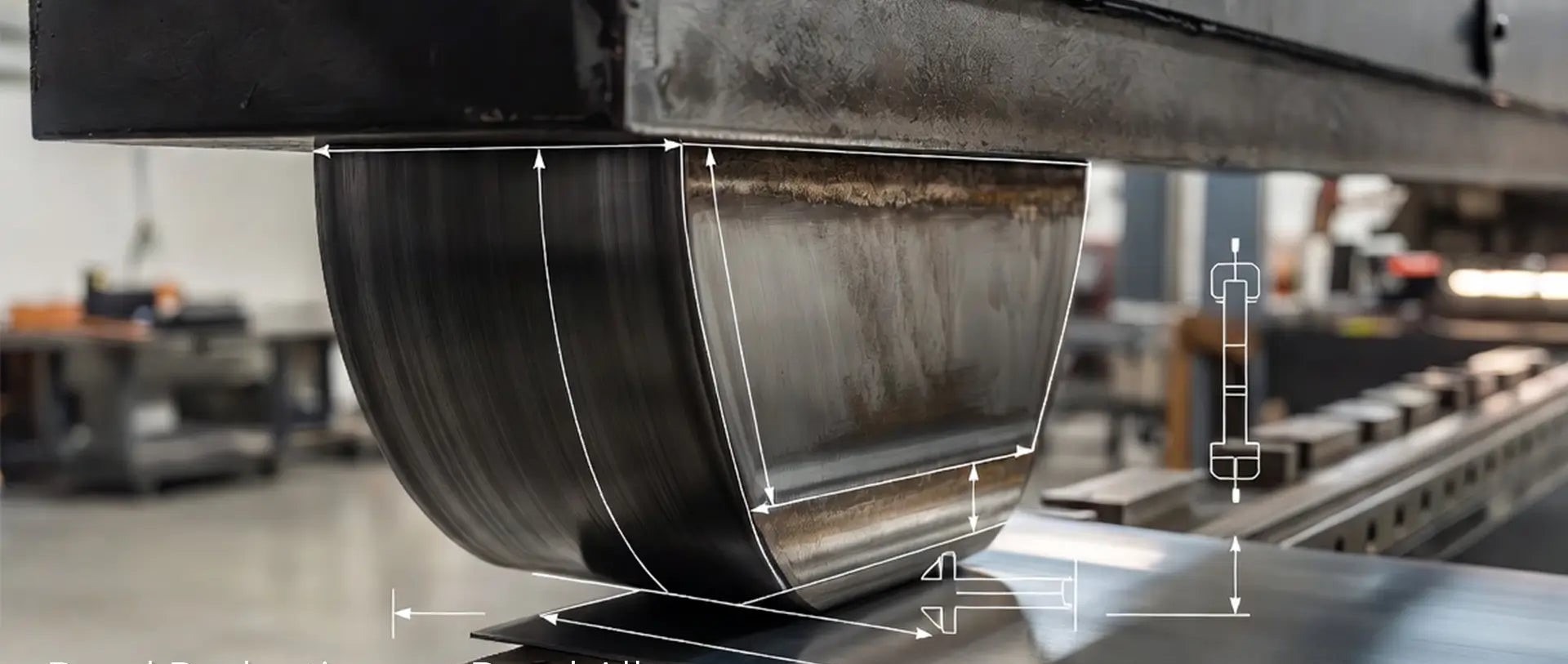
What is a sheet metal bend allowance? How do manufacturers calculate sheet metal bend allowance calculation? What is the correct bend allowance formula for accurate fabrication? How does sheet metal K factor affect flat pattern development and final dimensions? Why do engineers calculate bend allowance before sheet metal bending?
Sheet metal bend allowance is the extra length of material required around a bend to create accurate sheet metal parts. It helps manufacturers calculate the correct flat pattern size by considering material thickness, bend angle, inside radius, and K factor. Accurate bend allowance calculation reduces fabrication errors and improves the quality of finished components.
What Is Sheet Metal Bend Allowance?
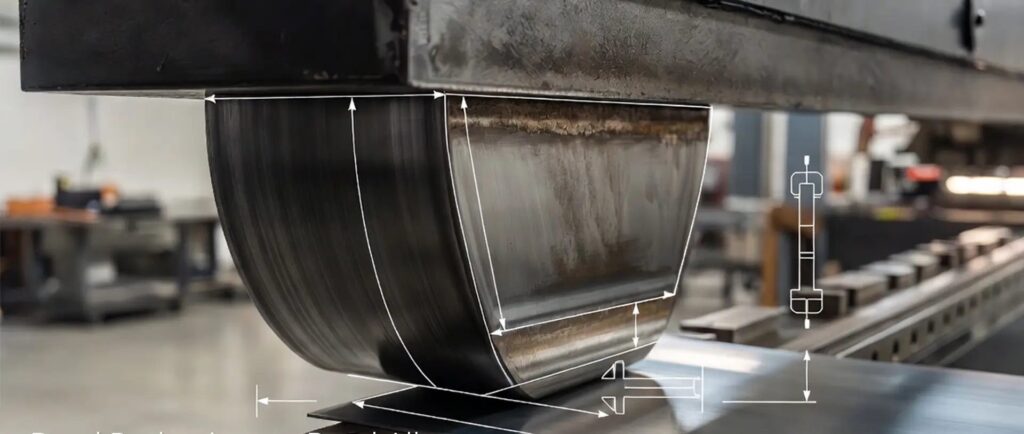
Sheet metal bend allowance is a measurement used during sheet metal fabrication to determine how much material is needed when a flat sheet is bent into a specific shape. During bending, the outer surface stretches while the inner surface compresses. The neutral axis between these areas remains nearly unchanged, and the bend allowance is calculated around this area.
For manufacturers, accurate bend allowance values are important because they directly affect the final dimensions of the component. A small calculation mistake can cause fitting problems, wasted material, and additional production adjustments.
Professional manufacturers such as Lewei Precision use engineering calculations and modern fabrication methods to produce accurate metal components through their sheet metal fabrication services.
Why Sheet Metal Bend Allowance Matters
Bend allowance helps engineers convert a 3D CAD model into a correct flat sheet pattern before manufacturing begins. Without accurate calculations, the final bent part may not match the required dimensions.
Incorrect bend allowance can lead to:
- Incorrect part measurements
- Assembly problems
- Material waste
- Higher production costs
- Poor product quality
A proper calculation process ensures that the flat pattern matches the final formed component.
Understanding the Bend Allowance Formula
The bend allowance formula calculates the additional material required for a bend. The calculation depends on bend angle, inside radius, material thickness, and K factor.
The standard formula is:
BA = (π / 180) × Bend Angle × (Inside Radius + K Factor × Material Thickness)
Where:
| Term | Meaning |
| BA | Bend Allowance |
| 曲げ角度 | Angle created during bending |
| Inside Radius | Internal curve of the bend |
| K Factor | Neutral axis position |
| 材料の厚さ | Thickness of sheet metal |
This formula helps designers create accurate flat patterns before sending parts for production.
Sheet Metal K Factor Explained
The sheet metal K factor represents the location of the neutral axis inside the material thickness. During bending, this neutral area experiences minimum stretching or compression.
The K factor depends on:
- Material type
- Thickness
- Bending method
- Tooling setup
- Inside radius
A correct K factor improves the accuracy of bend allowance calculations. Different materials require different K factor values because each metal reacts differently during bending.
Sheet Metal Bend Allowance Calculation Example
Assume a sheet metal component has:
- Material thickness: 2 mm
- Inside radius: 3 mm
- Bend angle: 90 degrees
- K factor: 0.4
Using the formula:
BA = (3.14 / 180) × 90 × (3 + 0.4 × 2)
BA = 1.57 × 3.8
BA = 5.96 mm
The bend allowance value is approximately 5.96 mm. This value is added when creating the flat pattern of the sheet metal part.
Factors Affecting Bend Allowance Accuracy
Several factors influence the final bend allowance value. Engineers must consider these elements before manufacturing.
| ファクター | Impact on Bend Allowance |
| 材料の厚さ | Changes the neutral axis location |
| 曲げ半径 | Affects stretching during bending |
| 素材タイプ | Influences flexibility and springback |
| 曲げ角度 | Changes total bend length |
| 製造方法 | Creates different bending results |
Understanding these factors helps manufacturers create accurate and repeatable parts.
Bend Allowance vs Bend Deduction
Bend allowance and bend deduction are two common methods used in sheet metal development.
Bend allowance calculates the material added around the bend, while bend deduction calculates the amount removed from the outside dimensions.
| 方法 | 目的 |
| Bend Allowance | Finds extra material needed for bending |
| Bend Deduction | Calculates final outside dimension adjustment |
| K Factor Method | Determines neutral axis location |
Both methods are useful, but modern CAD systems often rely on bend allowance values for accurate sheet metal designs.
Common Sheet Metal Bend Allowance Mistakes
Many fabrication problems happen because incorrect values are used during design.
Common mistakes include:
Using the wrong K factor
Ignoring material springback
Using incorrect bend radius
Not considering material thickness changes
Creating flat patterns without testing
Avoiding these mistakes improves production accuracy and reduces unnecessary costs.
How CAD Software Uses Bend Allowance
Modern CAD software can automatically calculate bend allowance using predefined material settings. Engineers can enter thickness, radius, and K factor values to generate accurate flat patterns.
However, software results depend on correct input information. Experienced engineers still review calculations because real manufacturing conditions can affect final results.
For projects requiring accurate design validation, manufacturers often combine fabrication with CNC加工サービス to test components before final production.
Manufacturing Methods That Support Accurate Bending
Accurate sheet metal production requires proper cutting, forming, and finishing processes. Each stage affects final part quality.
Manufacturers use processes such as:
- レーザー切断
- Precision bending
- 溶接
- 表面仕上げ
- Quality inspection
Companies developing new products can also use rapid prototyping services to test designs before large scale manufacturing.
Relationship Between Sheet Metal Design and Bend Allowance
Good sheet metal design considers bending requirements from the beginning. Features such as holes, slots, corners, and cutouts should be positioned carefully to avoid deformation.
Engineers should review:
- Bend lines
- Minimum bend radius
- Material thickness
- Relief cuts
- Tool limitations
A related design topic is understanding sheet metal design guidelines for manufacturing because proper planning improves production results.
Role of Professional Manufacturers
Professional fabrication companies understand that bend allowance is not only a mathematical calculation. Real production requires experience with machines, materials, and tooling.
Manufacturers help with:
- Design review
- Material selection
- Prototype development
- Production planning
- Quality control
Lewei Precision provides complete manufacturing solutions for businesses that need accurate and reliable components.
For projects that combine multiple manufacturing techniques, engineers can also review injection molding design guidelines to understand how different production methods affect product development.
Applications of Sheet Metal Bend Allowance
Accurate bend allowance calculations are used in many industries, including:
- Automotive components
- Electrical enclosures
- Industrial machinery
- Aerospace parts
- 医療機器
- 消費者製品
Every industry requires precise dimensions because incorrect bending can affect product performance and assembly.
最終的な感想
Sheet metal bend allowance is an essential calculation for producing accurate and high quality fabricated components. Using the correct bend allowance formula, K factor, and material information helps engineers create reliable flat patterns.
Professional manufacturing partners help businesses avoid design errors by combining engineering knowledge with advanced production methods. Accurate bend allowance planning leads to better fitting parts, reduced waste, and improved manufacturing efficiency.
よくある質問
What is sheet metal bend allowance?
Sheet metal bend allowance is the extra material length required to create a bend in a metal sheet. It helps engineers calculate accurate flat patterns before manufacturing and ensures final parts match design specifications.
How do you calculate sheet metal bend allowance?
Sheet metal bend allowance is calculated using the bend angle, inside radius, material thickness, and K factor. The bend allowance formula provides the additional length needed around the bend area.
What is the sheet metal K factor?
The K factor shows the position of the neutral axis inside the sheet thickness during bending. It helps determine how much the material stretches and improves flat pattern accuracy.
Why is bend allowance important in fabrication?
Bend allowance prevents incorrect dimensions and reduces material waste. Accurate calculations help manufacturers create parts that fit properly and maintain consistent quality.
Does material type change bend allowance?
Yes, different metals have different flexibility and springback behavior. Aluminum, stainless steel, and mild steel may require different bend allowance values for accurate fabrication.
 English
  简体中文
简体中文  Español
  Deutsch (Sie)
  日本語
日本語  Português