
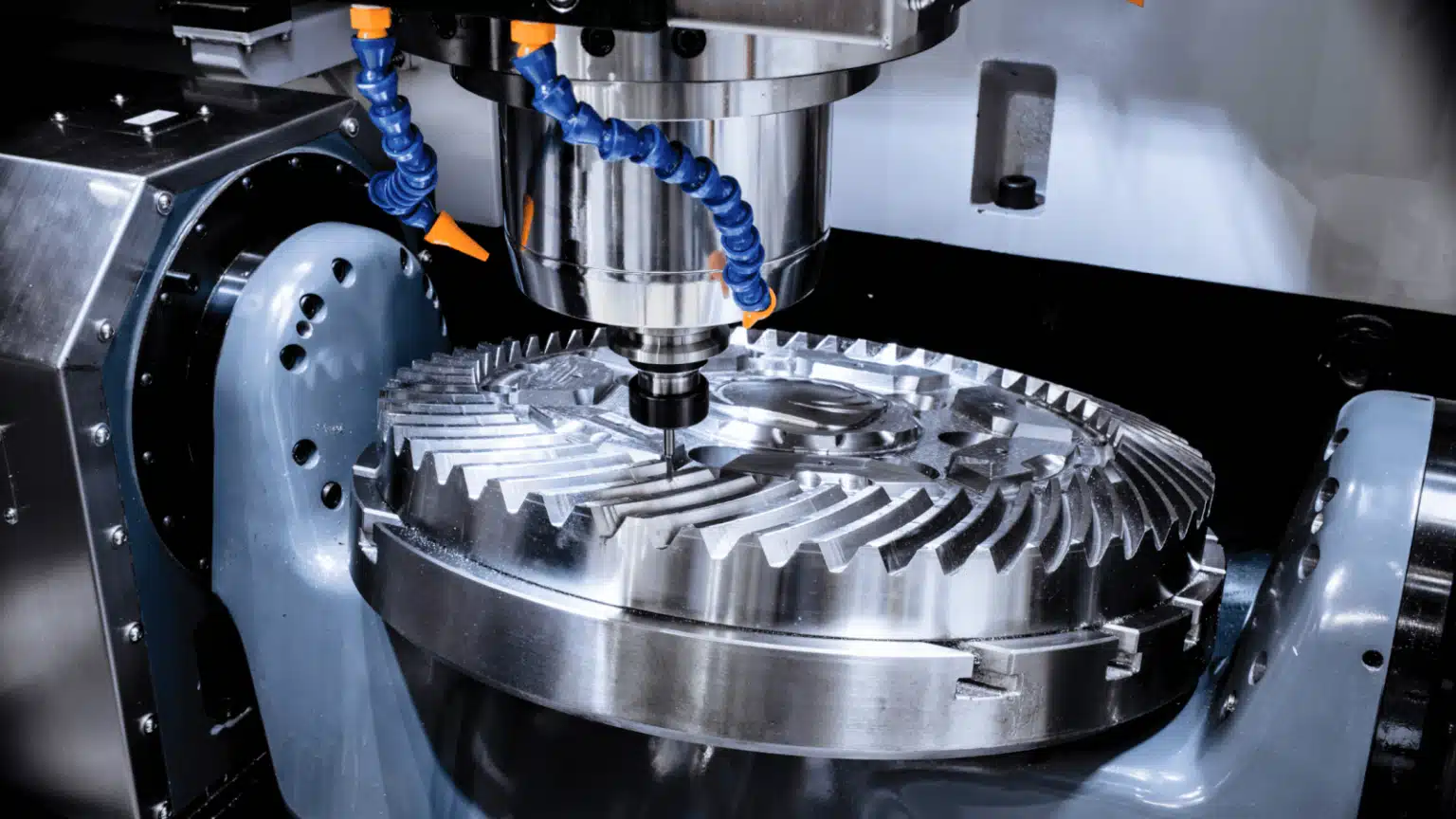
Understanding CNC Milling in Real-World Manufacturing
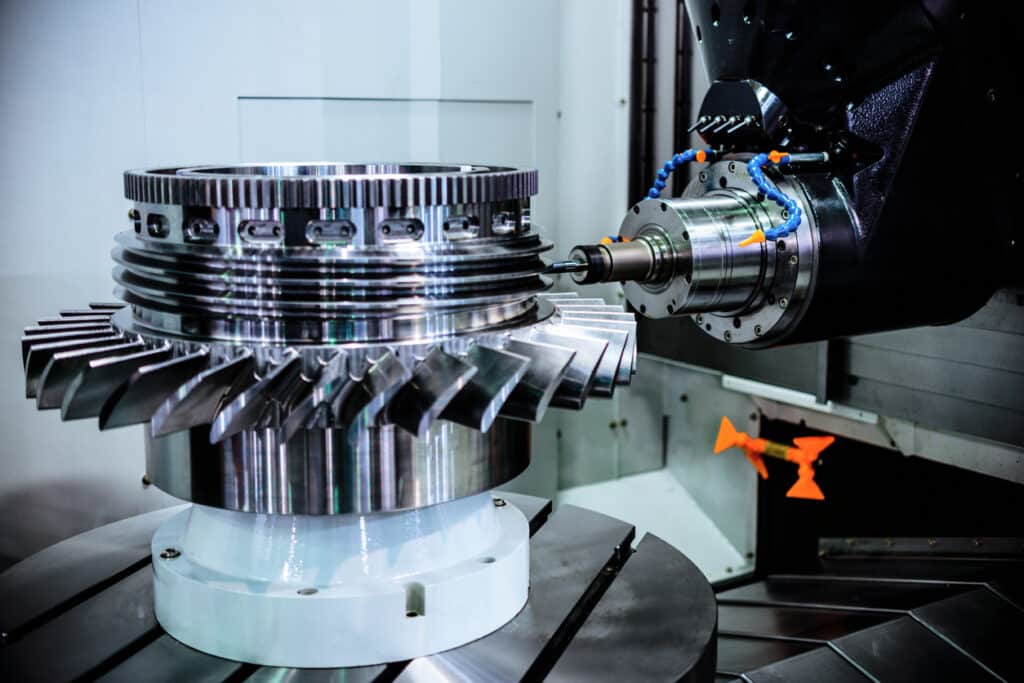
CNC milling stands as one of the core pillars of modern manufacturing, yet it is often misunderstood in terms of its true capabilities and operational intricacies. For engineers, OEM buyers, and procurement managers, a deep understanding of CNCフライス加工 is crucial not just for making informed decisions about production but also for ensuring quality, minimizing downtime, and optimizing cost.
This article is not a superficial guide but a detailed, real-world exploration of CNCフライス加工 from the perspective of someone who has spent years on the shop floor. It aims to fully explain what CNCフライス加工 is, how it works, and why certain choices are made during production. We will cover its fundamentals, explore the decision-making logic that drives real-world applications, and address common pitfalls that engineers and managers encounter when choosing this method.
By the end of this article, you’ll be well-equipped to make decisions on CNCフライス加工 with a level of detail that most basic guides do not offer. This is a deep dive into the world of CNC milling, with practical insights grounded in manufacturing experience.
CNCフライス加工とは?
Defining CNC Milling
CNC (Computer Numerical Control) milling is a subtractive manufacturing process where 材料 is precisely removed from a workpiece using rotating cutting tools. The process is controlled by a computer program that guides the machine’s movements, allowing for high precision and repeatability.
Unlike traditional manual milling, which requires direct human interaction for adjustments during the process, CNCフライス加工 operates through pre-programmed instructions (G-code) that automate tool movements, speeds, and feed rates.
The Basics of CNC Milling Machines
A CNCフライス盤 is essentially a combination of an automated machine tool and a computer-controlled system. It uses a rotating tool (end mill, drill, etc.) to remove 材料 from a workpiece, which is fixed to a table or vice. The CNC system controls the machine’s movement along the X, Y, and Z axes, allowing for intricate cutting operations.
There are three main types of CNCフライス盤:
- Vertical Milling Machines: The cutting tool moves vertically, usually along the Z-axis, and is often used for operations like drilling, facing, and slotting.
- 横フライス盤: The tool moves horizontally, often allowing for deeper cuts and heavier materials. These machines are suitable for larger or more complex parts.
- 5-Axis Milling Machines: These machines can move the workpiece or tool along five axes, providing unparalleled flexibility for complex geometries.
Core Operations in CNC Milling
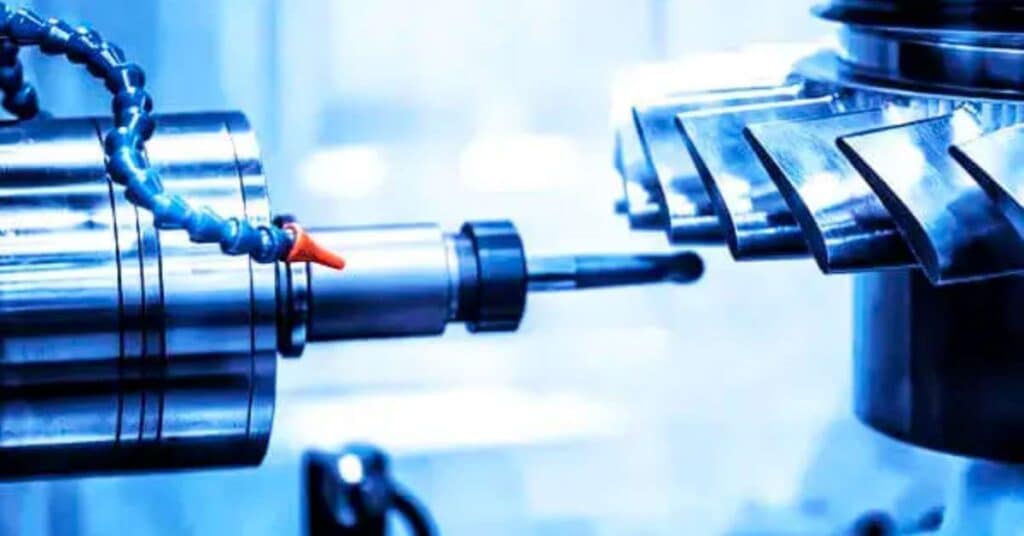
で CNCフライス加工, several different types of operations can be performed, depending on the 材料, tool, and machine setup:
- フェイシング: Removing 材料 from the surface of the part, often to create a smooth, flat surface.
- スロッティング: Cutting slots or grooves into the workpiece.
- 掘削: Creating holes or passages in the material.
- Contour Milling: Creating curves or complex shapes on a part’s surface.
- タッピング: Creating threads inside holes.
Each operation requires specific cutting tools and careful consideration of parameters like feed rate, spindle speed, and depth of cut.
How Does CNC Milling Work in Detail?
The CNC Milling Process Step-by-Step
- Design and CAD Modeling: The process begins with a detailed CAD (Computer-Aided Design) model of the part. This model contains the precise dimensions and geometry required for the finished component. The CAD model is often created using design software such as SolidWorks, AutoCAD, or Fusion 360.
- CAMプログラミング: The CAD model is then translated into a CAM (Computer-Aided Manufacturing) program. The CAM software generates the toolpath — the path that the cutting tool will follow during the milling process. It also defines other parameters like tool selection, feed rates, and cutting speeds.
- Toolpath Verification: The generated toolpaths are verified in a simulation environment to ensure that the tools will not collide with the workpiece or the machine itself. Any potential errors are corrected before actual cutting begins.
- マシンセットアップ: The workpiece is securely mounted on the machine’s bed or table, often with the help of a fixture or clamp. Tooling (cutting tools, end mills, etc.) is selected based on the 材料 and the machining operation required.
- Cutting Process: Once the setup is complete, the CNCマシン executes the program, moving the tool in precise, predetermined paths to remove material from the workpiece. This process continues until the desired shape is achieved.
- Post-Machining: After milling is complete, the workpiece is inspected for quality. Any necessary finishing operations such as deburring, polishing, or additional surface treatments are performed.
Control and Automation in CNC Milling
One of the most important factors in CNCフライス加工 is the control system, which dictates how the machine executes the programmed movements. Most modern CNCマシンs use G-code, a language that tells the machine’s motors how to move and interact with the workpiece. G-code programming involves commands that define movements in three-dimensional space (X, Y, and Z axes), spindle speed, tool changes, and more.
The level of control in CNCフライス加工 allows for a high degree of accuracy and repeatability, something that would be nearly impossible with manual machines. Precision tolerances as tight as a few microns (0.0001 inches) can be achieved with CNC milling, provided the machine is properly calibrated and the right tools are selected.
Real-World CNC Milling Scenarios
Scenario 1: Aerospace Component Production
An aerospace manufacturer needs to produce a titanium part that requires a series of intricate pockets, chamfers, and drilled holes. Manual machining would be highly inefficient, with numerous setup changes and human error introduced at each step. CNC milling, however, allows the company to program the toolpaths once, and run the same process repeatedly with minimal intervention.
The decision to use CNC milling here is driven by the complexity of the part and the need for repeatability, as well as the relatively low production volume, which justifies the upfront setup time.
Scenario 2: Prototyping and Low-Volume Production
A 医療機器 company is designing a prototype for a new part and needs to test its form, fit, and function before moving to high-volume production. CNC milling is used to produce the initial prototype because of its ability to create accurate and high-quality parts quickly. The company also values the flexibility CNC milling offers for quick design changes during the prototyping phase.
Here, the decision to use CNC milling is based on the need for precision, quick turnaround, and the ability to easily modify the design if necessary.
Scenario 3: Automotive Manufacturing
A manufacturer of automotive components needs to produce high volumes of parts, such as engine blocks, cylinder heads, and transmission housings. In this case, CNC milling is essential for maintaining tight tolerances and high productivity rates. CNCマシン allow for continuous operation with minimal downtime, which is critical for large-scale automotive production.
The trade-off here is the initial cost of machine setup and tooling, but the high volume of parts justifies the investment. CNC milling ensures the parts are produced consistently and meet the necessary quality standards.
Why Certain Choices Are Made in CNC Milling
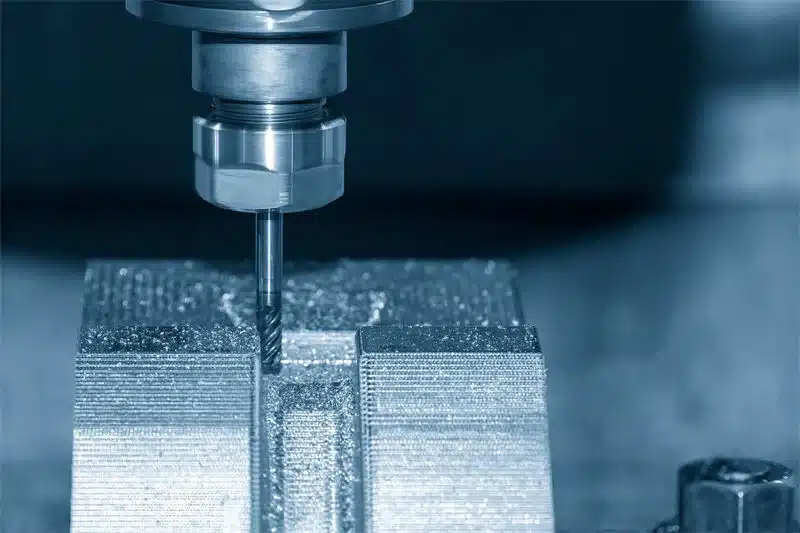
Material Selection and Tooling
The material being machined plays a significant role in the choice of tools and machine settings. Harder 材料 like titanium, Inconel, or hardened steel require specialized cutting tools, such as carbide inserts or high-speed steel (HSS) tools, to prevent excessive wear and ensure smooth cutting.
The choice of tooling affects not only the quality of the final product but also the speed of the operation. For example, using high-performance tools can speed up the cutting process but may come at a higher cost. Engineers must balance tooling costs with production needs, particularly when working with expensive 材料 or tight tolerances.
Speed vs. Quality
Another trade-off in CNC milling is the balance between speed and quality. In high-volume production, maximizing speed is crucial to maintaining a competitive edge. However, increasing the cutting speed can introduce problems like tool wear, surface finish degradation, or dimensional inaccuracies.
Engineers must carefully balance cutting speeds, feed rates, and depth of cut to optimize production rates without compromising the quality of the part. This requires not only technical expertise but also a deep understanding of the 材料 being machined and the machine’s capabilities.
Tool Wear and Maintenance
Tool wear is a critical factor in CNC milling, especially for high-volume or high-precision jobs. Over time, tools lose their sharpness, which can lead to poor surface finishes, inaccuracies, and even tool breakage. Monitoring tool wear and replacing tools at the right time is essential to maintaining consistent quality and minimizing downtime.
Regular maintenance and calibration of CNCマシン are also necessary to avoid accuracy drift over time, particularly in high-precision industries like aerospace and 医療機器製造.
Trade-Offs and Limitations in CNC Milling
High Initial Setup Costs
CNC milling machines require significant upfront investment in terms of machine purchase, tooling, software, and setup time. For low-volume or one-off projects, this initial cost can be a limiting factor. The trade-off here is that CNC milling shines in applications where production volume or part complexity justifies this investment.
Limited Material Compatibility
While CNC milling can handle a broad range of 材料, certain 材料 (such as very tough alloys) can present challenges in terms of tool life and machining parameters. For example, milling Inconel or other superalloys requires specialized tooling and may require slower speeds or additional cooling strategies.
Machine Time vs. Complexity
As parts become more complex, the machine time increases. CNC milling is ideal for producing intricate geometries, but the complexity of the part directly impacts the cutting time and, consequently, the cost. Engineers must carefully assess whether the design’s complexity justifies the time and cost involved in machining.
結論
CNC milling is a powerful tool in modern manufacturing, offering unmatched precision, repeatability, and flexibility. Its ability to handle complex geometries and tight tolerances makes it essential for industries like aerospace, automotive, 医療機器, and many others. However, it’s important to recognize the trade-offs and limitations that come with this technology, including the high initial setup costs and the complexity of machine programming.
Ultimately, the decision to use CNC milling comes down to balancing factors such as production volume, 材料 selection, part complexity, and cost. With the insights provided in this article, engineers, OEM buyers, and procurement managers can make informed decisions about when and how to utilize CNC milling in their operations.
よくある質問 (FAQ)
1. What types of materials can be machined with CNC milling?
CNC milling can handle a variety of materials, including metals like steel, aluminum, titanium, and brass, as well as plastics and composites. The choice of material depends on the part’s application and the required mechanical properties. For tougher materials, special tools and slower cutting speeds may be necessary.
2. How do I know when to use CNC milling instead of other manufacturing methods?
CNC milling is ideal when high precision, intricate designs, and repeatability are required. It is typically chosen for complex parts with tight tolerances or when multiple operations (like drilling, cutting, and tapping) need to be performed on a single machine. If the part is simple, high volume, and low precision is acceptable, other methods like injection molding or casting may be better.
3. What are the key advantages of CNC milling over traditional manual milling?
CNC milling offers higher precision, repeatability, and automation compared to manual milling. It reduces human error and can operate 24/7 with minimal intervention. It also allows for complex geometries that are difficult or impossible to achieve manually.
4. How does tool wear affect CNC milling?
Tool wear can lead to decreased accuracy, poor surface finish, and tool breakage. Regular monitoring of tool condition and proactive tool replacement is essential for maintaining quality. CNC machines can be programmed to alert operators when tools need to be changed.
5. Can CNC milling be used for prototyping?
Yes, CNC milling is commonly used for prototyping because of its ability to create accurate, high-quality parts quickly. It allows designers to test form, fit, and function before committing to mass production. Changes to the design can also be easily incorporated during the milling process.
6. How long does it take to set up a CNC milling machine?
The setup time for CNC milling can vary depending on the complexity of the part, the machine being used, and the availability of tooling. For simple parts, setup can take less than an hour, while more complex jobs may require several hours to prepare the machine, tools, and program.

 English
  简体中文
简体中文  Español
  Deutsch (Sie)
  日本語
日本語  Português