
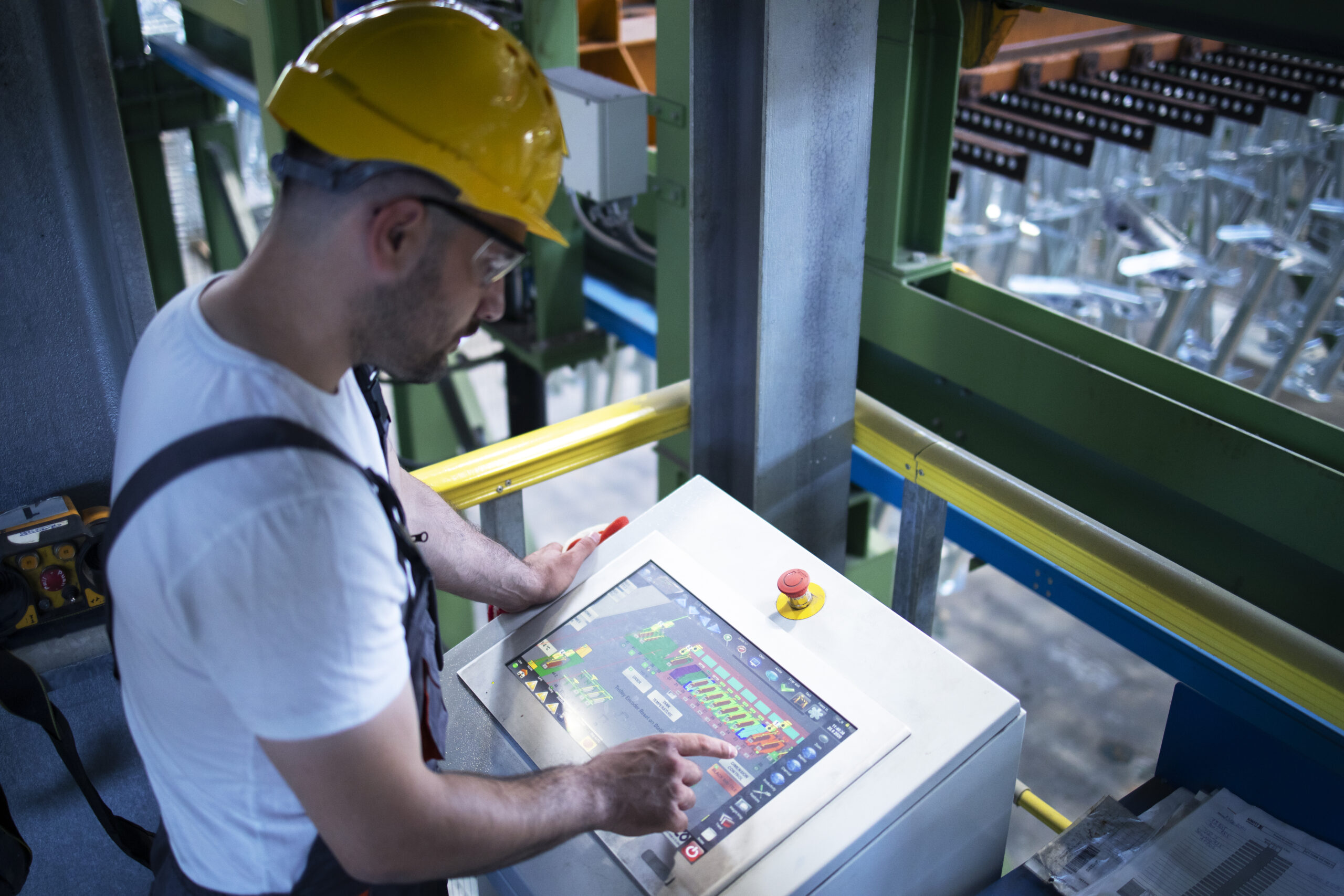
CNC machining for AI data centers is used to manufacture custom cooling manifolds, cold-plate bodies, pump and valve components, precision fittings, heat-transfer bases, copper power components, rack hardware, equipment housings, and other parts where sealing, alignment, thermal contact, or dimensional accuracy matters.
This guide explains where precision machining fits into the U.S. AI infrastructure buildout in 2026, which components benefit most from it, what materials are commonly considered, and how engineers should prepare data-center hardware for manufacturing.
Why AI Data Centers Are Creating New Mechanical Manufacturing Demands
AI infrastructure is not only a semiconductor story.
Every GPU, CPU, memory system, network switch, power converter, and storage device ultimately operates inside a physical mechanical and thermal environment.
As compute density increases, that environment becomes harder to manage.
The U.S. Department of Energy reported that data centers consumed approximately 4.4% of total U.S. electricity in 2023 and projected that consumption could reach roughly 6.7% to 12% by 2028. The growth is being driven in significant part by expanding computing requirements, including artificial intelligence. U.S. Department of Energy data-center energy report.
More electrical power entering computing equipment also means more heat must be managed.
That is one reason direct liquid cooling has become increasingly important in high-density infrastructure.
Where CNC Machined Parts Fit Inside an AI Data Center
A useful way to understand the opportunity is to divide AI infrastructure into functional hardware layers.
| Data-Center System | Examples of CNC-Machined Components | Important Manufacturing Concerns |
| Direct liquid cooling | Cold plates, cooling blocks, manifolds | Flatness, channels, sealing surfaces, ports |
| Coolant distribution | Manifold blocks, valve bodies, pump housings | Flow paths, threaded ports, pressure boundaries |
| 热管理 | Heat sinks, thermal bases, mounting plates | Surface contact, material conductivity, flatness |
| Power distribution | Copper terminal blocks, busbar interface parts, thermal plates | Conductivity, alignment, surface quality |
| Server hardware | Mounting plates, rails, alignment blocks, brackets | Position, stiffness, assembly repeatability |
| Networking hardware | Switch housings, thermal plates, connector mounts | Heat removal, connector alignment |
| Facility cooling | Pump components, heat-exchanger headers, flanges | Flow, sealing, corrosion resistance |
| Test and deployment equipment | Fixtures, gauges, alignment tooling | Repeatability and dimensional control |
CNC machining therefore supports far more than a single server component.
It can appear anywhere that a data-center equipment designer moves from standardized hardware to a custom mechanical interface.
1. CNC-Machined Cold Plates for Direct-to-Chip Cooling
Cold plates are among the most important precision components in modern AI data center cooling.
A cold plate transfers heat from a high-power electronic device into circulating coolant.
Typical applications include cooling:
- GPUs
- CPUs
- AI accelerators
- High-power networking chips
- Power electronics
- Memory or supporting electronics where required
The basic concept is straightforward.
A metal plate contacts or interfaces with the heat-producing device while coolant travels through internal passages.
Manufacturing it correctly is considerably more complicated.
Features That May Require CNC Machining
Depending on the design, a cold plate can contain:
- Internal coolant channels
- Inlet and outlet ports
- O-ring grooves
- Threaded connections
- Mounting holes
- Precision datum surfaces
- Thin channel walls
- Cover-plate interfaces
- Sensor interfaces
- 定位特征
CNC milling gives engineers significant flexibility when prototyping these designs because channel layouts can be changed without creating dedicated casting or forming tooling.
2. Coolant Distribution Manifolds
If cold plates remove heat at the chip, manifolds distribute coolant throughout the system.
A rack-level manifold can contain multiple supply and return connections feeding individual servers or cooling loops.
These components can become surprisingly complex.
A manifold may include:
- Long internal passages
- Cross-drilled holes
- Branching flow paths
- Threaded ports
- Quick-disconnect interfaces
- Sensor ports
- Plugged machining access holes
- Mounting features
- Valve interfaces
Why CNC Machining Works Well for Manifolds?
CNC machining is particularly useful when the internal flow architecture is still evolving or production quantity does not justify a custom casting.
A solid aluminum or stainless-steel block can be milled and drilled to create intersecting channels according to the customer’s controlled design.
For more complex geometries, multi-axis machining can improve access to angled ports and multiple mounting faces.
3. Pump, Valve, and Coolant Distribution Unit Hardware
A modern data center cooling system may also contain coolant distribution units, pumps, valves, heat exchangers, sensors, and associated control hardware.
CNC machining can support custom mechanical parts inside these systems, such as:
- Pump housings
- Valve bodies
- Valve blocks
- Fluid distribution blocks
- 法兰
- Mounting adapters
- Shaft components
- Connector bodies
- Sensor housings
CNC turning is often appropriate for rotational parts, while milling is better for ported blocks and irregular housings.
For parts that combine both types of geometry, mill-turn machining can sometimes reduce the number of setups.
Engineers considering cylindrical fluid components can review LEWEI Precision’s CNC turning capabilities for additional process information.
4. Precision Fittings and Liquid-Cooling Connectors
Dense server racks may contain a large number of fluid interfaces.
A small connector appears simple, but its dimensions can affect:
- Sealing
- Hose engagement
- Thread fit
- Flow restriction
- Alignment
- Assembly force
Precision turning is well suited to connectors, nipples, adapters, threaded fittings, and similar rotational hardware.
Features may include:
- External threads
- Internal threads
- O-ring lands
- Barbs
- Grooves
- Precision bores
- Hexagonal wrench flats
- Cross-holes
Live-tool turning can also machine non-rotational features without transferring the component to another machine.
For repeat production of relatively small connectors, process planning, bar feeding, tool life, inspection strategy, and deburring become as important as the nominal machine tolerance.
5. Heat Sinks and Thermal Base Plates
Liquid cooling is receiving significant attention, but air cooling has not disappeared.
Many lower-density electronics, networking systems, power supplies, storage systems, and supporting data-center devices continue to depend on conventional thermal hardware.
CNC machining can produce:
- Custom heat-sink bases
- Prototype heat sinks
- Thermal spreader plates
- Cooling housings
- Power-electronics thermal plates
- Mounting bases
For prototypes or specialized low-volume equipment, CNC milling offers design flexibility.
For very high-volume conventional heat sinks, however, extrusion, die casting, skiving, forging, or bonded-fin construction may be more economical.
This distinction matters.
CNC machining should be selected because the geometry or production requirement justifies it—not simply because the component transfers heat.
6. Copper Power-Distribution Components
AI computing places extraordinary emphasis on electrical power delivery.
Copper is widely used wherever high electrical conductivity is important.
CNC machining can be relevant to components such as:
- Custom copper terminals
- Power-distribution blocks
- Connector interfaces
- Prototype busbars
- Busbar contact blocks
- Thermal-electric interface plates
- High-current connection hardware
Copper’s conductivity makes it useful electrically and thermally, but it behaves differently during machining than aluminum or steel.
Tooling, chip formation, clamping, burr control, and surface requirements must be considered carefully.
Not every busbar should be CNC machined.
For high-volume flat or formed busbars, stamping, punching, laser cutting, bending, or dedicated busbar fabrication is generally more appropriate.
CNC machining makes the most sense where the design includes:
- Thick conductive blocks
- Precision contact faces
- Complex drilled or tapped features
- Custom prototypes
- Tight positional relationships
- Three-dimensional geometry
7. Rack, Chassis, and Alignment Hardware
AI server racks are increasingly dense mechanical assemblies.
Many of their largest structures are manufactured through sheet-metal fabrication rather than CNC machining.
Precision machining still has a place, particularly for:
- Alignment blocks
- Locating pins
- Structural mounting plates
- Precision brackets
- Rail components
- Equipment adapters
- Service-tool interfaces
- Cable-management hardware
- Chassis interface components
The decision comes down to functional need.
If a bracket simply holds a cable tray, sheet metal may be perfectly adequate.
If a machined plate locates several high-value systems relative to a common datum, CNC machining may be justified.
The Materials That Matter Most for AI Data-Center Components
Material selection should begin with the component’s function.
There is no universal “best data-center material.”
铝质
Aluminum—particularly common engineering grades such as 6061—is attractive for many data-center applications because it combines:
- Low density
- Good machinability
- Useful thermal conductivity
- 耐腐蚀性
- Availability
- Compatibility with several surface treatments
Typical applications can include:
- Cold-plate bodies
- Coolant manifolds
- Heat-sink bases
- Equipment housings
- Mounting plates
- Structural hardware
LEWEI Precision’s 数控加工服务 lists several machinable aluminum grades, including 6061, 6082, 7075, and 2024.
铜
Copper is highly attractive when electrical or thermal conductivity dominates the design.
Potential uses include:
- Processor cold plates
- Heat spreaders
- 接线端子
- Power-distribution blocks
- Thermal interfaces
LEWEI lists C110 and C101 among its supported copper grades.
The tradeoff is that copper is heavier and generally more demanding to machine efficiently than aluminum.
Cost can also become significant for large components.
不锈钢
Stainless steel may be preferred where the priority is:
- 耐腐蚀性
- Mechanical strength
- Thread durability
- Fluid-system compatibility
- Robust fittings or housings
黄铜
Brass offers good machinability and is widely used in many fluid and electrical components.
Possible uses include:
- 配件
- Adapters
- 阀门部件
- 连接器
- Electrical hardware
Its suitability depends on fluid chemistry, pressure, regulatory requirements, and surrounding materials.
工程塑料
Not every precision component in an AI data center needs to be metallic.
Engineering plastics such as PEEK, POM, nylon, PTFE, or polycarbonate may be useful for:
- 电气绝缘
- 垫片
- Guides
- 衬套
- Low-load brackets
- Cable-management components
- Fluid-system parts where chemically appropriate
The material must be selected for actual temperature, load, electrical, fire, chemical, and dimensional requirements.
Aluminum vs. Copper for AI Cooling Parts
This is one of the most common engineering tradeoffs.
| 系数 | 铝质 | 铜 |
| 导热性 | 良好 | 更高 |
| Electrical conductivity | 中度 | 优秀 |
| 重量 | 较低 | 更高 |
| 机械加工性能 | Generally favorable | More demanding |
| 材料成本 | 通常较低 | 通常较高 |
| Structural use | Very practical | Less common |
| Heat-spreading applications | 良好 | 优秀 |
| Large manifold bodies | Often practical | Can become heavy and expensive |
The decision should be made at system level.
A copper cold plate may improve thermal performance, but an aluminum design could offer substantial weight and cost benefits.
Hybrid constructions may also be possible, but joining different metals creates additional manufacturing and galvanic-corrosion considerations.
Galvanic Corrosion Cannot Be Ignored
Liquid-cooling loops may combine several metals.
When dissimilar metals are electrically connected in the presence of a conductive fluid, galvanic corrosion can become a concern.
CNC machining does not solve this problem.
The engineering team must define:
- Approved materials
- Coolant chemistry
- 涂层
- Inhibitors
- Surface treatments
- Isolation strategies
- Compatibility requirements
Changing a manifold from stainless steel to aluminum purely to reduce machining cost could create system-level problems if the rest of the cooling loop was designed around another material system.
Manufacturing decisions should therefore remain tied to the thermal-fluid design.
Which CNC Processes Are Most Useful for AI Infrastructure Hardware?
Different components require different machines.
3 轴数控铣床
3-axis milling is often sufficient for:
- Flat thermal plates
- Simple cold-plate bodies
- 括号
- Equipment mounts
- Basic manifolds
- 外壳
- 装置
When the component can be accessed efficiently from a limited number of orientations, 3-axis milling is usually the simpler and more economical choice.
4轴加工
A fourth rotary axis becomes useful when a component includes features around several sides.
Examples include:
- Multi-port manifolds
- Rotational fixtures
- Connector housings
- Parts with repeated radial features
Reducing manual repositioning can improve both efficiency and feature relationships.
5 轴数控加工
Complex data-center hardware may contain:
- Angled fluid ports
- Multi-sided mounting surfaces
- Difficult tool-access areas
- Compound-angle features
- Integrated flow and structural geometry
In these cases, 5 轴数控加工 can reduce setups and improve access to multiple surfaces.
That does not mean every cold plate or manifold requires five axes.
A good manufacturer should use the least complex machining strategy that reliably meets the drawing.
数控车削
Turning is ideal for:
- 配件
- 衬套
- 图钉
- Connector bodies
- 轴
- 阀门部件
- 螺纹转接头
For large production quantities of rotational parts, automated turning can provide significant cost advantages.
Precision Machining and Grinding
Some components contain interfaces where milling alone may not achieve the required final condition economically.
Depending on the drawing, secondary precision operations may include:
- Surface grinding
- Cylindrical grinding
- 铰孔
- Honing
- EDM
- Precision finishing
LEWEI的 精密加工服务 combine CNC processes with additional high-accuracy manufacturing options for drawing-critical features.
Leak and Pressure Testing Should Be Specified Separately
A critical distinction for buyers is that precision machining and leak testing are different manufacturing activities.
A CNC machine can create the sealing geometry and fluid passages.
It does not automatically prove that the completed assembly is leak-free.
If the component requires:
- Pressure testing
- Hydrostatic testing
- Pneumatic testing
- Pressure-decay testing
- Helium leak testing
those requirements should be stated explicitly in the RFQ along with:
- Test pressure
- Test medium
- Hold time
- Acceptance limit
- Temperature requirements
- Reporting requirements
Never assume that “CNC machined cold plate” automatically includes a specific leak-test standard.
Inspection Requirements for AI Data-Center Hardware
The inspection strategy should follow the functional risks.
Common measurement tools can include:
- CMMs
- Digital micrometers
- 高度规
- 内径量规
- 销规
- 螺纹量规
- Optical measurement
- Surface-roughness instruments
LEWEI’s CNC machining service states that dimensional inspection can include CMMs, optical scanning, and digital measurement, with GD&T verification and documentation options such as material reports, first-article inspection, and CMM data.
CNC Machining vs. Other Manufacturing Methods for Data-Center Parts
CNC should not be treated as the automatic answer.
| Part Type | CNC Machining Often Makes Sense When | Alternative Processes May Be Better When |
| Cold plate | Custom channels, prototypes, low-medium volume | Very high-volume design supports dedicated tooling |
| Coolant manifold | Complex ports and changing architecture | Stable very-high-volume design can be cast |
| Heat sink | Custom geometry or prototype | Standard high-volume design can be extruded/skived |
| Busbar | Thick 3D or precision contact geometry | Flat high-volume design can be stamped/formed |
| Rack panel | Tight machined interfaces required | Standard panels can be sheet-metal fabricated |
| Connector | Custom geometry or precision threads | Very high volume may justify dedicated forming processes |
This decision framework prevents overengineering.
The goal is to use precision machining where it produces measurable engineering value.
Domestic vs. International CNC Sourcing for U.S. AI Infrastructure
The rapid expansion of U.S. data-center capacity puts pressure on the manufacturing supply chain.
Some programs may require domestic manufacturing.
Others may allow global sourcing.
Domestic CNC Manufacturing May Be Preferred When
- Contract requirements specify U.S. production
- Government or defense restrictions apply
- Extremely short logistics times are needed
- Frequent supplier visits are necessary
- Very fast engineering iterations are required
- Supply-chain geography is part of the program strategy
International CNC Manufacturing May Be Considered When
- Global sourcing is permitted
- Additional capacity is required
- Production quantities make international logistics practical
- Buyers want another qualified source
- Total landed cost remains competitive
- Lead-time requirements allow overseas transport
For important AI infrastructure programs, dual sourcing may also be worth considering.
A second qualified manufacturing path can help reduce dependence on one machine shop, one region, or one production cell.
How LEWEI Precision Can Support Custom AI Infrastructure Hardware
LEWEI Precision is a CNC machining manufacturer based in Dongguan, China.
It should therefore be considered an international CNC manufacturing option rather than a U.S.-based data-center manufacturer.
Its existing custom CNC machining capabilities include machining of both metals and engineering plastics using CNC milling, turning, routing, drilling, EDM, grinding, and multi-axis equipment. The company states that its manufacturing capacity includes more than 700 CNC machines and supports prototype through production orders.
Those capabilities are relevant to drawing-controlled AI infrastructure components such as:
- Cold-plate bodies
- Cooling manifold blocks
- Fluid-system fittings
- Pump and valve hardware
- Thermal plates
- Copper terminal components
- Custom heat-sink bases
- Precision equipment mounts
- Rack alignment hardware
- Electronic equipment housings
Actual feasibility depends on the drawing, material, channel geometry, quantity, cleanliness requirements, pressure requirements, inspection documentation, and any required joining or test processes.
LEWEI’s published material range includes aluminum, copper, brass, steel, stainless steel, titanium, magnesium, and engineering plastics, giving engineers several options for cooling, structural, and electrical components.
Common Mistakes When Designing CNC Parts for AI Data Centers
Specifying Extreme Tolerances Everywhere
Tight tolerance should be tied to function.
Blanket ultra-tight requirements increase machining and inspection cost.
Treating a Cold Plate Like a Normal Aluminum Plate
Coolant channels, sealing, joining, thermal contact, cleanliness, and pressure integrity make it a system component.
Ignoring Machining Access
If an end mill cannot reach the feature, the design may require another process or a redesigned architecture.
Choosing Material Only by Thermal Conductivity
Material decisions also affect:
- 重量
- 费用
- corrosion
- 可加工性
- structural stiffness
- joining
- coolant compatibility
Forgetting Final-Part Distortion
Brazing, welding, heat treatment, and some surface treatments can change dimensions after machining.
Critical inspection may need to occur after the final process.
Failing to Define Cleanliness
Fluid components should not rely on an undefined instruction such as “clean before shipment.”
If cleanliness matters, define it.
Precision Manufacturing Will Remain Part of the AI Infrastructure Race
AI infrastructure growth is often discussed in terms of chips, electricity, networks, and software.
But those systems depend on physical hardware.
As racks become denser and liquid cooling becomes more common, mechanical components must control coolant, transfer heat, distribute power, align high-value equipment, and remain serviceable inside increasingly compact architectures.
That makes precision manufacturing an important part of the infrastructure stack.
CNC machining is particularly valuable where designers need:
- Custom cooling geometry
- Precision sealing interfaces
- Complex manifolds
- Copper power components
- Multi-sided hardware
- 快速原型
- Controlled production parts
- Flexible engineering changes
The key is to use it selectively.
A strong design combines CNC machining with sheet metal, extrusion, casting, brazing, stamping, and other processes according to what each component actually requires.
For U.S. AI infrastructure companies open to international manufacturing, LEWEI Precision’s 数控加工服务 can support drawing-based evaluation of custom metal and plastic components from prototype through production.
Provide the CAD model, engineering drawing, material, quantity, tolerance, thermal or fluid requirements, inspection documentation, and required secondary processes so the manufacturing route can be evaluated against the actual component.
常见问题
What CNC-machined parts are used in AI data centers?
CNC-machined data-center parts can include liquid-cooling cold plates, coolant manifolds, valve bodies, pump components, precision fittings, thermal plates, custom heat sinks, copper terminal components, mounting plates, alignment blocks, rack hardware, and electronic equipment housings. The exact process depends on the design and production quantity.
Why is CNC machining important for AI data center cooling?
CNC machining allows engineers to manufacture custom flow channels, sealing surfaces, threaded ports, thermal interfaces, and mounting features with controlled geometry. It is especially valuable for prototype and specialized liquid-cooling components where designs change quickly or complex features make standard fabrication processes unsuitable.
What is direct-to-chip cooling?
Direct-to-chip cooling transfers heat from high-power processors or accelerators into a liquid coolant through cold plates mounted at or near the heat-generating devices. The coolant then carries that heat toward other parts of the technology cooling system.
Are AI data centers moving toward liquid cooling?
Liquid cooling is becoming increasingly important as computing densities rise. Current industry guidance and high-density rack designs include direct liquid cooling, cold plates, rack manifolds, coolant distribution equipment, and related infrastructure. Air cooling remains appropriate in many other parts of the data center.
Is aluminum or copper better for data-center cold plates?
Copper generally provides higher thermal conductivity, while aluminum offers lower weight, favorable machinability, and typically lower material cost. The right material depends on thermal requirements, weight, coolant compatibility, corrosion strategy, joining method, and total system design.
Can LEWEI Precision manufacture components for AI data-center systems?
LEWEI Precision’s existing CNC machining capabilities support custom metal and engineering-plastic components using milling, turning, multi-axis machining, EDM, drilling, and grinding. Whether a specific data-center component is suitable depends on the engineering drawing, material, tolerance, fluid-system requirements, quantity, and required testing or documentation.
关于作者
关于作者
莱威精密工程团队 — 乐威精密的制造工程师们。乐威精密工程团队21多年来一直为来自120多个国家的航空航天、医疗、汽车和半导体领域的客户加工和注塑零部件。 我们的工厂在ISO 9001:2015、ISO 13485、ISO 14001和IATF 16949质量体系认证下,提供3轴至5轴数控加工、车削、注塑成型及钣金加工服务。 此处的指导建议源于我们每周在实际生产现场及客户设计制造可行性(DFM)评审中积累的经验,而非教科书上的理论。您手头有零件吗?请将CAD文件发送给我们,我们将准确告知您具体的制造方案。.

 English
  简体中文
简体中文  Español
  Deutsch (Sie)
  日本語
日本語  Português