
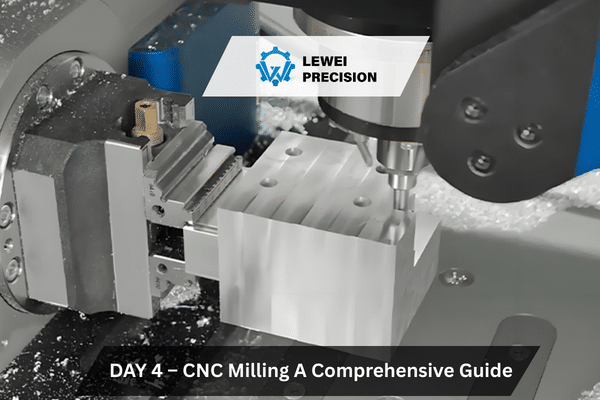
Introduction: Understanding the Decision-Making Process and Cost Factors in CNC Milling
CNC-Fräsen is a widely used process in precision manufacturing. However, while the technology itself is highly efficient, the decisions surrounding its application are often multifaceted and can have far-reaching implications. For engineers, OEM buyers, and procurement managers, the choices made in CNC-Fräsen—ranging from the material selection to machine setup—can significantly impact both the Kosten und quality of the final product.
In this article, we will break down the decision-making process involved in CNC-Fräsen, from selecting the right machine and tools to choosing materials, setting up the machine, and managing production costs. We will explore the trade-offs engineers face, the real-world decisions that need to be made on the shop floor, and the impact of those decisions on the overall manufacturing process. By the end, you will have a comprehensive understanding of how to optimize CNC-Fräsen operations while keeping costs in check.
This article is designed to help those involved in decision-making—whether engineers, procurement professionals, or OEM buyers—make informed choices about CNC-Fräsen that balance precision, cost-effectiveness, and production efficiency.
The Fundamentals of CNC Milling: A Quick Recap
Was ist CNC-Fräsen?
CNC (Computer Numerical Control) milling refers to the process of using a rotating cutting tool to remove Material from a workpiece to achieve the desired shape. The process is controlled by a computer, which uses pre-programmed instructions to guide the movements of the tool along various axes. CNC-Fräsen is highly automated, offering precise control and repeatability, making it suitable for a wide range of industries and applications.
Unter CNC-Fräsen, the cutting tool moves along several axes—typically three, four, or five—depending on the machine configuration. The most common configuration is 3-axis milling, but more complex parts may require 4-axis or 5-axis milling for more intricate geometries and precision.
Why Decision-Making Matters in CNC Milling
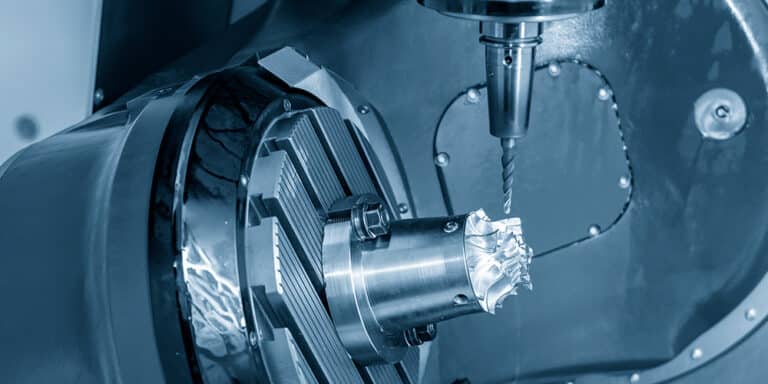
Unter CNC-Fräsen, the process may appear straightforward, but the decisions made at every stage of the operation play a crucial role in determining the success of the project. The choices you make can significantly affect the efficiency, Kosten, qualityund overall profitability of the milling process. Let’s break down why each of these decisions matters and how they contribute to the overall outcome.
1. Machine Selection
Die Wahl des richtigen CNC-Fräsmaschine is one of the most foundational decisions in the machining process. CNC-Fräsen machines come in various types, each with distinct features and capabilities suited to different tasks. Some of the most common types include vertical milling machines, horizontal Fräsmaschinenund 5-axis CNC machines.
- Material Suitability: Certain machines are designed to handle specific materials. For example, a machine built to handle hard metals like titanium will be different from one meant for weichere Materialien wie Aluminium or plastics.
- Size and Precision: The size of the part being manufactured will also influence machine selection. Larger parts require machines with greater travel capabilities, while smaller parts may only need a compact machine with high precision.
- Precision Requirements: Some parts require tight tolerances, and the machine must be able to deliver the necessary precision. Machines designed for high-precision applications will ensure that parts meet rigorous specifications, ensuring both quality and functionality.
Selecting the wrong machine can result in poor machining quality, längere Zykluszeitenund increased costs. It’s essential to match the machine’s capabilities with the requirements of the job to achieve the best results.
2. Tool Selection
Die right tooling for CNC milling is key to achieving faster Schneiden speeds, longer tool lifeund better surface finishes. The cutting tools used in CNC-Fräsen, wie zum Beispiel end mills, drillsund reamers, have different characteristics that make them more or less suited for specific tasks.
- Kompatibilität der Materialien: Just as with Maschine selection, the Material being machined dictates the type of tool required. For instance, harder materials like rostfreier Stahl oder Titan require tools made of more durable materials, like carbide oder high-speed steel (HSS). For weichere Materialien, tools made from less expensive materials may suffice.
- Cutting Speed and Tool Wear: The type of tool affects both cutting speed und Werkzeugstandzeit. Coated tools (e.g., TiN oder TiAlN coatings) can extend tool life by reducing wear caused by high temperatures and friction. The right tool allows for faster cuts and improved efficiency, reducing downtime for tool changes.
- Surface Finish Quality: Choosing the appropriate tool geometry and size can also impact the Oberflächengüte. Tools designed for fine finishes, such as ball nose end mills, provide smoother cuts and superior surface quality.
If the wrong tool is selected, the result can be poor surface finishes, overheated or worn toolsund increased machining time—all of which negatively impact both quality and profitability.
3. Material Selection
The material you choose for the part directly affects nearly every aspect of the CNC-Fräsverfahren, including machining time, Werkzeugverschleißund Gesamtkosten.
- Machining Time: Verschiedene Materialien require different Schneiden speeds and feed rates. Softer materials, like Aluminium, are generally easier to Maschine, requiring less time and effort. On the other hand, harder materials, wie zum Beispiel Titan oder hardened steels, often need slower Schneiden speeds and special tooling, increasing machining time.
- Werkzeugverschleiß: Harder Materialien cause more wear on tools, leading to more frequent tool changes and, consequently, higher costs. In contrast, softer materials are less demanding on tools, leading to less wear und longer tool life.
- Kostenüberlegungen: Material cost plays a critical role in project economics. More expensive materials may require specialized machines, tools, and longer machining times, all of which increase production costs. Cheaper materials can be processed more quickly and easily but may not meet the strength, durability, or aesthetic requirements of the part.
The decision to choose a particular Material involves balancing performance requirements mit cost constraints. If the material isn’t chosen wisely, it could result in overpaying for tools, increased production time, oder unsatisfactory finished parts.
4. Setups and Process Planning
Proper setup and process planning are key to minimizing Ausfallzeit and ensuring the highest quality output in CNC milling operations. This includes everything from fixturing the part to selecting the appropriate Bearbeitung strategy.
- Fixturing: The part must be held securely in place during machining. Die fixture design determines the accuracy of the machining process and minimizes the risk of part movement, which could lead to errors.
- Machining Strategy: The strategy for Schneiden the Material—including choosing the right tool paths, cutting parameters, and operation sequence—affects Zykluszeit and the quality of the part. For example, performing rough cuts first followed by finish cuts can optimize tool wear and improve surface finish.
- Minimizing Downtime: A well-thought-out setup minimizes unnecessary tool changes and adjustments during the operation. This leads to faster production times and higher throughput.
Effective setup planning ensures the efficiency of the process and that the Maschine runs at its optimal speed, minimizing interruptions and wasted time. Poor setups or improper planning can lead to delays, increased machine downtimeund subpar results.
Interconnection of Decisions
The decisions related to machine selection, tool selection, material choiceund setups are all intertwined. Poor choices in one area can cascade, leading to inefficiencies and quality issues in others. For example, selecting the wrong Material for a specific tool can result in faster tool wear, leading to longer cycle times. Similarly, improper setups can lead to inaccurate parts that may need to be reworked or scrapped, increasing both time and cost.
Decision-Making in CNC Milling: Factors That Affect Cost and Efficiency
1. Machine Selection: Choosing the Right CNC Milling Machine
The first critical decision in CNC-Fräsen is selecting the appropriate machine for the job. The decision typically depends on several factors:
a) Number of Axes
Understanding 3-Axis, 4-Axis, and 5-Axis CNC Milling
In der Welt der CNC-Fräsen, the number of axes that a Maschine uses determines its capability to handle different geometries, angles, and complexity of the parts being produced. Each configuration — 3-Achse, 4-axisund 5-axis — offers different levels of precision, speed, and complexity, and understanding how they function can help determine which machine is best suited for a specific application. Below is a detailed explanation of each configuration and its respective benefits and challenges.
3-Axis Milling:
3-Achsen-Fräsen is the most common and basic type of CNC milling machine. This machine operates on three axes of movement: X, Yund Z, which correspond to the horizontal (left to right), vertical (up and down), and depth (forward and backward) directions, respectively.
How It Works:
- The tool moves along the X (left-right), Y (front-back), and Z (up-down) axes to cut the Material.
- In 3-axis milling, the workpiece is usually stationary, and the cutting tool moves along these three axes to create the required shapes.
Suitability:
- Ideal for simple, flat parts or parts with simple geometries. For example, it’s great for producing parts like brackets, housings, or plates.
- Cost-effective compared to more advanced milling machines, making it a go-to option for many manufacturers, especially in industries where the parts are less complex.
Einschränkungen:
- Multiple setups required: For complex geometries or multi-sided parts, you’ll need to reposition the workpiece multiple times, which can lead to misalignment issues.
- Longer production times: Because you must reposition the workpiece, the Maschine will take longer to produce parts that require multiple angles.
- Höhere Arbeitskosten: More setups and repositioning increase labor costs as the machine operator must intervene more frequently to align the part.
Anwendungen:
- 3-axis milling is widely used for producing parts that are relatively simple, wie zum Beispiel flat or shallow features, engravingund light milling jobs that don’t require multi-sided machining.
4-Axis Milling:
4-axis milling introduces an additional rotational axis, usually around the X-Achse, allowing the Maschine to rotate the part and machine multiple sides without repositioning the workpiece manually.
How It Works:
- In 4-axis milling, the tool moves along the X, Yund Z axes, and the workpiece is also able to rotate around the X-Achse (the fourth axis).
- This rotational movement allows for multi-sided Bearbeitung. The machine can rotate the part so that different faces can be machined without needing to move or reposition the part.
Vorteile:
- Increased efficiency: Since the workpiece doesn’t need to be repositioned, the Maschine can work on multiple sides of the part without operator intervention. This reduces setup time und repositioning errors.
- Verbesserte Präzision: The reduction in repositioning improves part alignment, reducing the risk of misalignment and defects caused by manual adjustments.
Drawbacks:
- Kosten: 4-axis machines are more expensive than 3-axis machines, both in terms of initial investment and operational costs due to the added complexity of the rotational axis.
- Still limited for complex geometries: While 4-axis milling allows for some flexibility in machining multiple sides, it still has limitations when it comes to parts requiring angles and precision that are outside the standard rotational capabilities.
Anwendungen:
- 4-axis milling is suitable for more complex parts than 3-axis milling, such as gear housings, rotor bladesund automotive parts that require machining on multiple sides or parts with circular or cylindrical features.
5-Axis Milling:
5-axis milling is the most advanced and versatile type of CNC-Fräsen. It adds two more axes to the machine, usually in the form of a rotational movement around the Y-Achse und Z-Achse, allowing the workpiece to be positioned at virtually any angle for machining.
How It Works:
- In addition to the X, Yund Z axes, 5-Achsen-Maschinen include two additional rotational axes: A-Achse (rotation around the X-axis) and B-Achse (rotation around the Y-axis).
- This allows the workpiece to be tilted, rotated, and moved simultaneously in multiple directions, enabling Bearbeitung from multiple angles without repositioning the part.
Vorteile:
- Increased precision and complexity: 5-axis milling can produce extremely complex parts with multiple features and intricate geometries. For example, it can easily handle parts with curved surfaces, contoured shapesund undercuts that would be difficult or impossible to machine with 3 or 4-axis machines.
- Significantly reduced production time: Because parts can be machined from multiple angles without needing to be repositioned, 5-Achsen-Maschinen reduce machining time und increase throughput. This is particularly valuable for parts that require tight tolerances or complex geometries.
- High-quality surface finish: The ability to approach the workpiece from various angles allows for better surface finish quality, reducing the need for post-machining processes like grinding or polishing.
Drawbacks:
- High cost: 5-axis machines are much more expensive to purchase and operate compared to 3- or 4-axis machines. This includes the higher cost of Wartung, toolingund programming.
- Complex programming: Programming a 5-axis machine requires highly skilled operators and more advanced software, making it a more technical and resource-intensive Prozess.
- Werkzeugverschleiß: The increased complexity of machining from multiple angles can lead to higher Werkzeugverschleiß, particularly when dealing with hard Materialien or intricate shapes.
Anwendungen:
- 5-axis milling is used for highly complex parts in industries that require precision and efficiency, wie zum Beispiel Luft- und Raumfahrt, medizinische Geräteund Automobil industries. Parts like turbine blades, complex mold cavitiesund prosthetics are often produced using 5-axis CNC milling.
Summary Comparison:
| Merkmal | 3-Achsen-Fräsen | 4-Achsen-Fräsen | 5-Achsen-Fräsen |
| Axes of Movement | X, Y, Z | X, Y, Z + rotation around X-axis | X, Y, Z + rotations around X, Y, and Z axes |
| Complexity | Simple, flat parts | Multi-sided machining, moderate complexity | Highly complex, multi-angle machining |
| Efficiency | Moderate (requires multiple setups) | Improved efficiency, fewer setups | Very high efficiency, no repositioning required |
| Kosten | Least expensive | More expensive than 3-axis | Most expensive option |
| Anwendungen | Simple components, flat geometries | Cylindrical, multi-sided parts | High-precision, intricate, or 3D parts |
| Präzision | Standard precision for simple parts | Improved precision, especially for multi-sided parts | High precision for complex geometries |
- etries to be machined in a single setup.
b) Machine Size and Workpiece Capacity
- Larger machines are required for larger workpieces. The size of the machine you select impacts both cost and efficiency, as bigger machines tend to have higher operating costs and longer setup times.
- Machine rigidity is also a consideration. For heavy-duty Bearbeitung or high-precision parts, a more rigid machine minimizes vibration and allows for more consistent quality.
c) Speed and Precision Requirements
- Machines with higher precision are often slower and more expensive. Depending on your part’s tolerance requirements, balancing speed with accuracy is crucial.
- Spindle speed und Vorschubgeschwindigkeit must also be considered in choosing a Maschine. Higher spindle speeds allow for faster Schneiden but may wear tools more quickly.
Decision Example:
A manufacturer of aerospace components requires extremely high tolerances and surface finishes. A 5-axis CNC machine may be necessary, even though it’s more expensive, as it will reduce cycle time and eliminate the need for multiple setups, which are costly in terms of labor and tooling.
2. Tool Selection: Balancing Cost and Performance
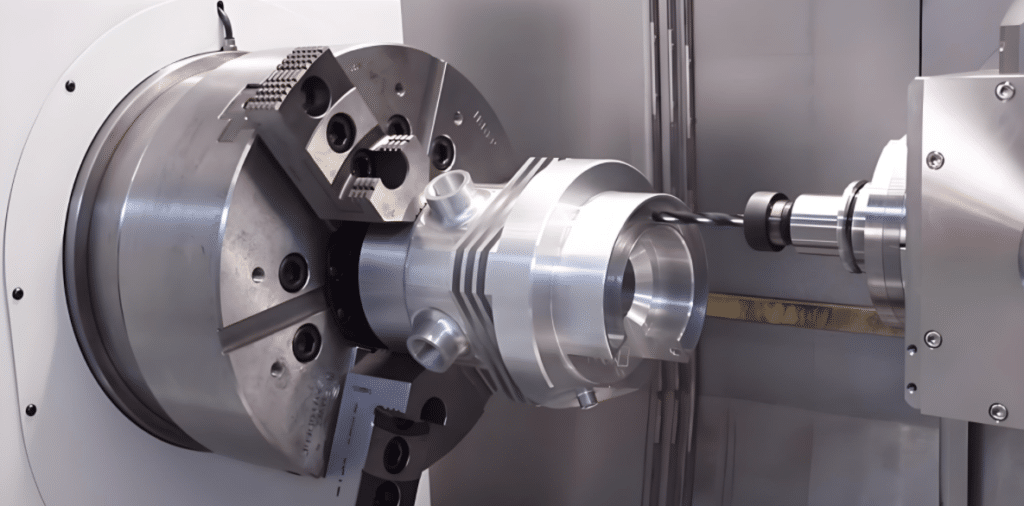
Tools are central to CNC-Fräsen performance. The selection of cutting tools affects both the Oberflächengüte und Schneiden efficiency. Tool costs vary significantly based on material, design, and coating. Selecting the right tool can also minimize downtime, increase tool life, and improve part quality.
a) Material of the Cutting Tool
- Carbide tools are commonly used for high-performance milling, especially in Materialien wie rostfreier Stahl und Titan. Carbide tools are harder and wear-resistant but are also more expensive.
- High-speed steel (HSS) is cheaper and works well for weichere Materialien but has a shorter tool life compared to carbide.
b) Coatings and Tool Types
- Coated tools (such as TiN oder TiAlN) reduce friction and wear, which improves performance and tool life. However, the initial cost is higher.
- Specialized tools like ball end mills oder slotting cutters are required for specific tasks, and selecting the right tool is key to achieving the desired surface finish and tolerances.
Decision Example:
An OEM buyer needs to mill high-strength steel für automotive parts. Opting for Hartmetallbestückung mit TiAlN coatings will help maintain tool life under high cutting pressures, improving efficiency even though the tooling costs are higher.
3. Material Selection: Costs and Challenges
Die Material you choose has a direct impact on machining costs, cycle time, and tool wear. The machinability of the material—its ease of Schneiden, hardness, and wear resistance—determines the overall cost of manufacturing.
a) Common Materials in CNC Milling
- Aluminium is one of the most commonly used Materialien because it is light, easy to machine, and relatively inexpensive. It also offers good machinability, which allows for faster production cycles.
- Stahl is used in a wide range of applications but requires slower Schneiden speeds and more robust tooling, increasing both tool wear and production time.
- Titan is strong and corrosion-resistant, but it is difficult to machine. The high Schneiden forces and tool wear associated with machining titanium can drive up costs significantly.
b) Material Costs and Machinability
- High machinability materials wie Aluminium und Messing can be machined faster with fewer tools, resulting in lower per-part costs.
- Härtere Materialien wie zum Beispiel Titan oder rostfreier Stahl may require slower speeds, more rigid machines, and specialized tooling, increasing both Material and operational costs.
Decision Example:
A manufacturer producing Luftfahrthalterungen might opt for Aluminiumdue to its balance of machinability, cost, and strength-to-weight ratio. Using Titan would increase the cost, as it demands slower machining, more tooling, and higher operational costs.
4. Setup and Labor Costs: Minimizing Production Time
Maschine setup time und die complexity of operations directly affect the overall cost of CNC-Fräsen. Parts with intricate geometries or multi-faceted features require more setups, which can increase labor costs and Maschine time.
a) Setup Time
Setup time includes the time spent aligning the machine, loading the part, and configuring the toolpaths. The more complex the part, the more setups are required. Multi-axis machines (4-axis, 5-axis) help minimize setup time by enabling multi-sided machining in one go.
b) Labor Costs
Labor costs increase when operators need to intervene frequently due to tooling changes, part realignment, or other manual adjustments. Automated features like robotic part handling oder in-process probing can reduce these labor costs.
Decision Example:
For a Medizinprodukt manufacturer producing Implantate, using a 5-axis CNC-Maschine eliminates the need for multiple setups, reducing both labor time and costs. Though the initial machine setup might be more expensive, the long-term savings in time and labor outweigh the costs.
Common Mistakes and How to Avoid Them
1. Overlooking Tool Wear
Tool wear can significantly affect part quality and cost. Failing to account for tool wear can result in dimensional inaccuracies, poor surface finishesund reduced tool life. This increases both Material waste and machine downtime.
Lösung: Regular monitoring of tool condition, using tool life management systems, and adopting predictive maintenance strategies help avoid this issue.
2. Not Optimizing Cutting Parameters
Optimizing Schneiden parameters such as Schneiden speed, Vorschubgeschwindigkeitund Schnitttiefe is essential for achieving the desired tolerances and surface finish. Incorrect settings can cause excessive heat buildup, poor chip removal, and premature tool wear.
Lösung: Invest in Schneiden simulations und feed-rate optimization software to fine-tune settings for each Material and part type.
Trade-Offs, Limitations, and Decision Logic Engineers Use
1. Precision vs. Production Speed
Tighter tolerances and finer surface finishes often result in slower Schneiden speeds, which increase cycle times. Engineers must weigh the trade-off between precision and efficiency.
Entscheidungslogik: For high-volume production, engineers may opt for slightly looser tolerances and faster Schneiden speeds to reduce cycle times and tooling costs, provided it doesn’t compromise the part’s functionality.
2. Tool Cost vs. Tool Life
High-performance tooling, such as carbide inserts with specialized coatings, offers longer tool life but comes with a higher upfront cost. Engineers must consider the total cost of ownership, including how long the tools will last and how much Material will be removed before requiring replacement.
Entscheidungslogik: For high-volume machining, the higher initial tooling costs are often justified by the increased tool life and fewer tool changes.
Conclusion: Optimizing CNC Milling Decisions to Minimize Costs and Maximize Quality
In CNC milling, the decisions made regarding machine selection, tooling, Material choice, and setup all influence the overall cost and quality of the final product. By understanding the intricacies of each stage in the process—from initial material selection to final inspection—engineers and procurement managers can make informed decisions that balance precision, speed, and cost-efficiency.
By considering all the factors involved, identifying trade-offs, and strategically optimizing each step, manufacturers can reduce costs, improve part quality, and ensure timely deliveries without compromising on the precision that CNC-Fräsen offers.
With this knowledge, engineers, OEM buyers, and procurement managers will be equipped to make more strategic, data-driven decisions that align with both operational goals and financial objectives.
FAQS
1. How do I choose the right CNC milling machine for my project?
The right machine depends on part complexity, material, volume, and tolerance requirements. For simple parts, a 3-axis machine may suffice, while complex geometries may require 4-axis or 5-axis machines to reduce setups and improve precision.
2. What are the key factors affecting CNC milling costs?
Key cost factors include material selection, machine type, Werkzeugkosten, setup time, labor costsund Zykluszeiten. Optimizing each of these factors helps reduce overall production costs.
3. How do I optimize tool usage in CNC milling to reduce costs?
Using the right tooling for the material, optimizing cutting parameters, and regularly monitoring tool wear can significantly reduce tool costs. Investing in high-quality, long-lasting tools can also reduce the frequency of tool changes.
4. Can I reduce cycle time without compromising quality?
Yes, optimizing cutting parameters, choosing the right machine for the part, and selecting efficient tooling can reduce cycle time without sacrificing quality. Automation and multi-axis machines can also help reduce manual intervention and increase speed.
How do I determine the most cost-effective material for CNC milling?
The most cost-effective material depends on the part’s function, strength requirements, and machinability. Softer materials like aluminum are quicker and cheaper to machine but may not offer the strength required for specific applications.

 English
  简体中文
简体中文  Español
  Deutsch (Sie)
  日本語
日本語  Português