
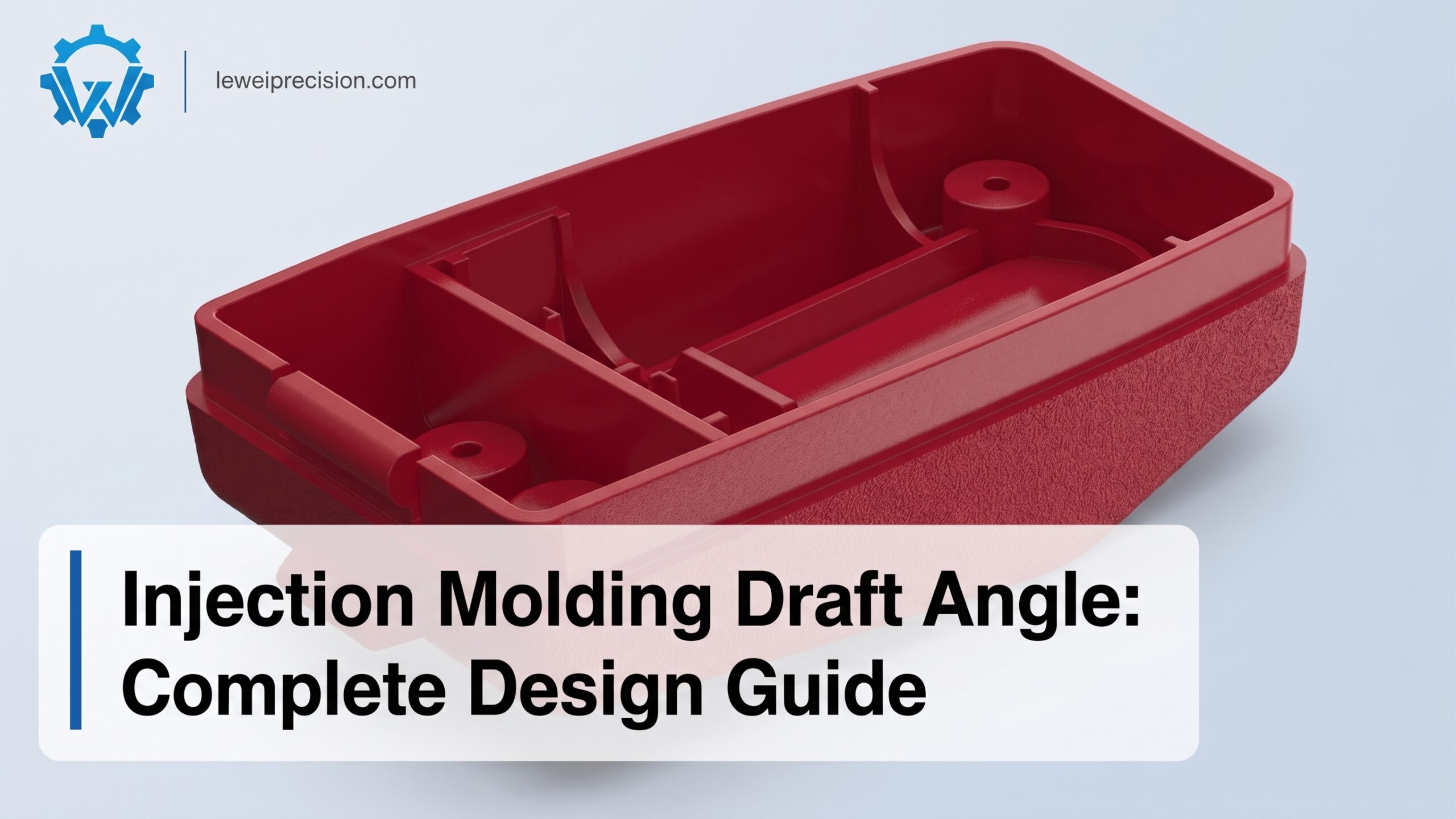
What is the correct injection molding draft angle for plastic parts? Why is draft angle important in injection molding design? How do engineers calculate the right draft angle for injection molding molds? What are the recommended injection molding draft angle guidelines for different materials?
Injection molding draft angle is the slight taper added to the vertical walls of a molded part to allow smooth removal from the mold. The correct draft angle reduces friction, prevents surface damage, and improves mold life. Most plastic parts require draft angles because straight walls can create strong resistance during ejection.
In injection molding design, draft angle plays an important role in part quality, production speed, and manufacturing cost. A properly designed draft angle helps manufacturers produce consistent parts with fewer defects. This guide explains draft angle for injection molding, recommended design rules, calculation methods, and practical considerations used by professional manufacturers.
What Is Injection Molding Draft Angle?
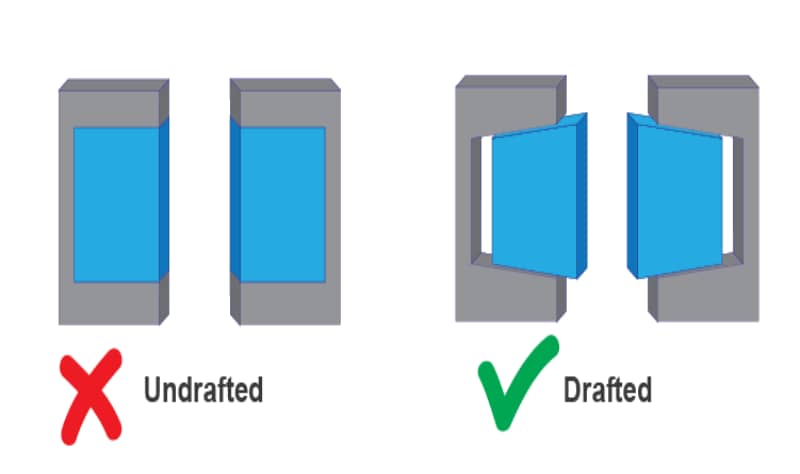
Injection molding draft angle refers to the angle applied to the vertical surfaces of a plastic component that allows the part to separate easily from the mold cavity.
During injection molding, molten plastic fills the mold and cools into the final shape. After cooling, ejector pins push the part out of the mold. If the walls are completely straight, the part can stick because the plastic shrinks slightly and grips the mold surface.
Adding a small taper creates clearance between the part and mold wall. This makes ejection smoother and reduces the risk of scratches, deformation, and damage.
For manufacturers, draft angle is not just a design preference. It is a necessary feature that affects mold performance and product quality.
Why Is Draft Angle Important in Injection Molding?
A missing or insufficient draft angle can create several manufacturing problems. Parts may require extra force during ejection, which can damage the surface or cause cracks.
A proper draft angle provides multiple benefits:
| Benefit | Impact on Manufacturing |
| Easier part removal | Reduces sticking and ejection problems |
| Better surface quality | Prevents scratches and marks |
| Longer mold life | Reduces wear on mold surfaces |
| Producción más rápida | Improves cycle time consistency |
| Costes más bajos | Reduces defects and rework |
Draft angle also improves the overall efficiency of injection molding production. When parts release smoothly, manufacturers can maintain stable production rates and reduce downtime.
You can also learn more about manufacturing preparation in our guide on Injection Molding Design Guidelines.
Recommended Injection Molding Draft Angle Guidelines
The required draft angle depends on several factors, including material type, surface finish, wall depth, and mold texture.
There is no single draft angle that works for every application. Smooth surfaces usually require smaller angles, while textured surfaces need larger angles because the texture increases friction during ejection.
Common recommendations include:
| Part Surface Condition | Recommended Draft Angle |
| Smooth polished surface | 0.5° to 1° |
| Standard textured surface | 1° to 3° |
| Heavy texture or deep patterns | 3° or more |
| Deep ribs and tall walls | Additional draft may be required |
These values are general guidelines. The final design should consider the specific material and mold requirements.
How to Choose the Right Draft Angle for Injection Molding
Selecting the correct draft angle for injection molding requires balancing design appearance and manufacturing needs.
Consider Material Shrinkage
Different plastics shrink at different rates after cooling. Materials with higher shrinkage may grip the mold more tightly and require additional draft.
For example, engineering plastics used in automotive and industrial components may need more careful draft planning compared with basic plastics.
Consider Surface Texture
Textured surfaces require more draft because the texture creates additional resistance. A deep textured finish may need several degrees of draft to prevent damage.
Consider Wall Height
Taller walls usually need larger draft angles. A small draft may work for short walls but create problems on deeper features.
Consider Mold Direction
Engineers must decide the direction in which the part will leave the mold. Draft angles should support the natural ejection direction without creating undercuts.
For complex plastic components, professional mold analysis helps identify potential issues before production begins.
Injection Molding Draft Angle Calculation
Injection molding draft angle calculation is based on the relationship between wall height and the amount of clearance needed for easy removal.
A simple way to understand draft is:
Draft clearance = Wall height × Draft angle effect
For example, a tall wall with a small draft angle creates more clearance difference between the top and bottom sections of the part.
However, real calculations depend on mold design, material shrinkage, surface finish, and tooling conditions.
Professional engineers usually evaluate:
- Part depth
- Material properties
- Mold surface finish
- Ejection method
- Required appearance
Using CAD software, designers can analyze draft angles before manufacturing. This prevents expensive mold changes after production starts.
Common Draft Angle Problems and Solutions
Poor draft design can create several issues during injection molding.
Part Sticking in the Mold
When walls have little or no draft, plastic parts may stick to mold surfaces.
Solution: Increase draft angle and review mold surface conditions.
Ejector Marks
High ejection force can leave visible marks on the product.
Solution: Improve draft design and optimize ejector placement.
Surface Scratches
Parts may scrape against the mold during removal.
Solution: Add suitable draft based on surface texture and material.
Mold Damage
Repeated force during ejection can damage mold components.
Solution: Use proper draft angles during the initial design stage.
Draft Angle Requirements for Different Plastic Parts
Different products have different draft requirements based on their function and appearance.
Consumer products with visible surfaces often need careful draft planning because appearance is important. Industrial parts may prioritize strength and function over appearance.
Entre sus aplicaciones más habituales se incluyen:
- Automotive plastic components
- Medical device housings
- Electronic enclosures
- Consumer product covers
- Industrial components
For high precision plastic components, combining good design practices with advanced manufacturing methods creates better results.
Lewei Precision ofrece servicios profesionales Injection Molding Services for prototype and production parts with engineering support.
Draft Angle vs Undercut Design in Injection Molding
Draft angle and undercut design solve different molding challenges. Draft helps remove parts from the mold, while undercuts create features that lock or retain components.
| Característica | Ángulo de calado | Undercut Design |
| Objetivo principal | Helps part release | Creates locking features |
| Mold Removal | Easier ejection | Requires special mechanisms |
| Complejidad del diseño | Simple improvement | More complex tooling |
| Manufacturing Cost | Normalmente inferior | Often higher |
Some parts require both draft angles and undercuts. In these cases, engineers must carefully plan mold actions and tooling requirements.
You can read more about complex geometry planning in our article Tipos de socavados en el mecanizado CNC.
How Manufacturers Improve Draft Angle Design
Experienced manufacturers review draft angles during the early design stage. This process is known as design for manufacturability.
Engineers analyze:
- CAD geometry
- Mold opening direction
- Selección de materiales
- Surface requirements
- Production volume
Early design review helps avoid mold modifications and reduces production delays.
A professional manufacturing partner can suggest improvements that maintain product appearance while making production easier.
Best Practices for Injection Molding Draft Angle Design
Good draft design follows a few important principles:
Use consistent draft angles whenever possible. Avoid sudden changes in wall direction because they can create molding problems.
Add more draft for textured surfaces. Deep textures need additional clearance to prevent damage.
Consider the final application of the part. Decorative parts may require different draft decisions compared with hidden mechanical components.
Review the design before creating molds. Changes after mold production can be expensive and time consuming.
Reflexiones finales
Injection molding draft angle is a critical part of successful plastic product design. A correct draft angle improves mold release, reduces manufacturing problems, and helps produce high quality parts.
Following proper injection molding draft angle guidelines during the design stage saves time and reduces production costs. Engineers should consider material, surface finish, wall depth, and mold requirements before selecting the final draft angle.
By working with an experienced manufacturing partner and applying proper design principles, companies can create reliable injection molded products with better performance and consistent quality.
For more manufacturing solutions, explore Lewei Precision’s Servicios de mecanizado CNC and professional production support.
Preguntas frecuentes
What is the standard draft angle for injection molding?
The standard draft angle is usually between 0.5° and 3° depending on the surface finish, material, and part design. Textured surfaces often require larger angles.
Why is draft angle needed in injection molding?
Draft angle allows molded parts to release easily from the mold. It reduces sticking, surface damage, and unnecessary stress during ejection.
How is injection molding draft angle calculated?
Draft angle calculation depends on wall height, material shrinkage, mold texture, and required clearance. CAD tools are commonly used for accurate analysis.
Can injection molding parts be made without draft angles?
Some small parts may work with minimal draft, but most molded components require draft to prevent ejection problems and mold damage.
Does surface texture affect draft angle requirements?
Yes, textured surfaces require more draft because the texture increases friction between the part and mold surface.
Sobre el autor
SOBRE EL AUTOR
Equipo de Ingeniería de Precisión de Lewei — Ingenieros de fabricación de Lewei Precision: El equipo de ingeniería de Lewei Precision lleva más de 21 años dedicándose al mecanizado y moldeado de piezas para clientes de los sectores aeroespacial, médico, de la automoción y de los semiconductores en más de 120 países. Nuestra fábrica lleva a cabo mecanizados CNC de 3 a 5 ejes, torneado, moldeo por inyección y fabricación de chapa metálica bajo los sistemas de calidad ISO 9001:2015, ISO 13485, ISO 14001 e IATF 16949. Las orientaciones que aquí ofrecemos reflejan lo que observamos cada semana en las plantas de producción reales y en las revisiones de DFM (diseño para la fabricación) de nuestros clientes, no son meras teorías de manual. ¿Tienes una pieza delante? Envíanos el archivo CAD y te diremos exactamente cómo la fabricaríamos.

 English
  简体中文
简体中文  Español
  Deutsch (Sie)
  日本語
日本語  Português