
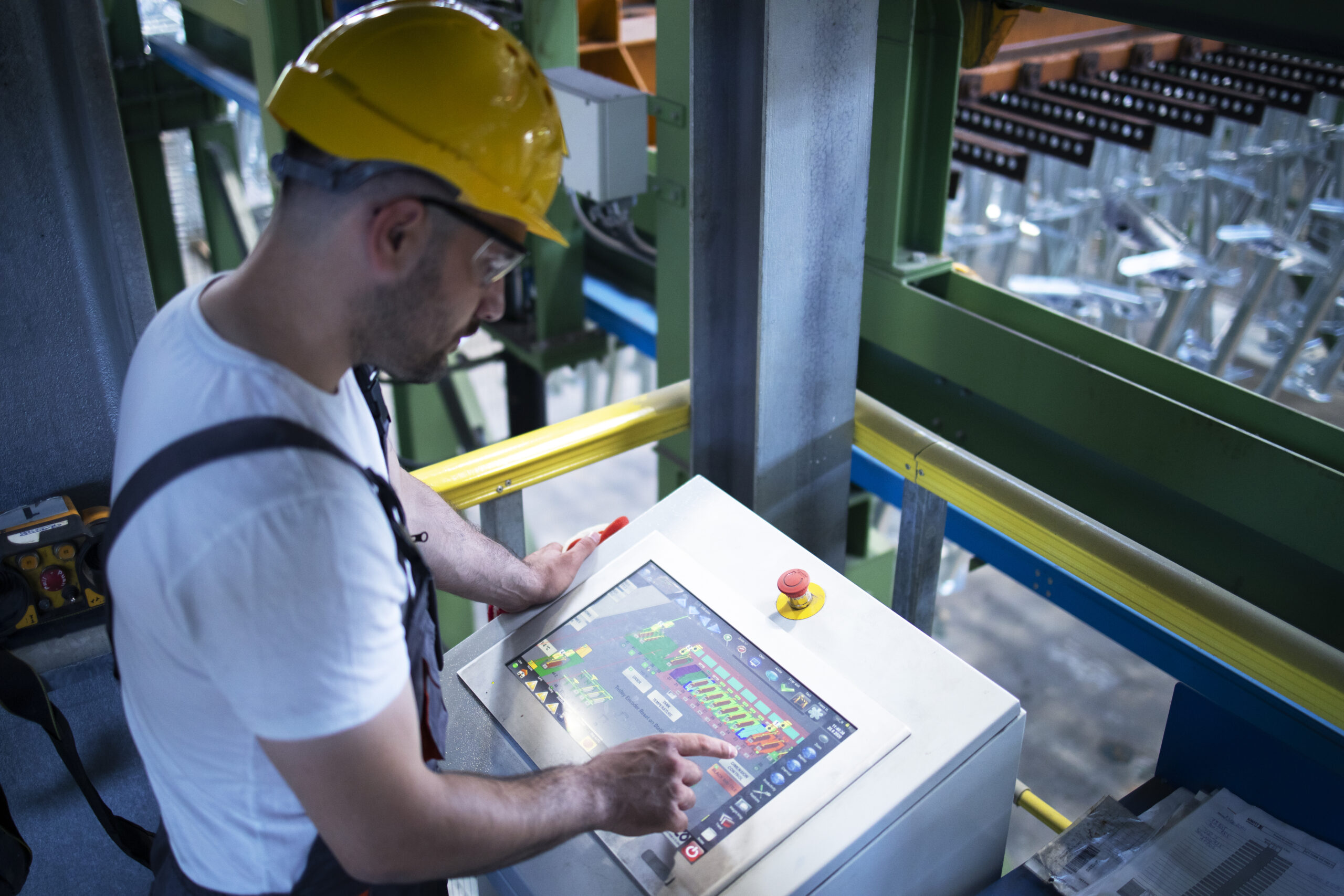
El mecanizado CNC para centros de datos de IA se utiliza para fabricar colectores de refrigeración a medida, cuerpos de placas de refrigeración, componentes de bombas y válvulas, racores de precisión, bases de transferencia térmica, componentes de potencia de cobre, herrajes para racks, carcasas de equipos y otras piezas en las que son fundamentales el sellado, la alineación, el contacto térmico o la precisión dimensional.
Esta guía explica qué papel desempeña el mecanizado de precisión en el desarrollo de la infraestructura de IA de EE. UU. en 2026, qué componentes se benefician más de él, qué materiales se suelen tener en cuenta y cómo deben preparar los ingenieros el hardware de los centros de datos para su fabricación.
Por qué los centros de datos de IA están generando nuevas demandas en el sector de la fabricación mecánica
La infraestructura de IA no se limita únicamente al sector de los semiconductores.
Todas las GPU, CPU, sistemas de memoria, conmutadores de red, convertidores de potencia y dispositivos de almacenamiento funcionan, en última instancia, dentro de un entorno físico, mecánico y térmico.
A medida que aumenta la densidad de cálculo, ese entorno se vuelve más difícil de gestionar.
El Departamento de Energía de EE. UU. informó de que los centros de datos consumieron aproximadamente 4,41 TP3T del total de electricidad de EE. UU. en 2023 y estimó que el consumo podría alcanzar aproximadamente De 6,71 TP3T a 121 TP3T para 2028. Este crecimiento se debe, en gran medida, al aumento de las necesidades informáticas, incluida la inteligencia artificial. Informe del Departamento de Energía de EE. UU. sobre el consumo energético de los centros de datos.
Un mayor consumo eléctrico en los equipos informáticos también implica que hay que gestionar una mayor cantidad de calor.
Esa es una de las razones por las que la refrigeración líquida directa ha cobrado cada vez más importancia en las infraestructuras de alta densidad.
El papel de las piezas mecanizadas por CNC en un centro de datos de IA
Una forma útil de comprender esta oportunidad es dividir la infraestructura de IA en capas funcionales de hardware.
| Sistema de centro de datos | Ejemplos de componentes mecanizados con CNC | Cuestiones importantes relacionadas con la fabricación |
| Refrigeración líquida directa | Placas de refrigeración, bloques de refrigeración, colectores | Planitud, canales, superficies de sellado, orificios |
| Distribución del refrigerante | Bloques de colectores, cuerpos de válvulas, carcasas de bombas | Recorridos de flujo, conexiones roscadas, límites de presión |
| Gestión térmica | Disipadores térmicos, bases térmicas, placas de montaje | Contacto superficial, conductividad del material, planitud |
| Distribución de energía eléctrica | Bloques de terminales de cobre, piezas de interfaz para barras colectoras, placas térmicas | Conductividad, alineación, calidad de la superficie |
| Hardware del servidor | Placas de montaje, rieles, bloques de alineación, soportes | Posición, rigidez, repetibilidad del montaje |
| Hardware de redes | Carcasas de interruptores, placas térmicas, soportes para conectores | Disipación del calor, alineación de los conectores |
| Refrigeración de instalaciones | Componentes de bombas, colectores de intercambiadores de calor, bridas | Caudal, estanqueidad, resistencia a la corrosión |
| Equipos de prueba e implementación | Soportes, medidores, herramientas de alineación | Repetibilidad y control dimensional |
Por lo tanto, el mecanizado CNC admite mucho más que un único componente de servidor.
Puede darse en cualquier situación en la que un diseñador de equipos para centros de datos pase de utilizar hardware estandarizado a un interfaz mecánica personalizada.
1. Placas de refrigeración mecanizadas con CNC para la refrigeración directa del chip
Las placas de refrigeración se encuentran entre los componentes de precisión más importantes en los sistemas modernos de refrigeración de los centros de datos de IA.
Una placa de refrigeración transfiere el calor de un dispositivo electrónico de alta potencia al líquido refrigerante que circula por ella.
Entre las aplicaciones típicas se incluyen la refrigeración:
- GPU
- CPU
- Aceleradores de IA
- Chips de red de alta potencia
- Electrónica de potencia
- Memoria o componentes electrónicos auxiliares, cuando sea necesario
El concepto básico es sencillo.
Una placa metálica entra en contacto o se acopla al dispositivo generador de calor, mientras que el refrigerante circula por los conductos internos.
Fabricarlo correctamente es bastante más complicado.
Elementos que pueden requerir mecanizado CNC
Dependiendo del diseño, una placa de refrigeración puede contener:
- Canales internos de refrigeración
- Orificios de entrada y salida
- Ranuras para juntas tóricas
- Uniones roscadas
- Orificios de montaje
- Superficies de referencia de precisión
- Paredes del canal delgadas
- Interfaces de placa de cubierta
- Interfaces de sensores
- Características de localización
El fresado CNC ofrece a los ingenieros una gran flexibilidad a la hora de crear prototipos de estos diseños, ya que permite modificar la disposición de los canales sin necesidad de fabricar utillajes específicos para la fundición o el conformado.
2. Colectores de distribución de refrigerante
Mientras que las placas de refrigeración eliminan el calor del chip, los colectores distribuyen el líquido refrigerante por todo el sistema.
Un colector a nivel de rack puede incluir varias conexiones de alimentación y retorno que abastecen a servidores individuales o a circuitos de refrigeración.
Estos componentes pueden llegar a ser sorprendentemente complejos.
Un colector puede incluir:
- Pasajes internos largos
- Agujeros perforados transversalmente
- Recorridos ramificados
- Orificios roscados
- Interfaces de desconexión rápida
- Puertos para sensores
- Orificios de acceso para el mecanizado tapados
- Características de montaje
- Interfaces de válvulas
¿Por qué el mecanizado CNC es tan adecuado para los colectores?
El mecanizado CNC resulta especialmente útil cuando la arquitectura interna del flujo aún está en fase de desarrollo o cuando el volumen de producción no justifica una pieza fundida a medida.
Se puede fresar y taladrar un bloque macizo de aluminio o acero inoxidable para crear canales entrecruzados según el diseño especificado por el cliente.
En el caso de geometrías más complejas, el mecanizado multieje puede facilitar el acceso a orificios en ángulo y a múltiples caras de montaje.
3. Componentes de la bomba, la válvula y la unidad de distribución de refrigerante
Un sistema moderno de refrigeración de un centro de datos también puede incluir unidades de distribución de refrigerante, bombas, válvulas, intercambiadores de calor, sensores y los dispositivos de control correspondientes.
El mecanizado CNC permite fabricar piezas mecánicas a medida para estos sistemas, tales como:
- Carcasas de bomba
- Cuerpos de válvula
- Bloques de válvulas
- Bloques de distribución de fluidos
- Bridas
- Adaptadores de montaje
- Componentes del eje
- Connector bodies
- Sensor housings
CNC turning is often appropriate for rotational parts, while milling is better for ported blocks and irregular housings.
For parts that combine both types of geometry, mill-turn machining can sometimes reduce the number of setups.
Engineers considering cylindrical fluid components can review LEWEI Precision’s CNC turning capabilities for additional process information.
4. Precision Fittings and Liquid-Cooling Connectors
Dense server racks may contain a large number of fluid interfaces.
A small connector appears simple, but its dimensions can affect:
- Sealing
- Hose engagement
- Thread fit
- Flow restriction
- Alignment
- Assembly force
Precision turning is well suited to connectors, nipples, adapters, threaded fittings, and similar rotational hardware.
Features may include:
- External threads
- Internal threads
- O-ring lands
- Barbs
- Grooves
- Precision bores
- Hexagonal wrench flats
- Cross-holes
Live-tool turning can also machine non-rotational features without transferring the component to another machine.
For repeat production of relatively small connectors, process planning, bar feeding, tool life, inspection strategy, and deburring become as important as the nominal machine tolerance.
5. Heat Sinks and Thermal Base Plates
Liquid cooling is receiving significant attention, but air cooling has not disappeared.
Many lower-density electronics, networking systems, power supplies, storage systems, and supporting data-center devices continue to depend on conventional thermal hardware.
CNC machining can produce:
- Custom heat-sink bases
- Prototype heat sinks
- Thermal spreader plates
- Cooling housings
- Power-electronics thermal plates
- Mounting bases
For prototypes or specialized low-volume equipment, CNC milling offers design flexibility.
For very high-volume conventional heat sinks, however, extrusion, die casting, skiving, forging, or bonded-fin construction may be more economical.
This distinction matters.
CNC machining should be selected because the geometry or production requirement justifies it—not simply because the component transfers heat.
6. Copper Power-Distribution Components
AI computing places extraordinary emphasis on electrical power delivery.
Copper is widely used wherever high electrical conductivity is important.
CNC machining can be relevant to components such as:
- Custom copper terminals
- Power-distribution blocks
- Connector interfaces
- Prototype busbars
- Busbar contact blocks
- Thermal-electric interface plates
- High-current connection hardware
Copper’s conductivity makes it useful electrically and thermally, but it behaves differently during machining than aluminum or steel.
Tooling, chip formation, clamping, burr control, and surface requirements must be considered carefully.
Not every busbar should be CNC machined.
For high-volume flat or formed busbars, stamping, punching, laser cutting, bending, or dedicated busbar fabrication is generally more appropriate.
CNC machining makes the most sense where the design includes:
- Thick conductive blocks
- Precision contact faces
- Complex drilled or tapped features
- Custom prototypes
- Tight positional relationships
- Three-dimensional geometry
7. Rack, Chassis, and Alignment Hardware
AI server racks are increasingly dense mechanical assemblies.
Many of their largest structures are manufactured through sheet-metal fabrication rather than CNC machining.
Precision machining still has a place, particularly for:
- Alignment blocks
- Locating pins
- Structural mounting plates
- Precision brackets
- Rail components
- Equipment adapters
- Service-tool interfaces
- Cable-management hardware
- Chassis interface components
The decision comes down to functional need.
If a bracket simply holds a cable tray, sheet metal may be perfectly adequate.
If a machined plate locates several high-value systems relative to a common datum, CNC machining may be justified.
The Materials That Matter Most for AI Data-Center Components
Material selection should begin with the component’s function.
There is no universal “best data-center material.”
Aluminio
Aluminum—particularly common engineering grades such as 6061—is attractive for many data-center applications because it combines:
- Low density
- Good machinability
- Useful thermal conductivity
- Resistencia a la corrosión
- Availability
- Compatibility with several surface treatments
Typical applications can include:
- Cold-plate bodies
- Coolant manifolds
- Heat-sink bases
- Equipment housings
- Mounting plates
- Structural hardware
LEWEI Precision’s Servicio de mecanizado CNC lists several machinable aluminum grades, including 6061, 6082, 7075, and 2024.
Cobre
Copper is highly attractive when electrical or thermal conductivity dominates the design.
Potential uses include:
- Processor cold plates
- Heat spreaders
- Terminales eléctricos
- Power-distribution blocks
- Thermal interfaces
LEWEI lists C110 and C101 among its supported copper grades.
The tradeoff is that copper is heavier and generally more demanding to machine efficiently than aluminum.
Cost can also become significant for large components.
Acero inoxidable
Stainless steel may be preferred where the priority is:
- Resistencia a la corrosión
- Mechanical strength
- Thread durability
- Fluid-system compatibility
- Robust fittings or housings
Latón
Brass offers good machinability and is widely used in many fluid and electrical components.
Possible uses include:
- Fittings
- Adapters
- Valve components
- Conectores
- Electrical hardware
Its suitability depends on fluid chemistry, pressure, regulatory requirements, and surrounding materials.
Plásticos técnicos
Not every precision component in an AI data center needs to be metallic.
Engineering plastics such as PEEK, POM, nylon, PTFE, or polycarbonate may be useful for:
- Electrical insulation
- Spacers
- Guides
- Bushings
- Low-load brackets
- Cable-management components
- Fluid-system parts where chemically appropriate
The material must be selected for actual temperature, load, electrical, fire, chemical, and dimensional requirements.
Aluminum vs. Copper for AI Cooling Parts
This is one of the most common engineering tradeoffs.
| Factor | Aluminio | Cobre |
| Thermal conductivity | Bien | Más alto |
| Electrical conductivity | Moderado | Excelente |
| Peso | Baja | Más alto |
| Maquinabilidad | Generally favorable | More demanding |
| Coste del material | Normalmente inferior | Normalmente más alto |
| Structural use | Very practical | Less common |
| Heat-spreading applications | Bien | Excelente |
| Large manifold bodies | Often practical | Can become heavy and expensive |
The decision should be made at system level.
A copper cold plate may improve thermal performance, but an aluminum design could offer substantial weight and cost benefits.
Hybrid constructions may also be possible, but joining different metals creates additional manufacturing and galvanic-corrosion considerations.
Galvanic Corrosion Cannot Be Ignored
Liquid-cooling loops may combine several metals.
When dissimilar metals are electrically connected in the presence of a conductive fluid, galvanic corrosion can become a concern.
CNC machining does not solve this problem.
The engineering team must define:
- Approved materials
- Coolant chemistry
- Recubrimientos
- Inhibitors
- Surface treatments
- Isolation strategies
- Compatibility requirements
Changing a manifold from stainless steel to aluminum purely to reduce machining cost could create system-level problems if the rest of the cooling loop was designed around another material system.
Manufacturing decisions should therefore remain tied to the thermal-fluid design.
Which CNC Processes Are Most Useful for AI Infrastructure Hardware?
Different components require different machines.
Fresado CNC de 3 ejes
3-axis milling is often sufficient for:
- Flat thermal plates
- Simple cold-plate bodies
- Corchetes
- Equipment mounts
- Basic manifolds
- Housings
- Accesorios
When the component can be accessed efficiently from a limited number of orientations, 3-axis milling is usually the simpler and more economical choice.
4-Axis Machining
A fourth rotary axis becomes useful when a component includes features around several sides.
Examples include:
- Multi-port manifolds
- Rotational fixtures
- Connector housings
- Parts with repeated radial features
Reducing manual repositioning can improve both efficiency and feature relationships.
Mecanizado CNC de 5 ejes
Complex data-center hardware may contain:
- Angled fluid ports
- Multi-sided mounting surfaces
- Difficult tool-access areas
- Compound-angle features
- Integrated flow and structural geometry
In these cases, Mecanizado CNC de 5 ejes can reduce setups and improve access to multiple surfaces.
That does not mean every cold plate or manifold requires five axes.
A good manufacturer should use the least complex machining strategy that reliably meets the drawing.
Torneado CNC
Turning is ideal for:
- Fittings
- Bushings
- Alfileres
- Connector bodies
- Shafts
- Valve components
- Threaded adapters
For large production quantities of rotational parts, automated turning can provide significant cost advantages.
Precision Machining and Grinding
Some components contain interfaces where milling alone may not achieve the required final condition economically.
Depending on the drawing, secondary precision operations may include:
- Surface grinding
- Cylindrical grinding
- Reaming
- Honing
- EDM
- Precision finishing
De LEWEI precision machining services combine CNC processes with additional high-accuracy manufacturing options for drawing-critical features.
Leak and Pressure Testing Should Be Specified Separately
A critical distinction for buyers is that precision machining and leak testing are different manufacturing activities.
A CNC machine can create the sealing geometry and fluid passages.
It does not automatically prove that the completed assembly is leak-free.
If the component requires:
- Pressure testing
- Hydrostatic testing
- Pneumatic testing
- Pressure-decay testing
- Helium leak testing
those requirements should be stated explicitly in the RFQ along with:
- Test pressure
- Test medium
- Hold time
- Acceptance limit
- Temperature requirements
- Reporting requirements
Never assume that “CNC machined cold plate” automatically includes a specific leak-test standard.
Inspection Requirements for AI Data-Center Hardware
The inspection strategy should follow the functional risks.
Common measurement tools can include:
- CMMs
- Digital micrometers
- Medidores de altura
- Bore gauges
- Pin gauges
- Thread gauges
- Optical measurement
- Surface-roughness instruments
LEWEI’s CNC machining service states that dimensional inspection can include CMMs, optical scanning, and digital measurement, with GD&T verification and documentation options such as material reports, first-article inspection, and CMM data.
CNC Machining vs. Other Manufacturing Methods for Data-Center Parts
CNC should not be treated as the automatic answer.
| Part Type | CNC Machining Often Makes Sense When | Alternative Processes May Be Better When |
| Cold plate | Custom channels, prototypes, low-medium volume | Very high-volume design supports dedicated tooling |
| Coolant manifold | Complex ports and changing architecture | Stable very-high-volume design can be cast |
| Heat sink | Custom geometry or prototype | Standard high-volume design can be extruded/skived |
| Busbar | Thick 3D or precision contact geometry | Flat high-volume design can be stamped/formed |
| Rack panel | Tight machined interfaces required | Standard panels can be sheet-metal fabricated |
| Connector | Custom geometry or precision threads | Very high volume may justify dedicated forming processes |
This decision framework prevents overengineering.
The goal is to use precision machining where it produces measurable engineering value.
Domestic vs. International CNC Sourcing for U.S. AI Infrastructure
The rapid expansion of U.S. data-center capacity puts pressure on the manufacturing supply chain.
Some programs may require domestic manufacturing.
Others may allow global sourcing.
Domestic CNC Manufacturing May Be Preferred When
- Contract requirements specify U.S. production
- Government or defense restrictions apply
- Extremely short logistics times are needed
- Frequent supplier visits are necessary
- Very fast engineering iterations are required
- Supply-chain geography is part of the program strategy
International CNC Manufacturing May Be Considered When
- Global sourcing is permitted
- Additional capacity is required
- Production quantities make international logistics practical
- Buyers want another qualified source
- Total landed cost remains competitive
- Lead-time requirements allow overseas transport
For important AI infrastructure programs, dual sourcing may also be worth considering.
A second qualified manufacturing path can help reduce dependence on one machine shop, one region, or one production cell.
How LEWEI Precision Can Support Custom AI Infrastructure Hardware
LEWEI Precision is a CNC machining manufacturer based in Dongguan, China.
It should therefore be considered an international CNC manufacturing option rather than a U.S.-based data-center manufacturer.
Its existing custom CNC machining capabilities include machining of both metals and engineering plastics using CNC milling, turning, routing, drilling, EDM, grinding, and multi-axis equipment. The company states that its manufacturing capacity includes more than 700 CNC machines and supports prototype through production orders.
Those capabilities are relevant to drawing-controlled AI infrastructure components such as:
- Cold-plate bodies
- Cooling manifold blocks
- Fluid-system fittings
- Pump and valve hardware
- Thermal plates
- Copper terminal components
- Custom heat-sink bases
- Precision equipment mounts
- Rack alignment hardware
- Electronic equipment housings
Actual feasibility depends on the drawing, material, channel geometry, quantity, cleanliness requirements, pressure requirements, inspection documentation, and any required joining or test processes.
LEWEI’s published material range includes aluminum, copper, brass, steel, stainless steel, titanium, magnesium, and engineering plastics, giving engineers several options for cooling, structural, and electrical components.
Common Mistakes When Designing CNC Parts for AI Data Centers
Specifying Extreme Tolerances Everywhere
Tight tolerance should be tied to function.
Blanket ultra-tight requirements increase machining and inspection cost.
Treating a Cold Plate Like a Normal Aluminum Plate
Coolant channels, sealing, joining, thermal contact, cleanliness, and pressure integrity make it a system component.
Ignoring Machining Access
If an end mill cannot reach the feature, the design may require another process or a redesigned architecture.
Choosing Material Only by Thermal Conductivity
Material decisions also affect:
- Peso
- Coste
- corrosion
- maquinabilidad
- structural stiffness
- joining
- coolant compatibility
Forgetting Final-Part Distortion
Brazing, welding, heat treatment, and some surface treatments can change dimensions after machining.
Critical inspection may need to occur after the final process.
Failing to Define Cleanliness
Fluid components should not rely on an undefined instruction such as “clean before shipment.”
If cleanliness matters, define it.
Precision Manufacturing Will Remain Part of the AI Infrastructure Race
AI infrastructure growth is often discussed in terms of chips, electricity, networks, and software.
But those systems depend on physical hardware.
As racks become denser and liquid cooling becomes more common, mechanical components must control coolant, transfer heat, distribute power, align high-value equipment, and remain serviceable inside increasingly compact architectures.
That makes precision manufacturing an important part of the infrastructure stack.
CNC machining is particularly valuable where designers need:
- Custom cooling geometry
- Precision sealing interfaces
- Complex manifolds
- Copper power components
- Multi-sided hardware
- Prototipos rápidos
- Controlled production parts
- Flexible engineering changes
The key is to use it selectively.
A strong design combines CNC machining with sheet metal, extrusion, casting, brazing, stamping, and other processes according to what each component actually requires.
For U.S. AI infrastructure companies open to international manufacturing, LEWEI Precision’s Servicios de mecanizado CNC can support drawing-based evaluation of custom metal and plastic components from prototype through production.
Provide the CAD model, engineering drawing, material, quantity, tolerance, thermal or fluid requirements, inspection documentation, and required secondary processes so the manufacturing route can be evaluated against the actual component.
Preguntas frecuentes
What CNC-machined parts are used in AI data centers?
CNC-machined data-center parts can include liquid-cooling cold plates, coolant manifolds, valve bodies, pump components, precision fittings, thermal plates, custom heat sinks, copper terminal components, mounting plates, alignment blocks, rack hardware, and electronic equipment housings. The exact process depends on the design and production quantity.
Why is CNC machining important for AI data center cooling?
CNC machining allows engineers to manufacture custom flow channels, sealing surfaces, threaded ports, thermal interfaces, and mounting features with controlled geometry. It is especially valuable for prototype and specialized liquid-cooling components where designs change quickly or complex features make standard fabrication processes unsuitable.
What is direct-to-chip cooling?
Direct-to-chip cooling transfers heat from high-power processors or accelerators into a liquid coolant through cold plates mounted at or near the heat-generating devices. The coolant then carries that heat toward other parts of the technology cooling system.
Are AI data centers moving toward liquid cooling?
Liquid cooling is becoming increasingly important as computing densities rise. Current industry guidance and high-density rack designs include direct liquid cooling, cold plates, rack manifolds, coolant distribution equipment, and related infrastructure. Air cooling remains appropriate in many other parts of the data center.
Is aluminum or copper better for data-center cold plates?
Copper generally provides higher thermal conductivity, while aluminum offers lower weight, favorable machinability, and typically lower material cost. The right material depends on thermal requirements, weight, coolant compatibility, corrosion strategy, joining method, and total system design.
Can LEWEI Precision manufacture components for AI data-center systems?
LEWEI Precision’s existing CNC machining capabilities support custom metal and engineering-plastic components using milling, turning, multi-axis machining, EDM, drilling, and grinding. Whether a specific data-center component is suitable depends on the engineering drawing, material, tolerance, fluid-system requirements, quantity, and required testing or documentation.
SOBRE EL AUTOR
SOBRE EL AUTOR
Equipo de Ingeniería de Precisión de Lewei — Ingenieros de fabricación de Lewei Precision: El equipo de ingeniería de Lewei Precision lleva más de 21 años dedicándose al mecanizado y moldeado de piezas para clientes de los sectores aeroespacial, médico, de la automoción y de los semiconductores en más de 120 países. Nuestra fábrica lleva a cabo mecanizados CNC de 3 a 5 ejes, torneado, moldeo por inyección y fabricación de chapa metálica bajo los sistemas de calidad ISO 9001:2015, ISO 13485, ISO 14001 e IATF 16949. Las orientaciones que aquí ofrecemos reflejan lo que observamos cada semana en las plantas de producción reales y en las revisiones de DFM (diseño para la fabricación) de los clientes, no la teoría de los libros de texto. ¿Tienes una pieza delante? Envíanos el archivo CAD y te diremos exactamente cómo la fabricaríamos.

 English
  简体中文
简体中文  Español
  Deutsch (Sie)
  日本語
日本語  Português