
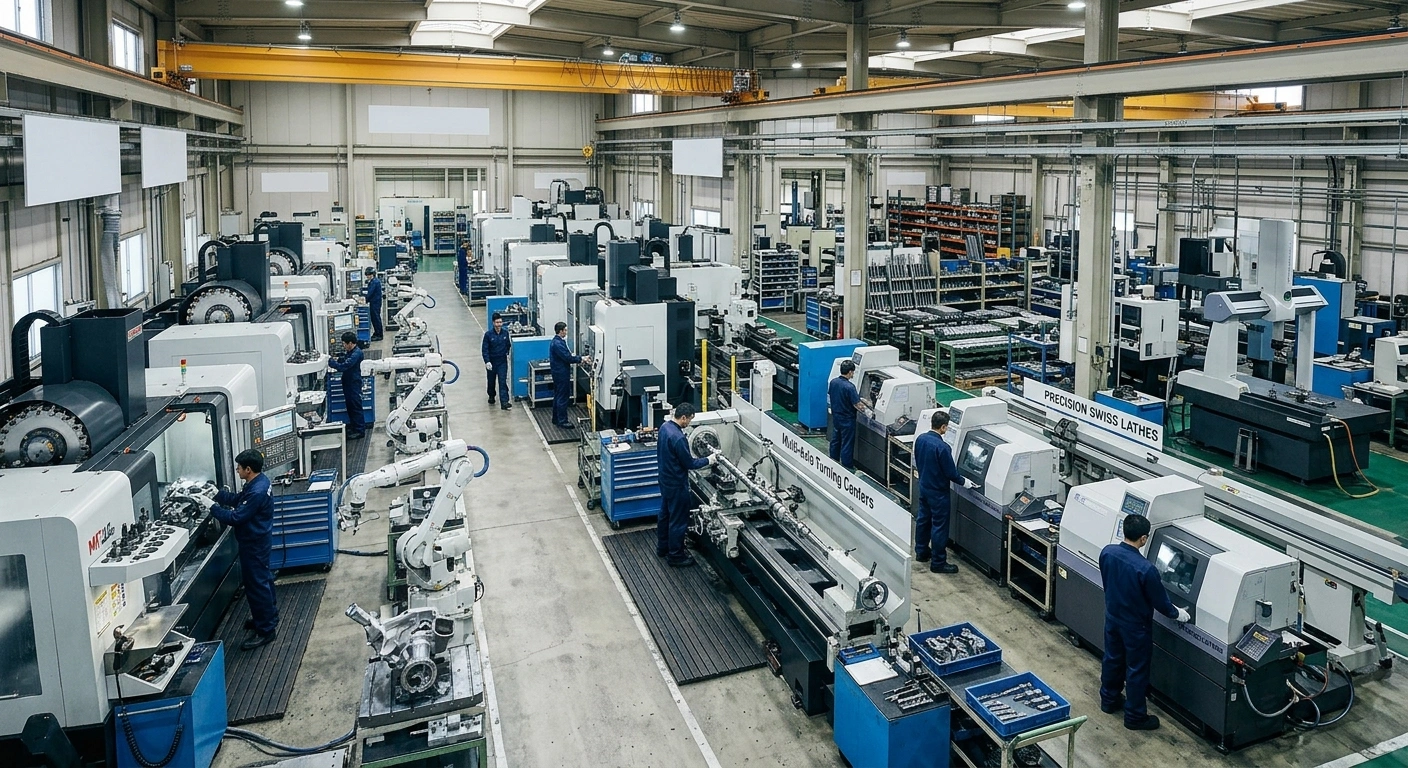
Who are the best US CNC manufacturers for precision machining, CNC milling, CNC turning, rapid prototyping, and production parts in 2026? Which CNC manufacturers are suitable for aerospace, medical, automotive, electronics, robotics, and industrial components? What should engineers and procurement teams compare before selecting a CNC machining supplier?
The best US CNC manufacturers depend on the part requirements rather than a single overall ranking. Protolabs, Xometry, Fictiv, Owens Industries, Pioneer Service, Plethora, Quickparts, Hy-Tech Machining, and Tech Manufacturing are among the companies worth evaluating for different machining needs. Lewei Precision is also an option for US buyers seeking an international manufacturing partner with CNC machining, multi-axis production, and scalable capacity. The right supplier should be evaluated by machining capability, tolerances, materials, certifications, inspection, production volume, lead time, and total landed cost.
What Should You Look for in a US CNC Manufacturer?
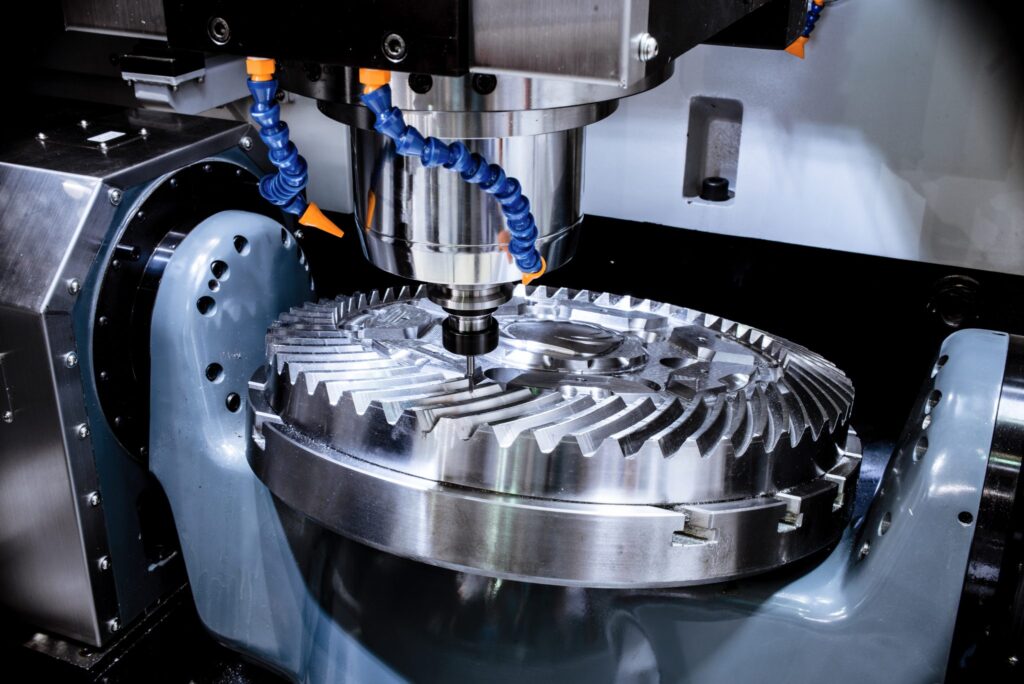
CNC machining remains one of the most widely used methods for producing accurate metal and plastic components. The process uses computer-controlled cutting tools to remove material from a workpiece according to CAD geometry. Depending on the design, manufacturers may use 3-axis, 4-axis, or 5-axis milling, CNC turning, drilling, routing, EDM, or secondary finishing.
For buyers, the challenge is not simply finding a company that owns CNC machines. A capable manufacturer must be able to consistently produce parts according to engineering drawings and specifications.
A strong supplier should provide clear information about tolerances, materials, machine capabilities, inspection methods, surface finishes, quality certifications, and production capacity. For regulated applications, certifications and traceability can become just as important as machine capability.
Lewei Precision, for example, describes engineering review, CAM programming, multi-axis machining, CMM inspection, GD&T verification, and material documentation as parts of its CNC workflow. Its published capabilities include 3-axis, 4-axis, and 5-axis machining for metal and plastic components.
Businesses that are still comparing manufacturing processes can also read Lewei Precision’s CNC Machining vs. 3D Printing: Differences and Comparison to determine which process is more appropriate for a particular part.
Top 10 US CNC Manufacturers and Machining Companies
The companies below are not ranked solely by company size. They represent different CNC manufacturing models, including digital manufacturing platforms, specialized precision machine shops, rapid prototyping providers, and production machining companies.
| Empresa | Punto fuerte | Lo mejor para | Manufacturing Model |
| Protolabs | Rapid CNC manufacturing | Prototypes and production | Digital manufacturer |
| Xometry | Broad supplier network | Prototypes to production | Manufacturing marketplace |
| Fictiv | Engineering-focused sourcing | Product development | Digital manufacturing platform |
| Owens Industries | Ultra-precision machining | Complex tight-tolerance parts | Specialized manufacturer |
| Pioneer Service | Swiss CNC machining | Pequeños componentes de precisión | Direct manufacturer |
| Plethora | Automated CNC manufacturing | Prototipos rápidos | Digital manufacturer |
| Quickparts | Rapid manufacturing | Prototypes and low-volume production | Manufacturing service |
| Hy-Tech Machining | Precision production | Aerospace and industrial parts | Contract manufacturer |
| Fabricación tecnológica | CNC production | Industrial and precision parts | Direct manufacturer |
| Precisión Lewei | Scalable precision manufacturing | US buyers, prototypes to production | International manufacturer |
1. Protolabs
Protolabs is one of the better-known digital manufacturing companies serving US customers. Its CNC machining service focuses on rapid production, automated design analysis, online quoting, and domestic manufacturing support.
The company states that customers can upload a 3D CAD file and receive manufacturing analysis that identifies potentially difficult features before production. Its CNC service is designed for rapid iterations as well as production requirements.
Protolabs also lists ISO 9001:2015, ISO 13485, AS9100D, and ITAR-related capabilities across its manufacturing operations and services.
It can be a strong choice when speed, digital quoting, and rapid prototype development are major priorities.
2. Xometry
Xometry operates a large manufacturing network and provides online CNC machining for custom metal and plastic parts. Its platform supports rapid prototypes, small-batch machining, and high-volume production.
Xometry says its CNC machining service connects customers with a vetted network of more than 5,000 suppliers and supports materials ranging from aluminum and acetal to titanium and engineered plastics. It also lists ISO 9001:2015, ISO 13485, IATF 16949:2016, AS9100D, and ITAR registration among its quality and compliance capabilities.
The platform can be particularly useful for buyers who need access to different manufacturing capabilities without contacting individual machine shops separately.
3. Fictiv
Fictiv combines digital manufacturing with engineering and supply-chain support. Its CNC machining resources cover materials, tolerances, surface finishes, design requirements, and production considerations.
Fictiv’s current CNC specifications state support for more than 45 materials, tight tolerances, and a range of surface-finishing options. Its published guidance also encourages engineers to consider function, tolerancing, quantity, assembly context, material selection, and surface-finish requirements before manufacturing.
This approach makes Fictiv relevant for product teams that need engineering guidance alongside CNC production.
4. Owens Industries
Owens Industries is known for precision machining of complex components. It is frequently included among US precision machining suppliers for industries where tight tolerances and difficult geometries are important.
The company is particularly relevant to buyers looking for high-precision machining rather than general-purpose CNC production. For aerospace, medical, optics, and other technically demanding applications, buyers should review the supplier’s current certifications, inspection capabilities, material experience, and tolerance requirements before placing an order.
5. Pioneer Service
Pioneer Service is a US precision machining company with expertise in CNC Swiss machining and related production work. Swiss machining is particularly useful for small, precise components where multiple features must be produced efficiently.
Typical applications include medical, electronics, aerospace, and industrial components. Its position as a specialized machining supplier makes it different from large digital marketplaces that distribute jobs across multiple manufacturing partners.
For buyers requiring small-diameter components, turned parts, and repeat production, a specialist such as Pioneer Service may be more suitable than a general manufacturing marketplace.
6. Plethora
Plethora focuses on automated CNC manufacturing and digital production workflows. Its approach is particularly relevant to product development teams that want rapid feedback between design and manufacturing.
Automated manufacturing analysis can help identify difficult features, reduce unnecessary design revisions, and accelerate prototype development. This model is useful when engineers are working through several design iterations before committing to a production design.
7. Quickparts
Quickparts provides rapid manufacturing services for prototypes and low-volume production. CNC machining is part of a broader manufacturing offering that can support product development when companies need physical parts without establishing their own machining infrastructure.
The company is particularly relevant for organizations that need to move quickly from CAD data to physical components. Buyers should still compare material availability, tolerances, inspection documentation, finishing, and production location for each project.
8. Hy-Tech Machining
Hy-Tech Machining is a precision manufacturing company serving demanding industrial applications. Its capabilities include CNC machining and production support for customers requiring engineered components.
Specialized machining companies such as Hy-Tech can be useful when the project requires closer collaboration between the manufacturer’s engineering team and the customer’s design team. This can become especially important for parts involving difficult materials, complex setups, or strict inspection requirements.
9. Tech Manufacturing
Tech Manufacturing is another US-based precision machining option for industrial customers. Its capabilities cover CNC machining and related manufacturing requirements.
Companies evaluating a supplier like Tech Manufacturing should focus on the specific capabilities required for the project rather than relying only on general claims about precision. Machine type, maximum work envelope, material experience, inspection equipment, production volume, and certifications should all be confirmed during supplier qualification.
10. Lewei Precision
Lewei Precision is different from the US-based manufacturers listed above. It is headquartered in Dongguan, China, and operates a global manufacturing network rather than presenting itself as a US domestic manufacturer. Its inclusion is useful for US buyers who are open to international sourcing and want to compare domestic manufacturing with overseas production.
Lewei specializes in CNC machining, injection molding, sheet metal fabrication, and 3D printing. Its CNC operation includes more than 700 CNC machines, with 3-axis, 4-axis, and 5-axis capabilities, along with milling, turning, routing, EDM, drilling, and precision grinding.
Its published quality workflow includes CMM inspection, optical scanning, digital measurement, GD&T verification, surface-finish testing, material documentation, FAI reports, and CMM data sheets.
For US companies comparing suppliers, Lewei can therefore be considered when international manufacturing provides an acceptable balance of cost, capacity, engineering support, and delivery requirements.
US CNC Manufacturers Compared by Application
Different CNC projects require different manufacturing capabilities. A company that is excellent for a one-off prototype may not be the right choice for 50,000 production components.
| Solicitud | Important Selection Factors | Companies to Consider |
| Prototipos rápidos | Fast quoting, DFM feedback, short lead times | Protolabs, Plethora, Fictiv |
| Producción a pequeña escala | Flexible quantities, repeatability, finishing | Xometry, Quickparts, Lewei Precision |
| Tight-tolerance parts | Inspection, CMM, specialized machining | Owens Industries, Pioneer Service |
| Aeroespacial | AS9100, traceability, inspection, complex machining | Protolabs, Xometry, specialized US shops |
| Medical components | ISO 13485, documentation, precision | Protolabs, Xometry, Fictiv |
| Small turned components | Swiss machining, tooling expertise | Pioneer Service |
| High-volume manufacturing | Capacity, process control, quality systems | Xometry, Lewei Precision, production specialists |
| International sourcing | Capacity, cost, engineering support | Precisión Lewei |
How to Choose the Right CNC Manufacturer
The first step is to define the part requirements. A manufacturer cannot accurately quote a CNC component without understanding its geometry, material, quantity, tolerances, surface finish, and delivery requirements.
Your CAD model should be accompanied by a technical drawing when critical dimensions or GD&T requirements need to be controlled. The drawing should identify datums, tolerances, threads, surface finishes, and other features that cannot be interpreted reliably from a basic 3D model alone.
Material selection is another major factor. Aluminum is often chosen for its low weight and machinability. Stainless steel can provide corrosion resistance and strength. Titanium is useful where high strength-to-weight performance is important, but it can increase machining difficulty and cost. Engineering plastics such as PEEK are appropriate for specialized applications involving chemical, thermal, or mechanical requirements.
Lewei’s CNC machining service lists aluminum, copper, brass, tool steel, steel, stainless steel, magnesium, titanium, PEEK, and other materials among its available options.
For a deeper understanding of material selection, buyers can also review Lewei Precision’s Guía de materiales de mecanizado CNC if the page is relevant to their specific project.
Why CNC Tolerances Matter
Tolerance is one of the most important factors when selecting a CNC manufacturer. A supplier may advertise high precision, but what matters is whether it can repeatedly hold the tolerance required on the actual feature.
Not every dimension needs an extremely tight tolerance. Applying unnecessarily strict tolerances can increase machining time, inspection requirements, tooling costs, and overall part price.
Fictiv’s current CNC specification guide, for example, emphasizes determining which dimensions actually matter for the function of the part rather than automatically applying tight tolerances everywhere.
Lewei Precision publishes standard and tight tolerance ranges for its CNC machining processes and states that critical features can be inspected using CMMs and digital measurement equipment.
This is why buyers should provide complete drawings and ask suppliers to confirm the achievable tolerance before production.
CNC Milling vs. CNC Turning
CNC milling and CNC turning are both common, but they are suited to different geometries.
CNC milling uses rotating cutting tools to remove material from a stationary or positioned workpiece. It is suitable for brackets, housings, plates, pockets, slots, complex surfaces, and many prismatic components.
CNC turning rotates the workpiece while cutting tools remove material from its surface. It is especially effective for shafts, pins, bushings, sleeves, and other rotational components.
Many advanced manufacturers combine milling and turning capabilities to reduce the need for multiple suppliers. Lewei Precision, for example, provides both CNC milling and CNC turning and supports multi-axis machining for complex components.
Domestic US Manufacturing vs. International CNC Sourcing
For US companies, the decision is not always simply “US versus overseas.” The better comparison is based on the complete delivered cost and project requirements.
Domestic manufacturing can offer advantages in communication, shipping time, supplier visits, and certain regulatory or supply-chain requirements. International sourcing may offer competitive production costs, broader capacity, or access to specialized manufacturing networks.
However, lower piece pricing does not automatically mean lower total cost. Freight, customs, quality inspections, engineering communication, tooling, packaging, and inventory requirements should all be considered.
Lewei Precision operates from China and has a global manufacturing network with its own facilities and vetted manufacturing partners. Its published information states that the network includes more than 500 machines and 80+ stable suppliers.
For US buyers considering international CNC manufacturing, supplier qualification and quality documentation should therefore be completed before production begins.
What Certifications Should a CNC Manufacturer Have?
The appropriate certification depends on the industry and application. ISO 9001 is widely used for quality management. ISO 13485 is particularly relevant to medical-device manufacturing, while AS9100 is associated with aerospace quality systems. IATF 16949 is important within automotive supply chains.
Certification alone does not guarantee that a supplier is suitable for every project. Buyers should confirm that the certificate covers the relevant facility and scope of work.
Inspection capabilities are equally important. CMM inspection, material certificates, first article inspection, dimensional reports, and traceability can provide additional confidence for critical components.
Reflexiones finales
The US CNC manufacturing market includes rapid digital manufacturers, specialized precision machine shops, contract manufacturers, and large supplier networks. There is no single company that is the best choice for every project.
Engineers and procurement teams should compare manufacturers based on the actual requirements of the component. Tolerances, materials, machine configuration, quality certifications, inspection, production quantity, lead time, finishing, and total delivered cost all affect the final decision.
For companies that specifically require domestic US production, providers such as Protolabs and specialized American machine shops may be the appropriate starting point. For businesses open to international sourcing, Lewei Precision provides another option with CNC milling, CNC turning, multi-axis machining, inspection, and scalable production capacity.
The most reliable approach is to qualify suppliers against the drawing and production requirements rather than choosing solely on price or search rankings. A supplier that can consistently meet the required specification, document quality, communicate clearly, and scale with your production needs is ultimately more valuable than the supplier with the lowest initial quote.
Preguntas frecuentes
What are the best US CNC manufacturers?
Protolabs, Xometry, Fictiv, Owens Industries, Pioneer Service, Plethora, Quickparts, Hy-Tech Machining, and Tech Manufacturing are examples of CNC suppliers serving different US manufacturing requirements. The best option depends on the required material, tolerance, quantity, industry, and lead time.
What is the best CNC manufacturer for rapid prototypes?
Protolabs and other digital manufacturing providers are strong options for rapid prototyping because online quoting and automated design analysis can shorten the path from CAD to physical parts.
Which CNC manufacturer is best for production parts?
Production requirements should be evaluated based on repeatability, machine capacity, quality systems, inspection, material availability, and total production cost. Xometry, Protolabs, specialized contract manufacturers, and international providers such as Lewei Precision can all be considered depending on project requirements.
What should I send to a CNC manufacturer for a quote?
Provide a 3D CAD model, technical drawing when applicable, material specification, quantity, surface-finish requirements, critical tolerances, and desired delivery date. Providing complete information helps the manufacturer identify DFM issues and produce a more accurate quotation.
Is Lewei Precision a US CNC manufacturer?
No. Lewei Precision is based in Dongguan, China. It should be considered an international CNC manufacturing option for US buyers rather than a domestic US manufacturer. The company provides CNC machining and other manufacturing services through its own operations and manufacturing network.
Sobre el autor
SOBRE EL AUTOR
Equipo de Ingeniería de Precisión de Lewei — Ingenieros de fabricación de Lewei Precision: El equipo de ingeniería de Lewei Precision lleva más de 21 años dedicándose al mecanizado y moldeado de piezas para clientes de los sectores aeroespacial, médico, de la automoción y de los semiconductores en más de 120 países. Nuestra fábrica lleva a cabo mecanizados CNC de 3 a 5 ejes, torneado, moldeo por inyección y fabricación de chapa metálica bajo los sistemas de calidad ISO 9001:2015, ISO 13485, ISO 14001 e IATF 16949. Las orientaciones que aquí ofrecemos reflejan lo que observamos cada semana en las plantas de producción reales y en las revisiones de DFM (diseño para la fabricación) de nuestros clientes, no son meras teorías de manual. ¿Tienes una pieza delante? Envíanos el archivo CAD y te diremos exactamente cómo la fabricaríamos.

 English
  简体中文
简体中文  Español
  Deutsch (Sie)
  日本語
日本語  Português