
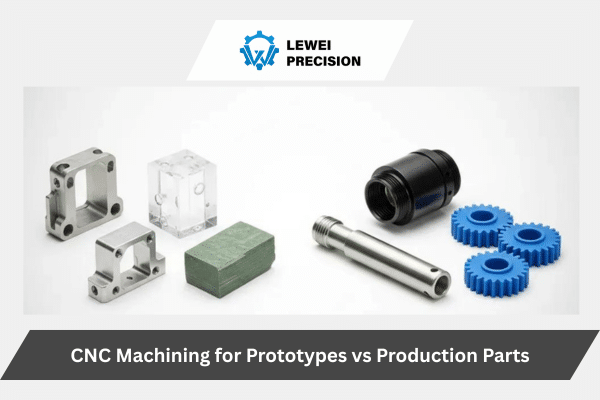
Introduction: Understanding the Distinction Between Prototypes and Production Parts
Mecanizado CNC is a versatile manufacturing process that is employed for both prototyping and production parts. While the fundamentals of the process remain the same, the strategies, expectations, and decision-making vary significantly when switching between prototype and production runs. For engineers, OEM buyers, and procurement managers, understanding these differences is critical to making informed decisions about project timelines, costs, material selection, and mecanizado approaches.
In this article, we will explore the key differences between Mecanizado CNC for prototypes and production parts, explaining how the process adapts to each. We’ll cover the practical considerations that engineers and procurement managers face on the shop floor, the trade-offs between rapid prototyping and mass production, and the real-world challenges encountered in both scenarios.
The Basics of CNC Machining: Common Ground for Prototypes and Production Parts
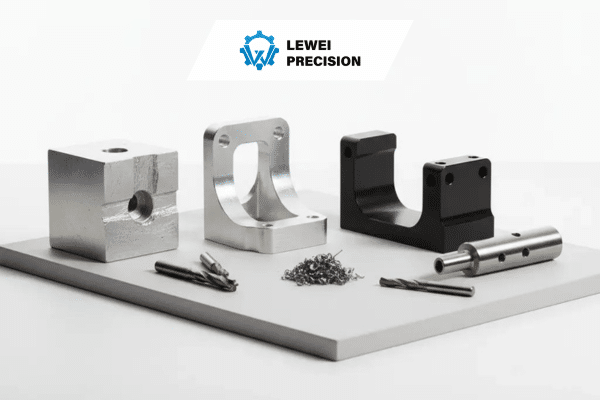
At its core, Mecanizado CNC involves using computer-controlled tools to shape a material into the desired geometry. The process utilizes digital instructions to precisely control the movement of cutting tools along multiple axes. Both prototypes and production parts share this fundamental process, whether the goal is a one-off part or thousands of identical pieces.
Core Principles of CNC Machining:
- Precisión: Máquinas CNC are capable of high precision, often down to thousandths of an inch or microns, making them ideal for both prototype and production work.
- Variedad de materiales: Máquinas CNC can handle a wide range of materiales, including metals, plastics, ceramics, and composites.
- Versatilidad: Mecanizado CNC can produce complex shapes and geometries, which is why it’s used for both prototyping and high-volume production.
Despite these shared capabilities, the methods of application, goals, and challenges differ when shifting from prototypes to production.
CNC Machining for Prototypes: Speed and Flexibility
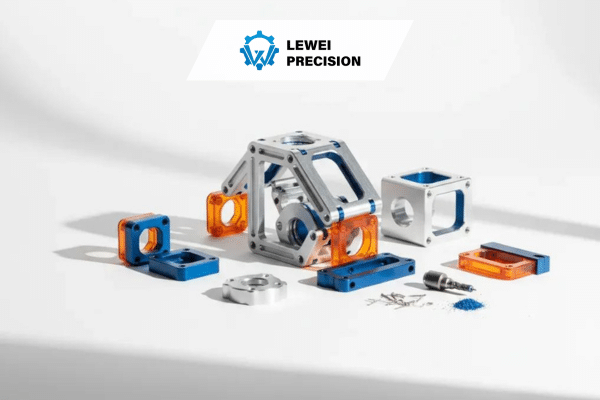
Prototypes serve as a physical representation of a design concept and are often used for testing, validation, and refining ideas before full-scale production begins. When mecanizado prototypes, the goal is often to achieve a functional part quickly, with some allowances for less-than-perfect finishes and minor dimensional tolerances.
Goals of Prototyping:
- Rapid Feedback: Prototypes must be fabricated quickly to test design concepts, fit, form, and function. The speed of iteration is crucial.
- Material Selection Testing: Often, prototyping is used to assess the behavior of materiales under mecanizado conditions, especially for new or unfamiliar materials.
- Testing and Design Refinement: Prototypes are rarely perfect in every aspect, but they must be functional enough to test for weaknesses in design, assembly, or material performance.
Key Considerations in CNC Prototyping:
- Speed Over Perfection: In prototyping, time is often more critical than precision. Therefore, engineers may prioritize faster cutting speeds or use materials that are easier to máquina, even if they aren’t the final material for production.
- Tooling Choices: Tooling for prototypes may not be as refined as for production runs. For example, standard off-the-shelf tools might be used instead of custom tools, reducing cost but possibly increasing cycle time.
- One-Off or Small-Batch Runs: Prototypes typically involve fewer parts, which means there’s less pressure to optimize tooling and setup. This results in greater flexibility in design changes or iterations.
Trade-offs and Limitations:
- Acabado superficial: Prototypes often tolerate a rougher surface finish. Since the part is being used primarily for testing, appearance is secondary to function.
- Dimensional Tolerances: Tighter tolerances can sometimes be specified for prototypes, but they are usually not as critical as for production parts. Engineering teams often rely on the prototype to provide functional insights rather than perfect precision.
- Coste: Prototypes can be expensive if not managed carefully. The use of low-cost tooling and less optimized machine settings can reduce costs, but additional time spent on setup and iteration can drive up expenses.
Example Scenario: Prototyping an Automotive Bracket
An automotive manufacturer needs to prototype a new bracket design for an engine component. The initial run uses aluminum for faster mecanizado and lower material cost. The part is machined on a 3-axis CNC mill. The goal is to test fit, function, and overall design rather than perfect finish or tight tolerances. After testing, the design is modified based on feedback and a new prototype is made.
CNC Machining for Production Parts: Efficiency and Consistency
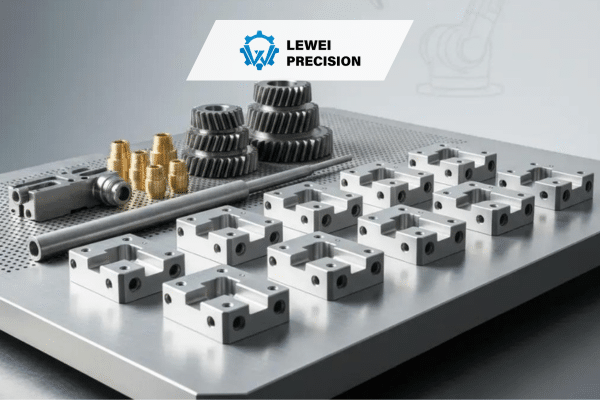
Mecanizado CNC for production parts involves large-volume manufacturing, where the primary goal is to achieve consistent, high-quality parts with minimal variation. While the fundamental proceso de mecanizadoes remain the same, the strategies shift to maximize efficiency and reduce costs.
Goals of Production Runs:
- High Consistency: Production parts require a high degree of uniformity. Each part must meet the same specifications, with minimal deviations, over potentially thousands of iterations.
- Eficiencia de costes: With high volumes, reducing the per-unit cost is critical. This is achieved through process optimization, tool wear management, and minimizing setup times.
- Quality Control: Production runs require detailed quality checks, inspections, and traceability to ensure that every part meets the necessary standards.
Key Considerations in CNC Production:
- Optimized Tooling: For production parts, custom tooling may be employed to reduce cycle time, improve accuracy, and enhance part consistency. Tooling setups are optimized for each specific part, ensuring high repeatability and minimal waste.
- Automation and Repeatability: Máquinas CNC for production are often equipped with automation features, such as automatic tool changers, part loaders, and robotic arms, to increase efficiency and reduce human error.
- Material Consistency: Production runs typically use materiales that have consistent properties to ensure uniformity in the final product. In some cases, special coatings or treatments may be applied to improve material performance.
Trade-offs and Limitations:
- Initial Setup Costs: Production runs often involve significant upfront costs in terms of setup, tooling, and fixturing. These costs must be amortized across a large number of parts to make the production cost-effective.
- Tool Wear Management: In high-volume production, tool wear can affect part quality. Engineers often implement tool wear monitoring and predictive maintenance systems to minimize downtime and ensure part consistency.
- Plazos de entrega: While production runs may take longer to set up, they often benefit from shorter lead times once the process is stabilized.
Example Scenario: CNC Machining for Aerospace Parts
A manufacturer produces precision parts for the aerospace industry, such as brackets for aircraft landing gear. These parts are made from titanium, requiring precise machining for both dimensional accuracy and material integrity. The production process uses highly specialized tools and multi-axis Máquinas CNC to achieve tight tolerances. Over 1,000 units are produced, and regular inspections and process adjustments are performed to ensure consistency. Tooling is optimized for the part’s geometry to reduce cycle times and ensure uniformity across the entire production batch.
Key Differences Between CNC Prototyping and Production Machining
1. Lead Time and Speed
- Creación de prototipos: Focuses on speed. Lead times are short as prototypes are often used to quickly test a design concept.
- Producción: Focuses on efficiency. Lead times are longer due to setup, tooling, and optimization efforts, but once in production, parts are made consistently and rapidly.
2. Tooling and Setup
- Creación de prototipos: Tooling is generally less specialized and more cost-effective. Tooling changes can be made relatively easily based on design revisions.
- Producción: Tooling is specialized and optimized for high-volume runs. The setup phase requires careful planning, and the tools must be carefully monitored for wear and tear.
3. Cost
- Creación de prototipos: Higher cost per unit due to the use of quick-turn setups and materiales. The focus is on functionality rather than cost savings.
- Producción: Lower cost per unit due to optimized tooling, materiales, and efficient machine time. The upfront investment in tooling and setup is significant but is amortized over the large production run.
4. Material Selection
- Creación de prototipos: Materials are chosen based on ease of mecanizado, cost, and the ability to quickly produce a functional part. The material choice may not be the final production material.
- Producción: Materials must meet strict requirements in terms of performance, consistency, and cost. Material selection is optimized for durability, strength, and cost-effectiveness in high-volume manufacturing.
5. Precision and Tolerances
- Creación de prototipos: Tolerances are less stringent, as prototypes are used for testing and validation rather than final use. Minor imperfections are acceptable as long as the part is functional.
- Producción: Precision is critical. Parts must meet strict tolerances to ensure proper fit, function, and performance. Every part in a production run must be consistent and meet the required standards.
Conclusion: Choosing the Right CNC Approach for Your Needs
Both CNC prototyping and production mecanizado offer unique advantages depending on the stage of the product lifecycle. Prototyping is essential for rapid design validation, iteration, and material testing, while production mecanizado focuses on efficiency, consistency, and high-volume manufacturing. Understanding the differences, trade-offs, and strategic decisions involved in both approaches allows engineers, OEM buyers, and procurement managers to make informed decisions and ultimately choose the best approach for their needs.
If you are considering Mecanizado CNC for either prototypes or production parts, a trusted partner like can help guide you through the process, offering expertise, cost-effective solutions, and reliable outcomes across both phases.
Preguntas frecuentes
What is the main difference between prototyping and production in CNC machining?
The key difference is that prototypes prioritize speed and flexibility over perfection, while production runs focus on consistency, high-volume efficiency, and cost-effectiveness. Production parts require optimized tooling, setup, and quality control.
How does tooling change between prototypes and production parts?
In prototyping, tooling is often off-the-shelf and may be reused across various designs. In production, specialized tooling is often custom-made to optimize machining times and ensure consistent quality across large batches.
Can I use the same material for both prototypes and production parts?
While it’s possible to use the same material, prototypes are often made from more cost-effective materials that are easier to machine, whereas production parts use materials that meet the performance and durability requirements of the final product.
Why is there a higher cost for prototyping in CNC machining?
Prototyping costs are higher because the process involves rapid iteration, which may involve multiple design changes, shorter runs, and less optimized setups. The focus is on testing ideas quickly rather than cost reduction.
What role does quality control play in CNC production runs?
Quality control in CNC production runs is critical to ensuring that every part meets strict tolerances and performance standards. Regular inspections, statistical process control (SPC), and traceability systems are often implemented to maintain consistency.

 English
  简体中文
简体中文  Español
  Deutsch (Sie)
  日本語
日本語  Português