
What are the top 3D printing companies in India for prototypes, functional parts, low-volume production, and industrial additive manufacturing? Businesses looking for a reliable 3D printing partner need to compare technology, materials, dimensional accuracy, production capacity, quality systems, turnaround time, and application expertise rather than choosing a company only because it appears high in search results.
The top 3D printing companies in India include Lewei Precision, Wipro 3D, Imaginarium, THINK3D, Makenica, 3Ding, Objectify Technologies, Sahas Softech, Altem Technologies, and Divide By Zero Technologies. Each company has a different focus. Some specialize in industrial metal and polymer additive manufacturing, while others focus on rapid prototyping, online 3D printing, printer manufacturing, engineering support, or scalable production.
What Makes a 3D Printing Company Stand Out?
India’s 3D printing industry has developed beyond basic prototyping. Modern service providers now support product development, engineering validation, tooling, medical applications, aerospace components, automotive parts, consumer products, and small-batch production.
A strong 3D printing company should have more than a selection of printers. Buyers should evaluate the available technologies, material options, build volumes, tolerances, post-processing capabilities, inspection methods, certifications, engineering support, and ability to handle the required production volume.
For example, THINK3D states that it provides FDM, SLA, SLS, MJF, and DMLS technologies under one roof, while Wipro 3D works with both metal and polymer additive manufacturing.
The following companies are selected based on their publicly available capabilities, industrial focus, technology range, engineering expertise, and relevance to businesses seeking professional 3D printing services.
Top 3D Printing Companies in India
| Unternehmen | Key Strength | Notable Technologies / Focus | Am besten für |
| Lewei Präzision | Custom precision manufacturing | SLA, SLS, MJF, SLM | Prototypes, custom parts, low-volume production |
| Wipro 3D | Industrial additive manufacturing | LPBF, FFF, MJF, DLP | Metal and polymer industrial parts |
| Imaginarium | Large-scale digital manufacturing | Multiple industrial 3D printing technologies | Aerospace, automotive, healthcare, jewelry |
| THINK3D | Integrated digital manufacturing | FDM, SLA, SLS, MJF, DMLS | Prototypes and production parts |
| Makenica | Online rapid 3D printing | FDM, SLA, SLS, MJF, DLP | Fast online orders and engineering parts |
| 3Ding | Pan-India 3D printing ecosystem | FDM, resin and other technologies | Prototypes, parts and maker-to-business needs |
| Objectify Technologies | Metal and polymer AM | LPBF, SLA, SLS | Industrial and aerospace components |
| Sahas Softech | Industrial AM solutions | SLA/DLP, SLS, DMLS, FDM, PolyJet | Industrial applications and scalable production |
| Altem Technologies | Industrial 3D technology solutions | FDM, PolyJet, metal AM | Engineering, manufacturing and professional users |
| Divide By Zero Technologies | Indian 3D printer manufacturing | FDM/FFF | Industrial printers and SME manufacturing |
1. Lewei Precision
Lewei Präzision is a precision manufacturing company that provides custom 3D printing for prototypes and production parts. Its 3D printing service supports SLA, SLS, MJF, and SLM processes and is designed for projects where accuracy, turnaround time, and production requirements matter.
According to its published service information, Lewei Precision supports tolerances as low as ±0.001 inches for applicable parts and offers lead times starting from one day for expedited projects. Its manufacturing certifications include ISO 9001:2015, AS9100D, ISO 13485, and ITAR-compliant manufacturing capabilities.
The company also provides engineering review, post-processing, inspection, and shipping as part of its manufacturing workflow. Its quality process includes dimensional inspection using CMMs, optical scanners, micrometers, and other measuring equipment.
For companies comparing additive manufacturing with conventional production methods, Lewei’s guide on CNC machining vs. 3D printing provides additional information about when each manufacturing method makes sense.
Its 3D printing services are particularly relevant for businesses that need custom prototypes, complex geometries, low-volume parts, or production-ready components.
2. Wipro 3D
Wipro 3D is focused on industrial additive manufacturing and provides both metal and polymer 3D printing solutions. The company states that it has delivered more than 250,000 3D printed parts across industries.
Its technology portfolio includes Laser Powder Bed Fusion, Fused Filament Fabrication, Multi Jet Fusion, and Digital Light Processing. This makes Wipro 3D relevant for organizations looking beyond basic plastic prototyping and requiring industrial-grade additive manufacturing.
The company’s infrastructure supports sectors including aerospace, space, oil and gas, defense, automotive, and energy. Its facilities also include post-processing and inspection capabilities for dimensional and material assurance.
3. Imaginarium
Imaginarium is an established Indian digital manufacturing company with expertise across additive, subtractive, and formative manufacturing.
Its published capabilities cover industries such as aerospace, automotive and mobility, healthcare and medical devices, energy, and robotics. Imaginarium positions itself as a hybrid manufacturing provider, combining multiple production technologies under one manufacturing ecosystem.
This makes the company suitable for businesses that need more than a single 3D printed prototype and may eventually move toward a broader production workflow.
4. THINK3D
THINK3D is one of India’s established digital manufacturing service providers. Its published capabilities include FDM, SLA, SLS, MJF, and DMLS 3D printing, along with CNC machining, vacuum casting, injection molding, and product development.
The company says its facility supports both prototypes and production parts. Its integrated approach can be useful for startups and manufacturers that need to move from an early design into low-volume production without managing several unrelated suppliers.
5. Makenica
Makenica focuses strongly on online 3D printing services. Customers can upload CAD files, receive online quotations, select technologies, and order parts for delivery.
Its published services include SLA, SLS, FDM, MJF, and production-grade DLP. Makenica also highlights inspection reports, ISO 9001:2015 certification, no minimum quantities, and rapid delivery options.
For engineering teams that prefer an online ordering workflow, this can be an attractive option. Its SLS service is also positioned for strong nylon parts, complex geometries, functional prototypes, and low-batch production.
6. 3Ding
3Ding combines 3D printing services with 3D printer sales, materials, scanners, and training. The company says it has been operating since 2013 and provides pan-India 3D printing services.
Its professional printing service supports multiple technologies and provides online quoting and delivery across India. The company states that it has produced more than 10 million parts and offers an average turnaround of 24 to 72 hours for its printing services.
This broader ecosystem makes 3Ding relevant for businesses, educational institutions, makers, and engineering teams that may need both printing services and access to 3D printing equipment.
7. Objectify Technologies
Objectify Technologies specializes in industrial additive manufacturing with both polymer and metal capabilities. Its published information highlights rapid prototyping, small-series production, design for additive manufacturing, topology optimization, and material development.
Objectify states that it supports aerospace, defense, space, automotive, and energy applications. Its additive manufacturing operation includes technologies such as LPBF, SLA, and SLS, with material traceability, process validation, and inspection documentation.
For manufacturers requiring industrial metal 3D printing or optimized production components, Objectify is a company worth evaluating.
8. Sahas Softech
Sahas Softech provides industrial 3D printing and additive manufacturing solutions across India. The company states that it has worked with more than 1,500 customers and delivered more than 50,000 projects.
Its technology portfolio includes SLA/DLP, SLS, DMLS, FDM and composites, binder jetting, continuous carbon fiber, and PolyJet. It also provides machine selection, training, reverse engineering, scalable manufacturing, and technical support.
Sahas can therefore be considered when a project requires both manufacturing expertise and support for adopting additive manufacturing technologies.
9. Altem Technologies
Altem Technologies is an Indian 3D technology company with nearly 15 years of industry presence. Its services and solutions cover 3D printing, reverse engineering, prototype manufacturing, digital solutions, and related engineering applications.
Altem works with industrial 3D printing technologies including FDM and PolyJet and offers metal printing solutions through its technology partners. Its customer applications include automotive, aerospace, manufacturing, healthcare, and research.
This makes Altem a useful option for organizations seeking industrial 3D printing technology, equipment, engineering support, and professional adoption services.
10. Divide By Zero Technologies
Divide By Zero Technologies is an Indian 3D printer manufacturer focused on bringing professional 3D printing to businesses and SMEs.
The company states that it has developed industrial 3D printers in India and provides machines for sectors including medical, automotive, and on-demand manufacturing. Its Aion NX, for example, is listed with a 500 × 500 × 500 mm build area.
Unlike service providers that primarily print customer files, Divide By Zero is particularly relevant when a business wants to establish or expand its own in-house 3D printing capability.
How Should You Choose Among These 3D Printing Companies?
There is no single best 3D printing company for every project. The right supplier depends on the part’s geometry, material, tolerance, quantity, application, surface finish, and required delivery time.
| Requirement | What to Look For | Suitable Companies |
| Rapid prototyping | Fast quoting, SLA/FDM/SLS/MJF | Lewei Precision, Makenica, THINK3D, 3Ding |
| Metal 3D printing | LPBF, DMLS/SLM, material traceability | Wipro 3D, Objectify, Sahas Softech |
| Aerospace applications | Quality systems, engineering support, traceability | Lewei Precision, Wipro 3D, Objectify |
| Low-volume production | Repeatability, inspection, scalable processes | Lewei Precision, THINK3D, Makenica, Sahas Softech |
| Large industrial parts | Large build volume and industrial equipment | Makenica, Wipro 3D, Divide By Zero |
| In-house 3D printing | Printer selection, installation and training | Altem, Sahas Softech, Divide By Zero |
| Hybrid manufacturing | Multiple manufacturing technologies | Lewei Precision, Imaginarium, THINK3D |
3D Printing Technologies Matter More Than Company Names
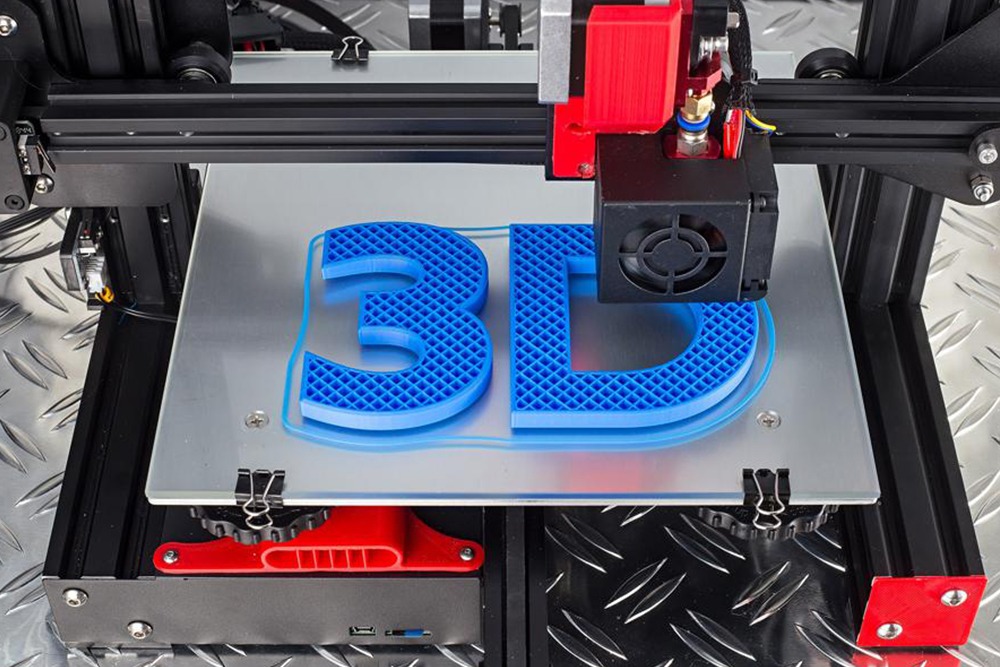
Before requesting a quote, identify which additive manufacturing technology is appropriate for the application. FDM can be practical for cost-sensitive prototypes and functional thermoplastic components. SLA is generally selected when fine details and smoother surfaces are important. SLS and MJF are useful for complex polymer parts and functional applications where support-free production can be valuable. Metal processes such as SLM, DMLS, or LPBF are appropriate for specific industrial applications requiring metal additive manufacturing.
Material selection is equally important. A prototype used only for visual validation does not necessarily require the same material as a component exposed to heat, mechanical loads, chemicals, or repeated assembly.
Lewei Precision’s published 3D printing capabilities, for example, show different build sizes, wall thickness requirements, layer heights, and dimensional tolerances across SLA, MJF, SLS, and SLM. Engineers can also review Lewei’s guide to the strongest 3D printer filaments when material strength is a major consideration.
Why Engineering Review and Quality Control Matter
A good 3D printing service does not simply accept a CAD file and start printing. Design orientation, wall thickness, unsupported features, holes, tolerances, material behavior, supports, and post-processing can all affect the final component.
Engineering review is particularly important for functional parts. A design that looks correct on a screen may require changes before manufacturing. For example, thin walls can deform, holes can print undersized, and large flat surfaces can experience warping depending on the technology and material.
Quality control is another important differentiator. Industrial customers should ask whether the supplier provides dimensional inspection, material certificates, first article inspection reports, CMM data, or other documentation where required.
Lewei Precision describes an inspection process involving CMMs, optical scanners, digital micrometers, GD&T practices, material certificates, FAI reports, and CMM data sheets.
3D Printing vs. CNC Machining
3D printing is not automatically better than CNC machining. The two technologies solve different manufacturing problems.
3D printing can be advantageous when a part has complex geometry, internal channels, organic shapes, or a low production volume. CNC machining can be preferable when tight tolerances, excellent surface finishes, material selection, or high-strength machined components are the priority.
For many businesses, the best manufacturing strategy combines both processes. A 3D printed prototype can be used to validate the design before a CNC-machined version is produced. Lewei Precision discusses this distinction in its detailed CNC machining vs. 3D printing comparison.
Businesses interested in larger additive components can also review the large 3D printing services guide to understand the production factors that become important as part size increases.
Abschließende Überlegungen
India has a growing ecosystem of 3D printing companies serving different segments of additive manufacturing. The companies covered in this guide demonstrate that the market now includes industrial metal printing, polymer production, rapid prototyping, online ordering, engineering consulting, printer manufacturing, and scalable production.
For businesses choosing a supplier, the most important factor is not simply whether a company owns advanced printers. The better question is whether its technology, engineering expertise, quality control, materials, production capacity, and delivery process match the actual requirements of your part.
If you need precision prototypes, complex components, low-volume production, or custom 3D printed parts, Lewei Precision’s 3D printing service provides an engineering-led approach from design review and process selection through printing, post-processing, inspection, and delivery.
Häufig gestellte Fragen
Which company is best for 3D printing in India?
The best company depends on the application. Lewei Precision, Wipro 3D, Objectify Technologies, and Sahas Softech are relevant for industrial and engineering-focused projects, while Makenica, THINK3D, and 3Ding offer strong options for online ordering, prototyping, and broader 3D printing requirements.
Which 3D printing company is best for industrial parts?
Industrial part requirements should be evaluated based on technology, material, tolerance, inspection, certifications, and production volume. Wipro 3D and Objectify Technologies have strong industrial metal and polymer additive manufacturing capabilities, while Lewei Precision provides a broader precision manufacturing workflow covering 3D printing and other production technologies.
What should I send to a 3D printing company for a quotation?
A manufacturer normally needs a 3D CAD model, preferred material, quantity, application, required tolerances, surface finish, and delivery requirements. STEP, STL, OBJ, and other formats may be accepted depending on the provider and process.
Is 3D printing suitable for production parts?
Yes. Modern additive manufacturing is used for functional components, tooling, replacement parts, and low-volume production. However, the appropriate process depends on the material, geometry, quantity, mechanical requirements, and quality standards.
How do I select the right 3D printing technology?
Start with the application’s functional requirements. Consider strength, temperature resistance, dimensional accuracy, surface finish, geometry, quantity, and budget. Then compare suitable processes such as SLA, SLS, MJF, FDM, DMLS, or SLM with an experienced manufacturing engineer.
Über den Autor
ÜBER DEN AUTOR
Das Team von Lewei Precision Engineering — Fertigungsingenieure bei Lewei Precision: Das Ingenieurteam von Lewei Precision verfügt über mehr als 21 Jahre Erfahrung in der Bearbeitung und im Formen von Bauteilen für Kunden aus den Bereichen Luft- und Raumfahrt, Medizin, Automobilindustrie und Halbleitertechnik in über 120 Ländern. In unserem Werk führen wir 3- bis 5-Achsen-CNC-Bearbeitung, Drehen, Spritzguss und Blechbearbeitung gemäß den Qualitätsmanagementsystemen ISO 9001:2015, ISO 13485, ISO 14001 und IATF 16949 durch. Die hier gegebenen Empfehlungen spiegeln wider, was wir jede Woche in der tatsächlichen Produktion und bei DFM-Prüfungen bei unseren Kunden beobachten – und nicht bloße Lehrbuchtheorie. Haben Sie ein Bauteil vor sich? Senden Sie uns die CAD-Datei, und wir sagen Ihnen genau, wie wir es fertigen würden.

 English
  简体中文
简体中文  Español
  Deutsch (Sie)
  日本語
日本語  Português