 Zum Inhalt springen
Umspritzungs-Service
Lewei Precision bietet fortschrittliche Dienstleistungen im Bereich Umspritzen für Hochleistungsbauteile aus Kunststoff und Metall. Von schnellen Prototypen bis hin zur On-Demand-Produktion bietet unser Overmolding-Verfahren eine starke Materialbindung, gleichbleibende Qualität und raffinierte Ästhetik. Unterstützt durch fachkundige Technik und schnelle Werkzeuge helfen wir Ihnen, zuverlässige Ergebnisse mit skalierbarer Fertigungseffizienz zu erzielen.
- Schnelle Werkzeugherstellung und Produktion: T1-Muster sind in weniger als 2 Wochen verfügbar und unterstützen Prototypen bis hin zur skalierbaren Produktion.
- Zertifizierte Qualität und Konsistenz: ISO 9001:2015, ISO 13485, ISO 14001 und IATF 16949 zertifizierte Fertigung mit strenger Qualitätskontrolle.
- Engineering-geführte Zuverlässigkeit: Professionelle DFM-Unterstützung, Beratung bei der Materialauswahl und verlässliche globale Fertigungsmöglichkeiten.


Mit unseren fachkundigen Prototyping-Dienstleistungen können Sie Ihre Produktideen schnell und präzise zum Leben erwecken.
Warum Lewei Precision für das Umspritzen wählen?
Lewei Precision liefert zuverlässige Dienstleistungen im Bereich Umspritzen entwickelt, um die Leistung, Haltbarkeit und Ästhetik von Teilen zu verbessern. Von Prototypen in der Frühphase bis hin zur Serienfertigung kombinieren wir Präzisionswerkzeuge, technisches Fachwissen und zertifizierte Qualitätssysteme, um konsistente, hochwertige umspritzte Komponenten zu gewährleisten.
Präzisionsgesteuertes Umspritzen
Unser Dienstleistungen im Bereich Umspritzen sorgen für eine präzise Materialbindung und eine strenge Maßkontrolle, was eine gleichbleibende Leistung und ein raffiniertes Aussehen bei jedem Produktionslauf gewährleistet.
Optimierte Arbeitsabläufe im Werkzeugbau verkürzen die Zeit von der Konstruktionsfreigabe bis zur Auslieferung der Teile, so dass Sie ohne Qualitätseinbußen schneller arbeiten können.
Unsere erfahrenen Ingenieure sorgen für frühzeitiges DFM-Feedback, Beratung zur Materialkompatibilität und Optimierung der Verklebung, bevor die Werkzeugherstellung beginnt.
Was ist Overmolding?
Das Umspritzen ist ein spezielles Herstellungsverfahren, bei dem ein Sekundärmaterial über eine starre Basiskomponente gegossen wird, um ein einziges, einheitliches Teil zu schaffen. Diese Methode wird häufig eingesetzt, um Griffigkeit, Haltbarkeit, Schutz und Optik zu verbessern. Mit professionellen Umspritzungsdiensten können Hersteller starre Kunststoffe oder Metalle mit weicheren Elastomeren oder Sekundärkunststoffen kombinieren, um die Produktleistung zu verbessern und gleichzeitig Montageschritte und langfristige Kosten zu reduzieren.
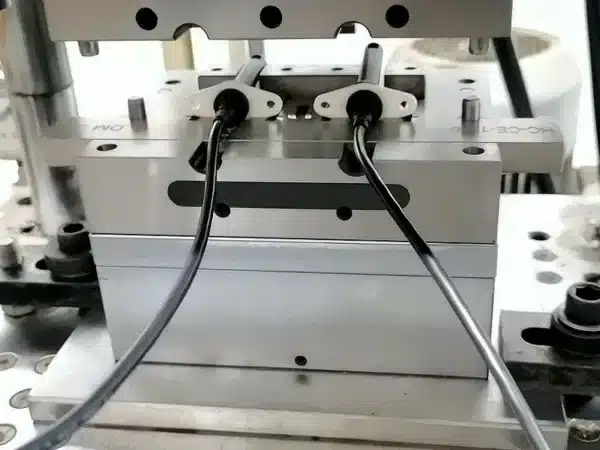
Overmolding-Verfahren
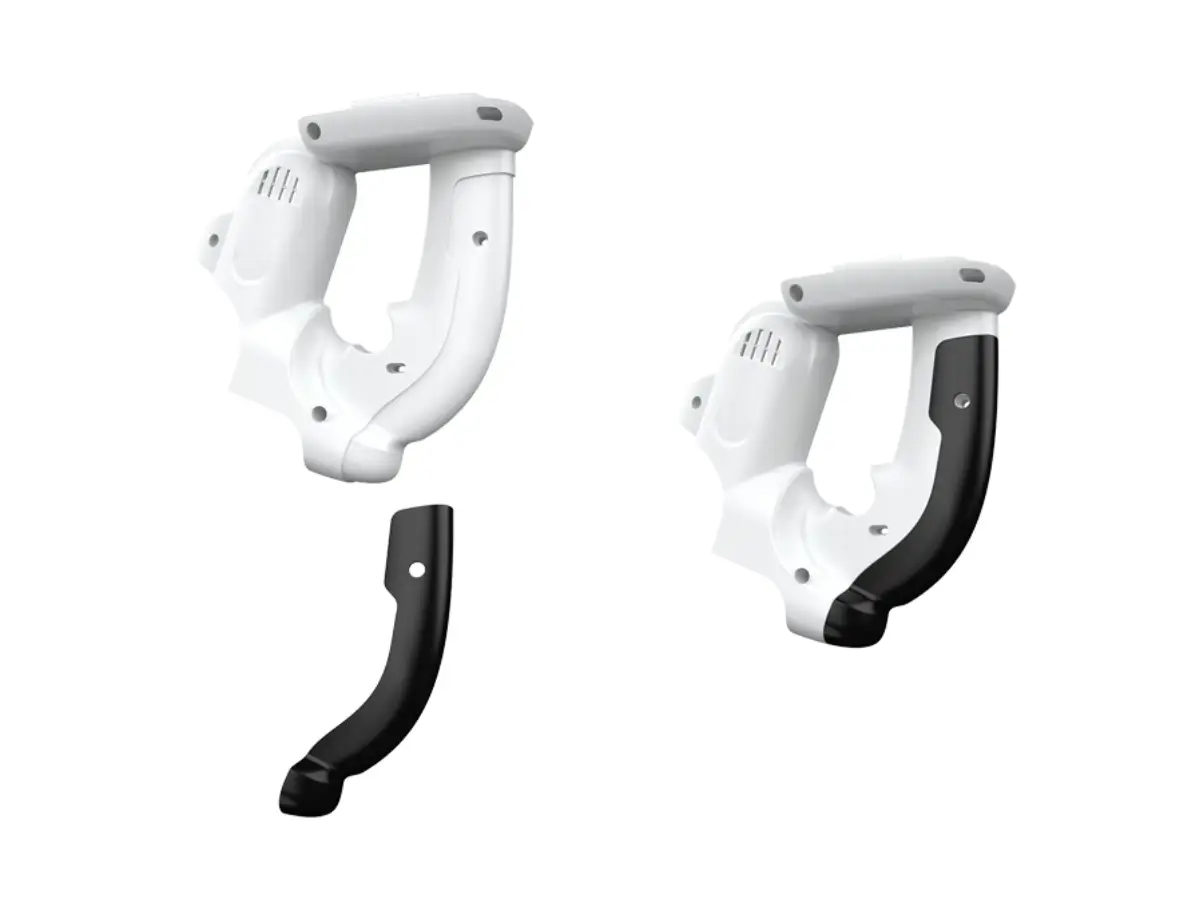
Bei diesem Umspritzverfahren werden mehrere Kunststoffmaterialien in einem einzigen Teil kombiniert, um die Festigkeit, Präzision und Oberflächenqualität zu verbessern. Unser Dienstleistungen im Bereich Umspritzen gewährleisten eine zuverlässige Verklebung und gleichbleibende Ergebnisse sowohl bei Prototypen als auch bei Produktionsteilen.
- Ideal für die Großserienproduktion
- Erzielt detaillierte Geometrien
- Verwendet Aluminium- und Stahlformen
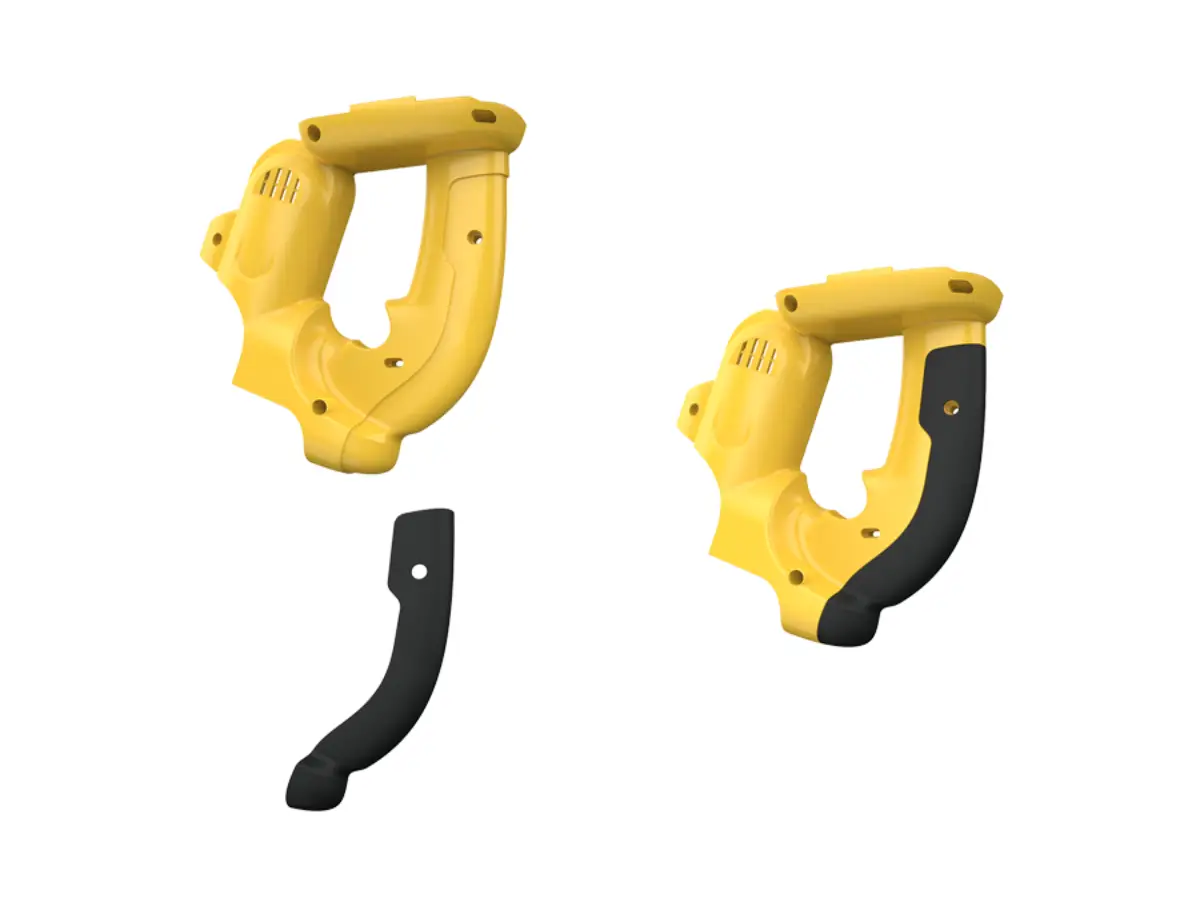
Das Umspritzen von Gummi mit Kunststoff verleiht starren Komponenten eine weiche Haptik und verbessert die Griffigkeit, den Komfort und die Vibrationsbeständigkeit. Es wird häufig für ergonomische Teile verwendet, die eine verbesserte Benutzerfreundlichkeit und Haltbarkeit erfordern.
- Bietet verschiedene Farb- und Texturoptionen
- Materialien nahtlos kombinieren
- Erhöht die Festigkeit und Lebensdauer

Beim Umspritzen von Kunststoff mit Metall werden Metalleinsätze in Kunststoff integriert, um die strukturelle Festigkeit zu erhöhen und gleichzeitig die Montageschritte zu reduzieren. Diese Lösung ist ideal für Teile, die sowohl steif als auch leicht sein müssen.
- Senkung der Produktionskosten
- Verbessert die Haltbarkeit
- Reduziert Montageschritte
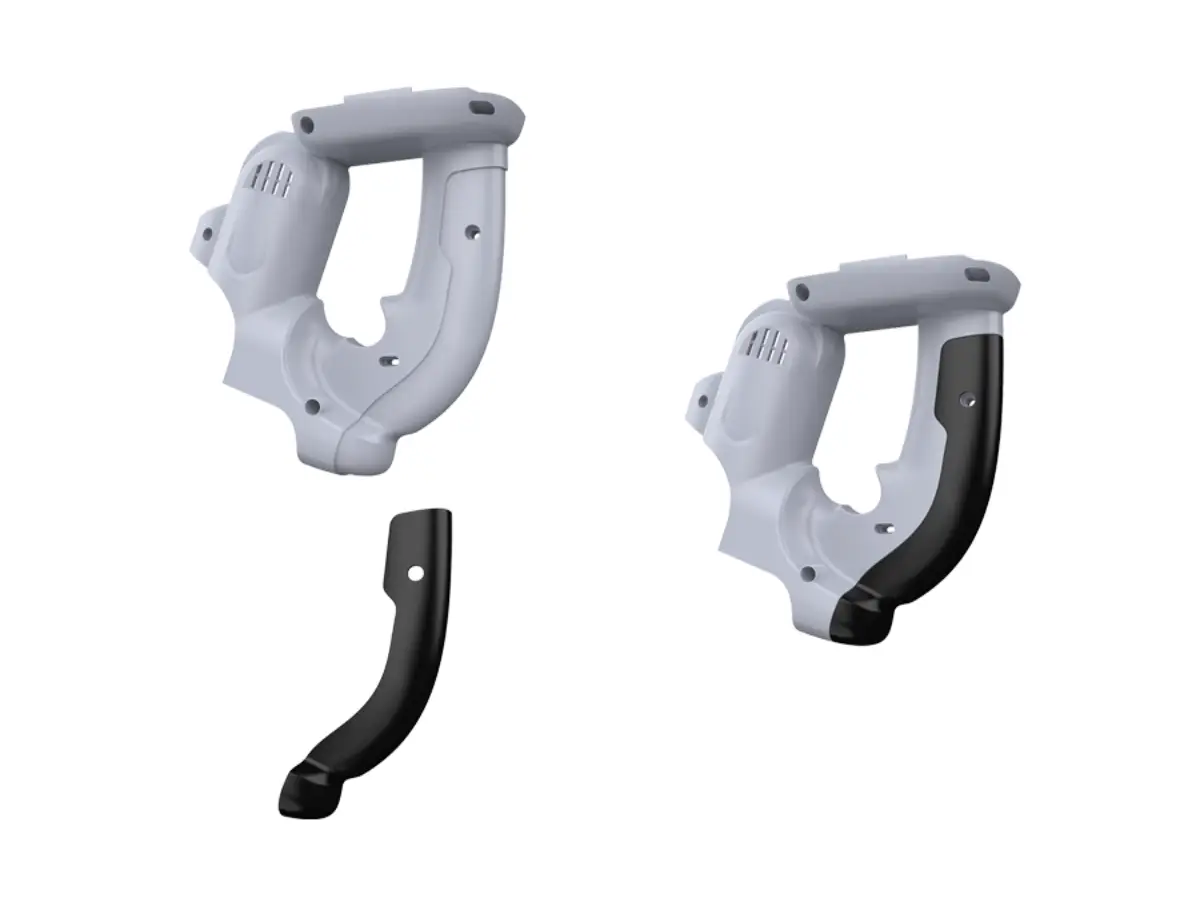
Beim Umspritzen von Metall mit Gummi wird eine Elastomerschicht auf Metallteile aufgebracht, um die Stoßfestigkeit und die Handhabung zu verbessern. Sie eignet sich gut für Bauteile, die häufigem Gebrauch und anspruchsvollen Umgebungen ausgesetzt sind.
- Senkung der Produktionskosten
- Verbessert die Haltbarkeit
- Reduziert Montageschritte
Overmolding Oberflächenbehandlungen
Lewei Precision bietet zahlreiche Möglichkeiten der Oberflächenveredelung, um die Qualität, Haltbarkeit und das Aussehen Ihrer 3D-gedruckten Bauteile zu verbessern. Unsere Dienstleistungen können genutzt werden, um Ihre persönlichen Projektanforderungen zu erfüllen, egal ob es sich um eine glatte Oberfläche, Schutz oder eine einzigartige Textur handelt.

Diese Oberfläche entsteht direkt beim Spritzgussverfahren und ist ideal für funktionale oder interne Teile, bei denen das Aussehen nicht entscheidend ist. Unser Dienstleistungen im Bereich Umspritzen gewährleisten eine gleichbleibende Oberflächenqualität und Maßhaltigkeit direkt aus der Form.

Wir bieten eine vollständige Palette von SPI-Veredelungen an, von Diamant der Klasse 3 oder hochpoliert bis 320 Stein niedrig poliert. Folgende Optionen sind verfügbar SPI A-1, A-2, A-3, B-1, B-2, B-3, C-1, C-2, C-3, D-1, D-2 und D-3und ermöglicht eine präzise Kontrolle von Oberflächenstruktur und Aussehen.

Kundenspezifische Texturen sind erhältlich, um die Griffigkeit, das Branding und die visuelle Attraktivität zu verbessern. Diese Oberflächen verbessern die Interaktion mit dem Benutzer und die Produktdifferenzierung, während die Haltbarkeit der umspritzten Komponenten erhalten bleibt.
CNC-Bearbeitungslösungen
Lewei Prototyping
Prototypenwerkzeuge sind ideal für die Validierung und Funktionsprüfung in einem frühen Stadium. Unser Dienstleistungen im Bereich Umspritzen kostengünstige Prototypformen zu verwenden, um das Teiledesign, die Materialbindung und die Leistung zu überprüfen, bevor sie in die Produktion gehen.
Werkzeuge für die Produktion
Die Produktionswerkzeuge sind für eine langfristige Fertigung in hohen Stückzahlen ausgelegt. Durch den Einsatz langlebiger Stahlformen bieten unsere Umspritzungslösungen stabile Leistung, Wiederholbarkeit und Kosteneffizienz über lange Produktionszyklen hinweg.
Lewei Umspritztechniken
SPI Veredelungen
Unsere SPI-Finishs reichen von Diamant/Hochglanz bis 320 Stone Low Polish. Die verfügbaren Oberflächenoptionen umfassen SPI A-1, SPI A-2, SPI A-3, SPI B-1, SPI B-2, SPI B-3, SPI C-1, SPI C-2, SPI C-3, SPI D-1, SPI D-2 und SPI D-3.
Polierte Oberfläche
Bietet eine glatte und glänzende Oberfläche und wird häufig für Teile verwendet, die leicht zu reinigen sind oder ein hochwertiges Aussehen haben sollen.
Satinierte Ausführung
Eine glatte, halbglänzende Oberfläche, die ein Gleichgewicht zwischen matten und spiegelnden Oberflächen bietet und sowohl für funktionale als auch ästhetische Anforderungen geeignet ist.

Werkstoffe für das Umspritzen bei Lewei Precision
Die kundenspezifischen Umspritzungsdienstleistungen von Lewei Precision ermöglichen die Herstellung von Hochleistungs-Kunststoffteilen, die Ästhetik und Funktionalität vereinen. Unser fortschrittliches Spritzgießverfahren integriert mehrere Materialien in ein einziges Teil und sorgt so für höchste Qualität und verbesserte Produktleistung.
Kunststoffe
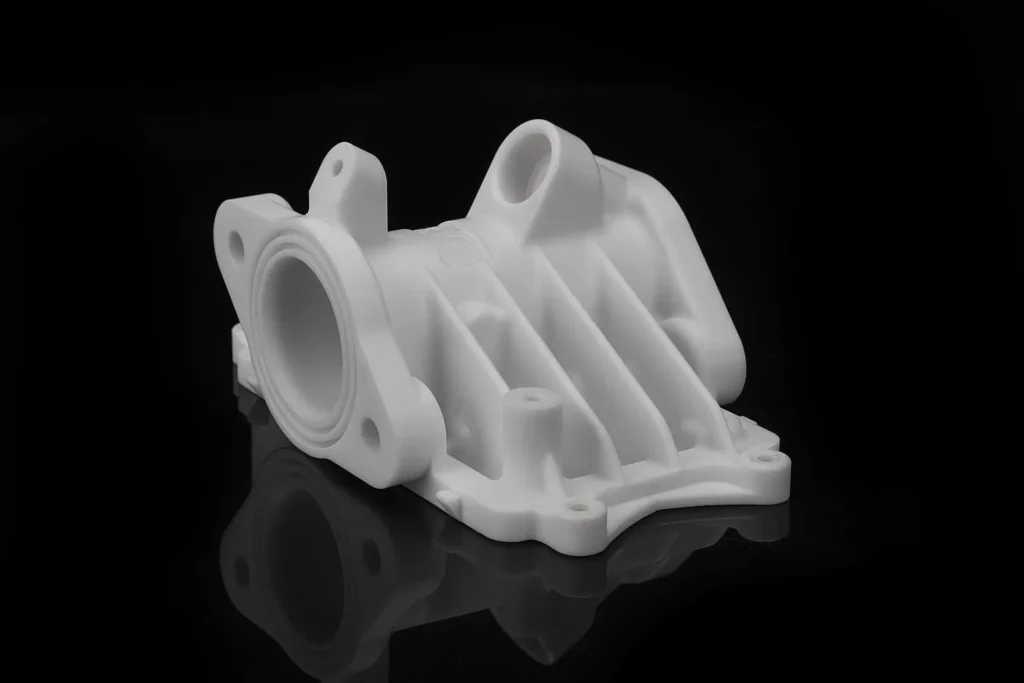
ABS ist stark, langlebig und bietet eine gute Hitze- und Stoßfestigkeit. Es wird bevorzugt für Automobilteile und Konsumgüter verwendet.
ABS Beige(Natur)
ABS Schwarz
ABS Schwarz Antistatisch
ABS Milchig Weiß
ABS+PC Schwarz
ABS+PC Weiß
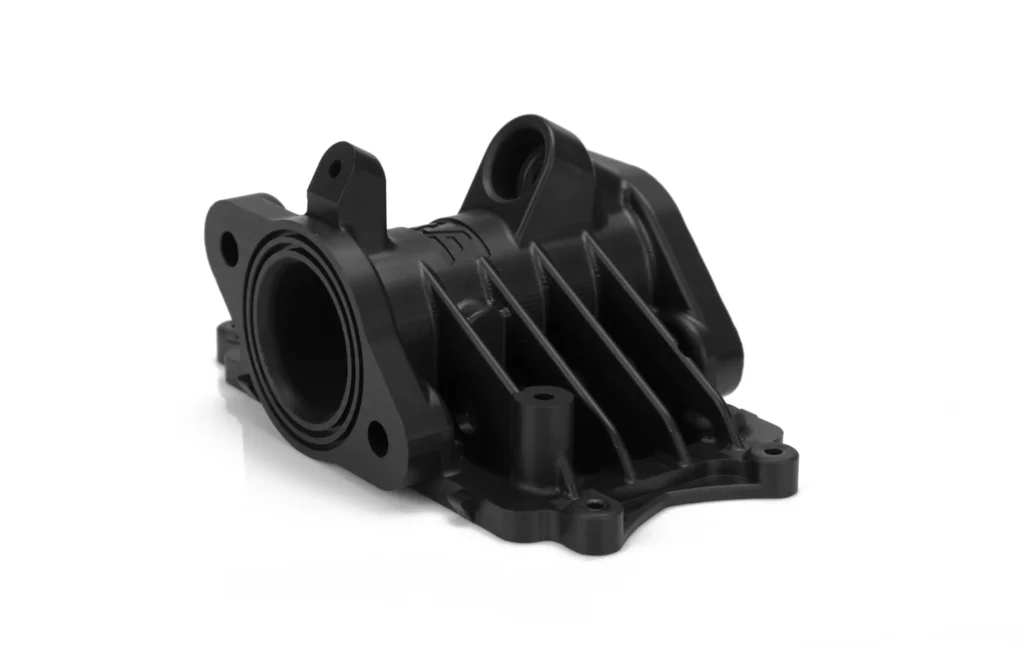
Polycarbonat ist extrem haltbar und weist eine hohe Schlagfestigkeit sowie eine ausgezeichnete Klarheit auf und wird für kugelsicheres Glas und Schutzkleidung verwendet.
PC Schwarz
PC Transparent
PC Weiß
PC Gelblich Weiß
PC+GF30 Schwarz
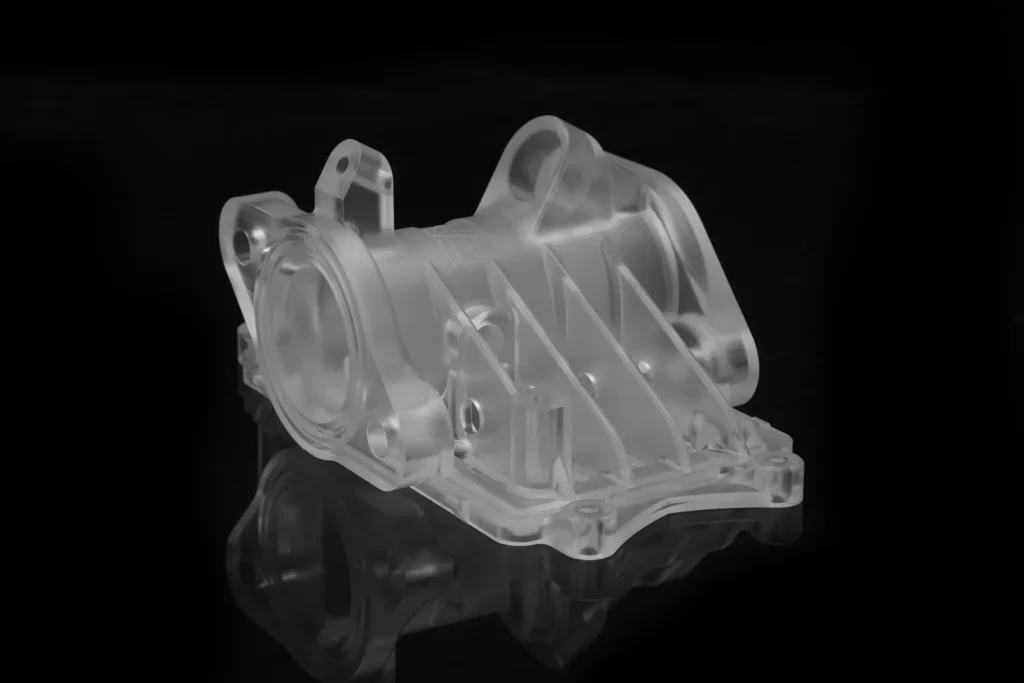
PMMA oder Acryl ist für seine kristalline Klarheit und Witterungsbeständigkeit bekannt und daher ideal für Außenbefestigungen und Vitrinen.
PMMA Schwarz
PMMA Transparent
PMMA Weiß
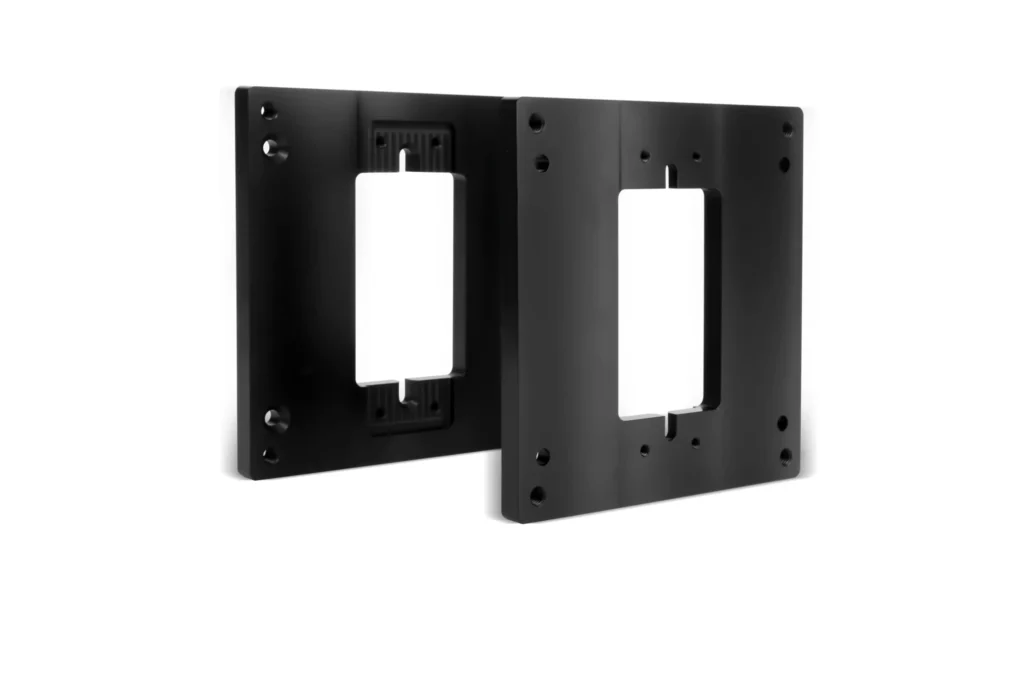
POM ist stark, hat eine reibungsarme Oberfläche und eine gute Dimensionsstabilität, ideal für Präzisionsteile in mechanischen Anwendungen.
Dunkelbraun (Kaffee) POM 100AF
POM Schwarz
POM Blau
POM Weiß
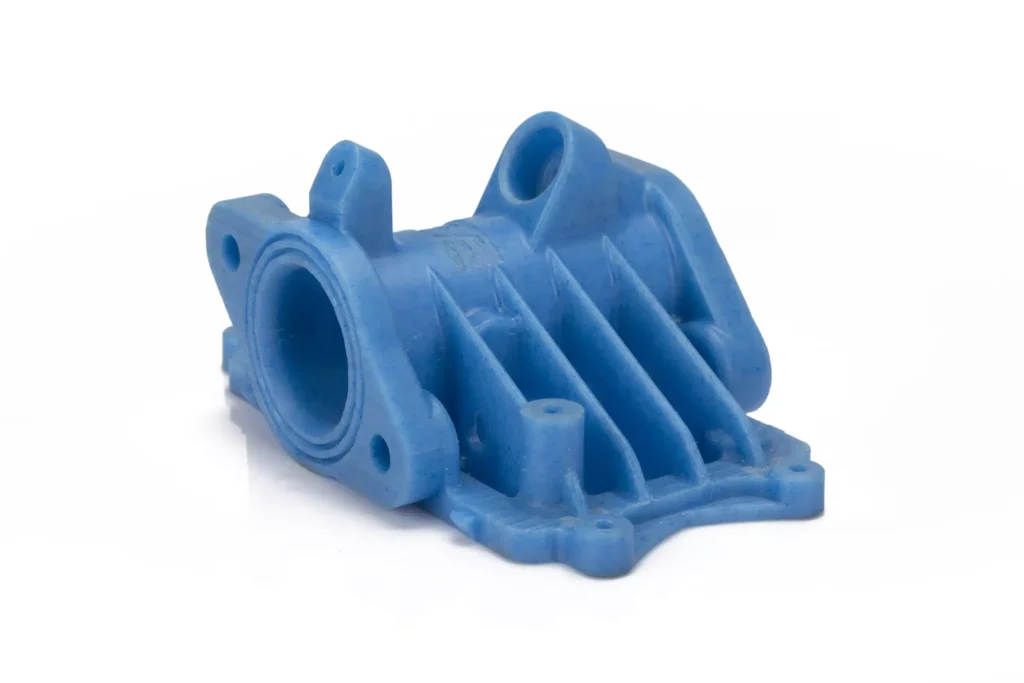
Nylon ist vielseitig, stark und verschleißt gut gegen Reibung und wird häufig für Zahnräder, Lager und andere verschleißfeste Oberflächen verwendet.
PA(Nylon) Blau
PA6 (Nylon)+GF15 Schwarz
PA6 (Nylon)+GF30 Schwarz
PA66 (Nylon) Beige(Natur)
PA66 (Nylon) Schwarz
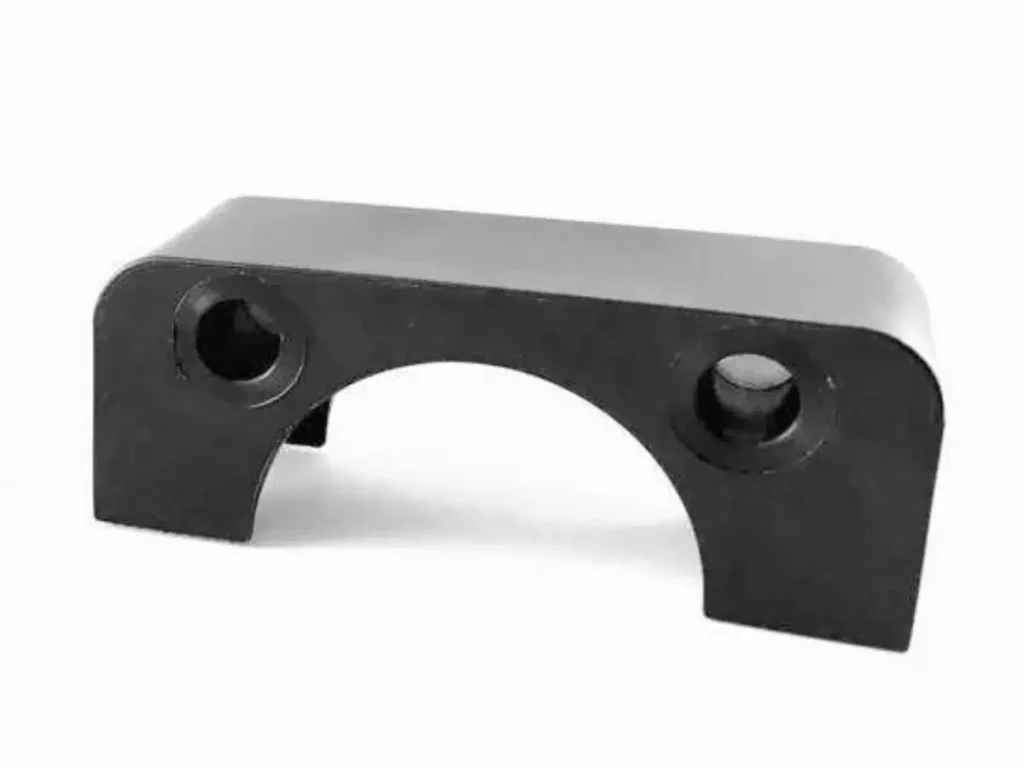
Polyethylen ist leicht und hat eine hohe Schlagfestigkeit und wird häufig für Verpackungen und Behälter verwendet.
PE Schwarz
PE Weiß
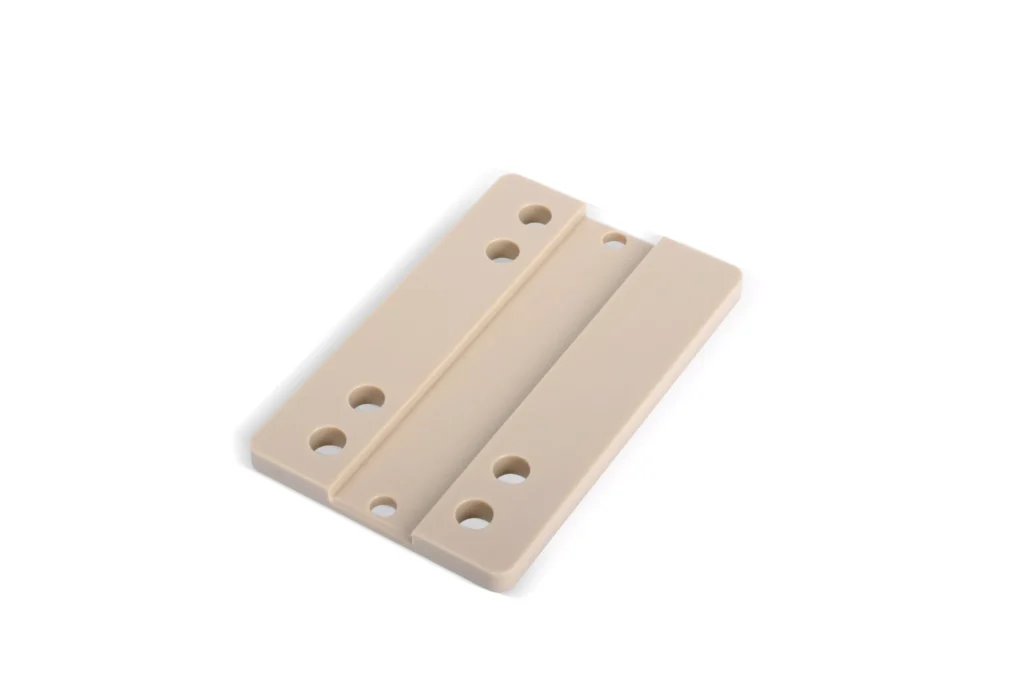
PEEK ist bekannt für seine hohe Temperaturbeständigkeit und Festigkeit und wird häufig in der Luft- und Raumfahrt sowie bei der Herstellung medizinischer Implantate verwendet.
PEEK Beige(Natürlich)
PEEK Schwarz
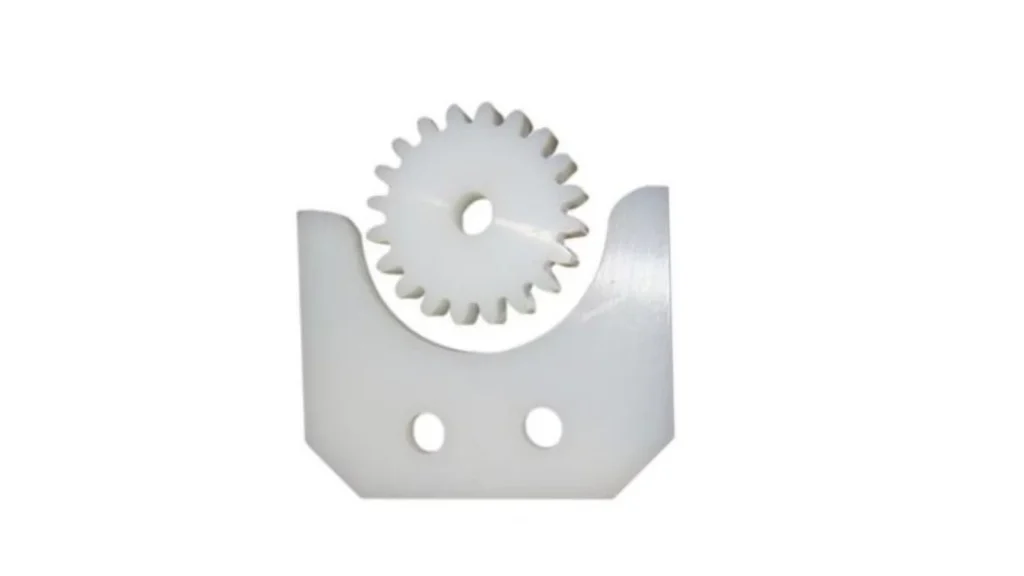
Polypropylen ist zäh, hat eine ausgezeichnete chemische Beständigkeit und wird für Automobilteile, Behälter und Verpackungen verwendet.
PP Schwarz
PP Weiß
PP+GF30 Schwarz
Insert Molding vs. Overmolding: Hauptunterschiede
Beide Einsatzspritzguss und Umspritzen sind fortschrittliche Formgebungsverfahren, mit denen mehrere Materialien zu einem einzigen Bauteil kombiniert werden. Jedes Verfahren dient jedoch einem anderen Zweck, je nach den funktionalen und strukturellen Anforderungen an das Teil.
| Vergleich | Einsatzformteil | Umspritzen |
|---|---|---|
| Herstellungsverfahren | Vorgeformte Einsätze werden vor dem Kunststoffspritzen in die Form eingelegt | Ein Sekundärmaterial wird über ein bestehendes Kunststoffteil gegossen |
| Hauptfunktion | Bietet innere Festigkeit und funktionelle Verstärkung | Verbessert die Haptik, den Schutz oder das Aussehen der Oberfläche |
| Produktionsschritte | Ein einziger Formgebungszyklus ohne Nachmontage | Mehrstufiges Verfahren, das mehrere Formgebungsstufen erfordert |
| Verwendung des Materials | Kunststoff um Metall oder starre Einsätze geformt | Weiche Elastomere, die über starre Kunststoffsubstrate gegossen werden |
| Stärke und Langlebigkeit | Hohe strukturelle Festigkeit und langfristige Zuverlässigkeit | Begrenzte strukturelle Festigkeit, Schwerpunkt auf Oberflächenleistung |
| Unterstützung für Gewinde und Befestigungen | Ideal für eingebettete Gewinde und verschleißfeste Merkmale | Nicht für Gewinde oder tragende Bewehrung ausgelegt |
| Flexibilität bei der Gestaltung | Gesteuert durch die Platzierung der Einsätze und das Design der Form | Größere Freiheit bei Texturen, Griffen und Dichtungsmerkmalen |
| Produktionseffizienz | Schnellere Zykluszeiten und niedrigere Arbeitskosten | Längere Zykluszeiten durch zusätzliche Formgebungsschritte |
| Gemeinsame Anwendungen | Steckverbinder, Gehäuse, verstärkte Komponenten, Sensoren | Griffe, Griffe, Dichtungen, Schutzabdeckungen |
| Beste Anpassung an die Anwendung | Strukturelle und funktionelle Komponenten | Ergonomische und kosmetische Verbesserungen |
Umspritzen Fähigkeiten
Das Drahterodieren von Lewei Precision, das Teil unserer CNC-Dienstleistungen ist, ermöglicht die effiziente Herstellung einfacher und komplizierter Formen. Diese berührungslose Methode ist ideal für Teile, die eine hohe Präzision erfordern. Sie erzeugt minimale Grate und eignet sich hervorragend für Metalle wie Stahl und Titan. Aufgrund ihrer Genauigkeit werden sie in der Luft- und Raumfahrt, in der Automobilindustrie und in der Elektronikbranche bevorzugt. Wir bieten Ihnen maßgeschneiderte, präzise Lösungen für jeden Bedarf.

Fähigkeit
Details/Spezifikationen
Kompatibilität der Materialien
Rostfreier Stahl, Titan, Aluminium, Werkzeugstahl, Kupfer
Toleranz
± 0,0001 Zoll (0,0025 mm) oder besser (basierend auf Material und Dicke)
Maximale Werkstückgröße
Länge: 16 Zoll (400 mm)
Breite: 12 Zoll (300 mm)
Höhe: 8 Zoll (200 mm)
Schnittgeschwindigkeit
Bis zu 300 mm2/min (abhängig von Material und Dicke)
Oberflächenbehandlung
So fein wie Ra 0,2 µm
Maximale Schnittdicke
Bis zu 300 mm (12 Zoll) - variiert je nach Material
Drahtdurchmesserbereich
0,004 Zoll (0,1 mm) bis 0,012 Zoll (0,3 mm)
Drahtdurchmesserbereich
0,004 Zoll (0,1 mm) bis 0,012 Zoll (0,3 mm)
Drahtdurchmesserbereich
0,004 Zoll (0,1 mm) bis 0,012 Zoll (0,3 mm)
Vorteile
Vorteile des Umspritzens bei Lewei Precision
Umspritzungsdienstleistungen bieten zahlreiche Vorteile, die sowohl die Produktleistung als auch die Fertigungseffizienz verbessern.
- Verbesserte Produktleistung Die Kombination von Materialien sorgt für bessere Funktionalität und Zuverlässigkeit.
- Verbesserte Griffigkeit und Ergonomie Weiche, geformte Oberflächen verbessern den Komfort und die Benutzerfreundlichkeit.
- Reduzierte Montagekosten Eliminiert die sekundäre Montage durch die Integration von Materialien in ein einziges Teil.
- Erhöhte Langlebigkeit und Stoßfestigkeit Umspritzte Schichten schützen die Komponenten vor Verschleiß und Beschädigung.
- Hervorragende ästhetische Qualität Saubere Oberflächen und Farboptionen verbessern das Erscheinungsbild des Produkts.
- Skalierbare Produktionseffizienz Geeignet für Prototypen, Kleinserien und Großserienproduktion.
Anwendungen
Anwendungen der Umspritzung bei Lewei Precision
Umspritzungsdienste werden in vielen Branchen eingesetzt, um die Funktionalität, Haltbarkeit und Verwendbarkeit der fertigen Teile zu verbessern. Zu den üblichen Anwendungen gehören:
- Griffe und Handgriffe Soft-Touch-Oberflächen, die den Komfort, die Kontrolle und das Benutzererlebnis verbessern.
- Dichtungen und Dichtungsringe Langlebige, umspritzte Dichtungen, die Schutz vor Feuchtigkeit, Staub und Vibrationen bieten.
- Elektronik-Gehäuse Schutzgehäuse mit verbesserter Isolierung und Oberflächenschutz für elektronische Bauteile.
- Werkzeugkomponenten Umspritzte Teile, die die Handhabung, Sicherheit und langfristige Zuverlässigkeit der Werkzeuge verbessern.
- Teile für medizinische Geräte Präzisionskomponenten mit glatten Oberflächen und ergonomischem Design für medizinische Anwendungen.
- Strukturell verstärkte Baugruppen Baugruppen aus mehreren Materialien, die Stärke, Flexibilität und reduzierte Montageschritte kombinieren.
Umspritzungsdienstleistungen für verschiedene Branchen
Lewei Precision bietet zuverlässige Dienstleistungen im Bereich Umspritzen die auf die Funktions-, Haltbarkeits- und Leistungsanforderungen verschiedener Branchen zugeschnitten sind. Unser Fachwissen im Bereich der Multimaterialfertigung unterstützt sowohl Prototypen als auch Produktionsteile für anspruchsvolle Anwendungen.


Qualitätskontrolle und Inspektion beim Umspritzen


Bei Lewei Precision ist die Qualitätssicherung ein fester Bestandteil unserer Dienstleistungen im Bereich Umspritzen. Jedes Projekt beginnt mit Vorproduktionskontrolle der Formen um die Genauigkeit der Werkzeuge vor der Bemusterung und Produktion zu überprüfen. Während des Gießens führen wir In-Prozess-Kontrollen um kritische Parameter zu überwachen und eine gleichbleibende Materialbindung, Abmessungen und Oberflächenqualität bei jedem Durchlauf zu gewährleisten.
Vor dem Versand werden alle Teile abschließende TeilevalidierungDazu gehören auch Maßkontrollen und Sichtprüfungen, um sicherzustellen, dass sie den Konstruktionsspezifikationen und Leistungsanforderungen entsprechen. Wir bieten auch komplette Dokumentation und RückverfolgbarkeitDazu gehören Inspektionsberichte, Materialzertifikate und Konformitätsaufzeichnungen, die Ihnen Vertrauen in Qualität, Konsistenz und die Einhaltung von Vorschriften vom Prototyp bis zur Produktion geben.
Overmolding Arbeitsablauf: Wie wir arbeiten
Technische Überprüfung und DFM
Bevor wir beginnen, prüfen unsere Experten Ihre CAD-Dateien sorgfältig auf Materialkompatibilität, Machbarkeit des Designs und Herstellbarkeit, um eine effiziente Werkzeugherstellung zu gewährleisten und Produktionsprobleme zu vermeiden.
Werkzeugbau und Rapid Prototyping
Wir entwerfen und fertigen die Formen unter Verwendung fortschrittlicher Materialien und bieten eine schnelle Durchlaufzeit für Prototypentests und Designvalidierung zur Bestätigung von Funktionalität und Qualität.
Overmolding-Verfahren
Während des Gießens spritzen wir ein Sekundärmaterial über ein starres Trägermaterial und erreichen so eine zuverlässige Verbindung und präzise Maßhaltigkeit. Wir verarbeiten Komponenten aus mehreren Materialien, um Ihre spezifischen Anforderungen zu erfüllen.
Qualitätskontrolle und Inspektion
Jedes Teil wird mit Hilfe von CMM (Coordinate Measuring Machines) umfassend geprüft, um Abmessungen, Toleranzen und die Gesamtqualität zu verifizieren und sicherzustellen, dass die Teile den Spezifikationen entsprechen.
Umspritzen vs. Insert Molding


FAQs
Wozu dient das Umspritzen?
Beim Umspritzen werden mehrere Materialien in einem einzigen Teil kombiniert, um Griffigkeit, Haltbarkeit, Schutz und Aussehen zu verbessern. Es wird häufig bei ergonomischen Griffen, Dichtungen, Gehäusen und verstärkten Komponenten eingesetzt.
Welche Materialien können miteinander verschmolzen werden?
Wie unterscheidet sich das Umspritzen vom Einspritzgießen?
Was sind typische Vorlaufzeiten für das Umspritzen?
Kann Overmolding für die Produktion von Kleinserien verwendet werden?
Welche Toleranzen können beim Umspritzen erreicht werden?
Bieten Sie DFM-Feedback an, bevor die Werkzeugherstellung beginnt?
Eignet sich das Umspritzen für komplexe Teilekonstruktionen?
Verringert das Umspritzen die Montagekosten?
Ja, das Umspritzen vereint mehrere Funktionen in einem einzigen Teil, wodurch sekundäre Montageschritte entfallen und die Gesamtfertigungskosten sinken.
In welchen Branchen werden Overmolding-Dienstleistungen häufig in Anspruch genommen?
Overmolding wird aufgrund seiner funktionalen und ästhetischen Vorteile in der Automobilindustrie, bei medizinischen Geräten, in der Elektronik, Robotik, Automatisierung und bei Konsumgütern eingesetzt.
 English
  简体中文
简体中文  Español
  Deutsch (Sie)
  日本語
日本語  Português