
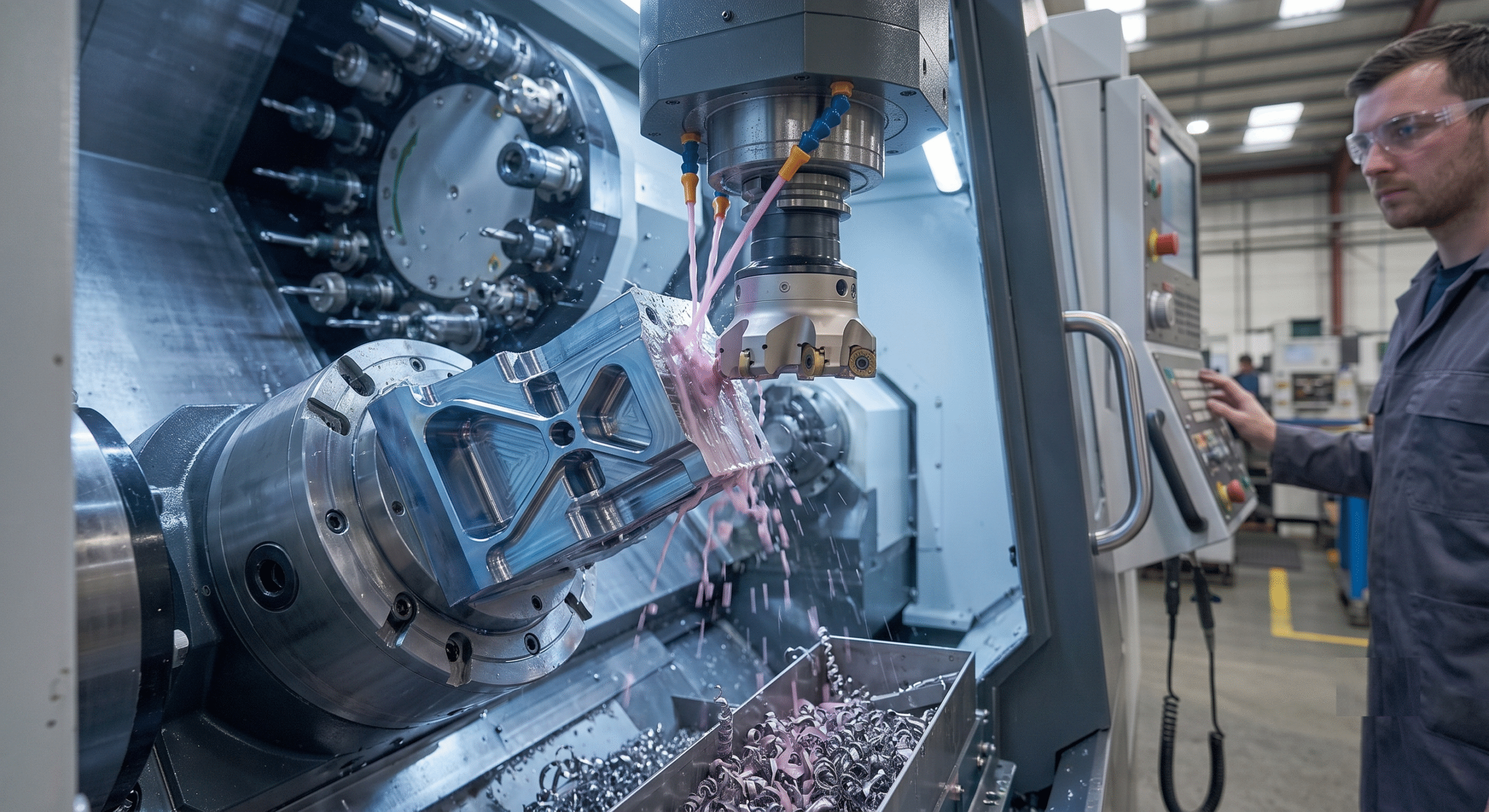
Choosing a precision CNC machining manufacturer is one of those decisions that looks simple until it goes wrong. On paper, every supplier offers the same thing: tight tolerances, fast lead times, competitive prices. In reality, the gap between a good machining partner and a poor one shows up in the parts that fail on the bench, the deliveries that slip a week, and the quotes that balloon after the order is placed.
I have sat on both sides of this table — briefing suppliers and reviewing their work — and the manufacturers that consistently deliver share a recognizable set of traits. This guide gives you a practical framework for evaluating a precision CNC machining manufacturer, the questions that separate the capable from the merely cheap, and the red flags worth walking away from.
What “Precision” Actually Means
The word “precision” gets thrown around loosely, so let us anchor it. A precision CNC machining manufacturer is one that can reliably hold tight tolerances — often ±0.005 mm to ±0.025 mm — repeatably across a production run, not just on a single lucky part. The key word is *repeatably*. Anyone can hit a tight dimension once. A precision shop hits it on part one and part ten thousand, backed by inspection data that proves it.
Resposta rápida: A precision CNC machining manufacturer reliably holds tight tolerances (typically ±0.005–0.025 mm) repeatably across full production runs, verified with documented inspection — not just on a single part.
The Seven Traits of a Strong Machining Partner
When I evaluate a supplier, I am really checking for seven things.
| Trait | What good looks like | Warning sign |
| Capability range | Turning, milling, EDM, finishing in-house | Everything outsourced |
| Quality system | ISO 9001 / AS9100, CMM inspection, reports | “We check by eye” |
| Material expertise | Advises on grades and machinability | Machines whatever you send, no input |
| Comunicação | Fast, clear quotes and DFM feedback | Slow, vague, no questions asked |
| Tolerance proof | Inspection data with every batch | No documentation offered |
| Lead time honesty | Realistic dates they actually hit | Optimistic promises, frequent slips |
| Escalabilidade | Prototype to production smoothly | Great at one, weak at the other |
The single most telling trait is DFM feedback — Design for Manufacturability. A manufacturer who reviews your drawing and suggests improvements is a partner. One who silently machines exactly what you sent, flaws and all, is just a vendor.
Capabilities to Confirm Before You Commit
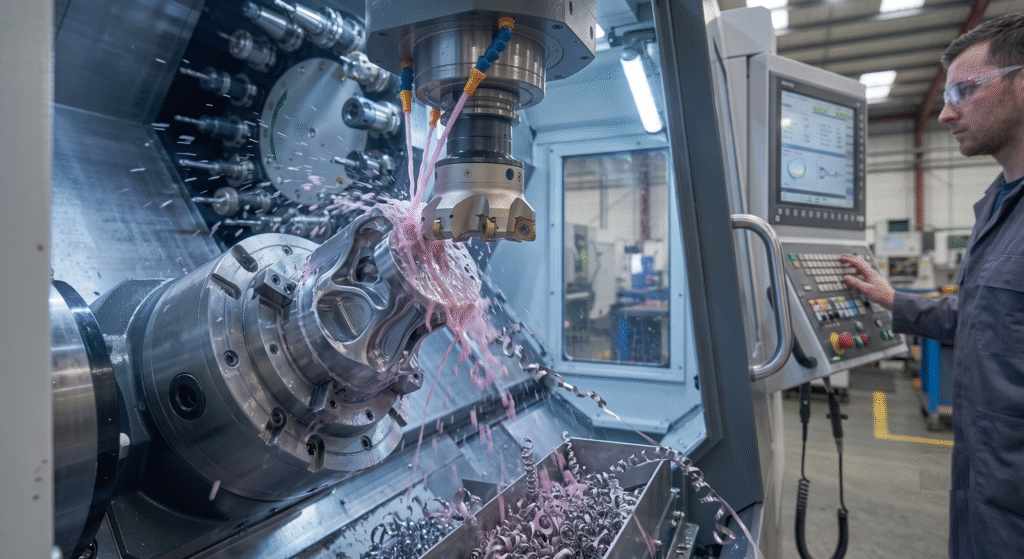
Not every job needs every capability, but you should know what your supplier can do in-house versus what they subcontract. In-house control usually means better quality and shorter lead times.
- Torneamento CNC for round parts — see our turning foundation guide for what this covers.
- Fresagem CNC for prismatic parts — our milling machine guide explains the variants.
- EDM de fio for hard metals and sharp internal features — background in our Wire EDM cost guide.
- Acabamento de superfícies — anodizing, plating, bead-blasting, polishing.
- Inspeção — CMM, optical measurement, and documented reports.
- Material breadth — from aluminum to titanium and specialty alloys like aço 4340.
A shop that keeps most of these under one roof can control quality end to end, rather than pointing fingers when a subcontractor slips.
Questions That Separate Good from Cheap
Price is easy to compare. Capability is not. These questions surface the difference fast:
- “What tolerances can you hold repeatably, and how do you verify them?” Listen for inspection method and documentation, not just a number.
- “Will you review my design and suggest cost or manufacturability improvements?” A yes signals a real partner.
- “What is your realistic lead time, including finishing and inspection?” Watch for honesty over optimism.
- “How do you handle a part that fails inspection?” Good shops have a clear containment and correction process.
- “Can you scale from prototype to production?” Confirm they can grow with you.
- “What materials do you machine most, and can you advise on grade selection?” Depth of material knowledge predicts fewer surprises.
Domestic vs. Overseas: Weighing the Trade-offs
Where your manufacturer is located changes the calculus of cost, speed, and communication. There is no universally right answer — only the right answer for your project.
| Fator | Local / domestic | Overseas |
| Unit cost | Mais alto | Often lower |
| Lead time | Shorter | Longer (shipping) |
| Comunicação | Easy, same time zone | Requires clear documentation |
| Economia de volume | Good for low volume | Strong for high volume |
| IP and quality control | Easier oversight | Choose ISO-certified partners |
If you are researching by region, our comparisons of the top machining companies in Alemanha, Japane India show how capability and cost vary across markets. The best overseas partners close the communication gap with disciplined documentation and inspection reporting — which is exactly what to demand.
Red Flags to Walk Away From
Some warning signs are worth ending the conversation over:
- No quality certification and no inspection data. You are buying precision on faith.
- Quotes that seem too good to be true. They usually hide corner-cutting or later change orders.
- No questions about your application. A shop that does not ask how the part is used cannot help you get it right.
- Vague or shifting lead times. Reliability is a capability, and its absence is a red flag.
- Reluctance to share references or sample reports. Confident suppliers are transparent.
Building a Long-Term Relationship
The best sourcing outcome is not a single good order — it is a supplier who learns your parts, anticipates your needs, and improves your designs over time. That relationship is built on clear communication in both directions: you sharing how the part is really used, and them sharing honest feedback on how to make it better and cheaper. Treating a machining partner as a collaborator rather than a commodity vendor is, in my experience, the single highest-leverage decision in the whole sourcing process. It is also the philosophy behind how we work at Precisão Lewei — asking the right questions upfront so the parts are right the first time. Avoiding the common machining defects starts long before the first cut, in that conversation.
Perguntas mais frequentes
What certifications should a precision CNC machining manufacturer have?
The baseline is ISO 9001, which shows the shop runs a documented, audited quality management system. For aerospace work, AS9100 is expected, while medical parts often call for ISO 13485, and automotive suppliers may need IATF 16949. Certifications are not a guarantee of quality on their own, but they demonstrate that a manufacturer has formal processes for inspection, traceability, and continuous improvement. Ask to see the certificate and, more importantly, the inspection reports that prove the system is actually used.
How do I know if a shop can hold my tolerances?
Ask specifically what tolerances they hold repeatably in production, not just as a one-off, and how they verify them. A credible answer includes measurement equipment like a CMM and a willingness to supply inspection reports with each batch. You can also request a first-article inspection on your part before committing to full production. If a supplier cannot describe how they measure and document accuracy, they probably cannot guarantee it.
Is it cheaper to use an overseas CNC manufacturer?
Overseas manufacturers often offer lower unit prices, particularly for medium-to-high production volumes, which can make a meaningful difference on large orders. The trade-offs are longer shipping lead times and the need for very clear documentation to bridge distance and time zones. For low volumes or urgent prototypes, a local shop’s speed and communication may outweigh a higher unit price. It comes down to your volume, your timeline, and — honestly — how well that overseas partner communicates and backs its work with documentation.
What is DFM feedback and why does it matter?
Design for Manufacturability feedback is when a manufacturer reviews your part design and suggests changes that reduce cost, improve quality, or make the part easier to produce. It might mean loosening a non-critical tolerance, adding a fillet to an internal corner, or consolidating features onto fewer faces. This feedback often saves far more than any price difference between suppliers, because it prevents expensive redesigns and scrap. A shop that offers thoughtful DFM feedback is signaling genuine engineering partnership rather than order-taking.
How many suppliers should I get quotes from?
Requesting three quotes is a sensible balance, giving you enough range to judge pricing and capability without overwhelming your evaluation. Compare not only the numbers but the quality of each supplier’s questions, DFM feedback, and lead-time honesty, since these predict how the relationship will actually perform. The lowest quote is not always the cheapest part once scrap, delays, and rework are counted. Weigh total value and communication alongside price before you commit.
Sobre o autor
SOBRE O AUTOR
Equipa de Engenharia de Precisão da Lewei — Engenheiros de produção da Lewei Precision. A equipa de engenharia da Lewei Precision conta com mais de 21 anos de experiência na usinagem e moldagem de peças para clientes dos setores aeroespacial, médico, automóvel e de semicondutores em mais de 120 países. A nossa fábrica realiza usinagem CNC de 3 a 5 eixos, torneamento, moldagem por injeção e fabricação de chapas metálicas, em conformidade com os sistemas de qualidade ISO 9001:2015, ISO 13485, ISO 14001 e IATF 16949. As orientações aqui apresentadas refletem o que observamos semanalmente nas linhas de produção reais e nas análises de DFM (Design for Manufacturing) dos clientes, e não a teoria dos livros. Tem uma peça à sua frente? Envie-nos o ficheiro CAD e dir-lhe-emos exatamente como a fabricaríamos.

 English
  简体中文
简体中文  Español
  Deutsch (Sie)
  日本語
日本語  Português