
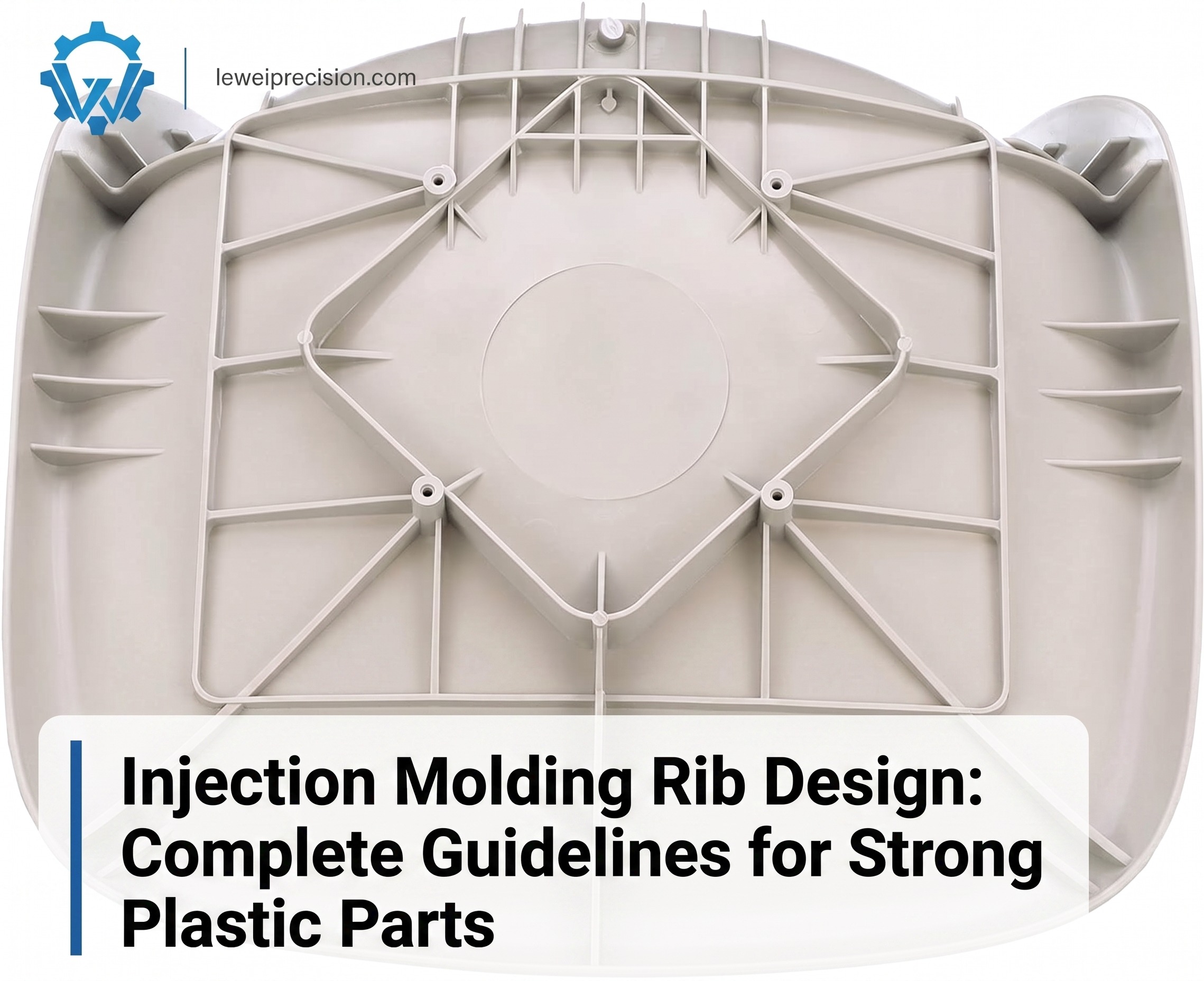
What is injection molding rib design? How thick should ribs be in injection molded parts? What are the best injection molding rib design guidelines for preventing sink marks, warping, and weak structures? How can designers create ribs that improve strength without increasing material usage?
Injection molding rib design is the process of adding thin supporting structures to plastic parts to improve stiffness, strength, and stability without making the entire part thicker. Proper rib thickness, height, spacing, and placement help manufacturers produce high quality injection molded components while reducing defects such as sink marks and warpage.
What Is Injection Molding Rib Design?
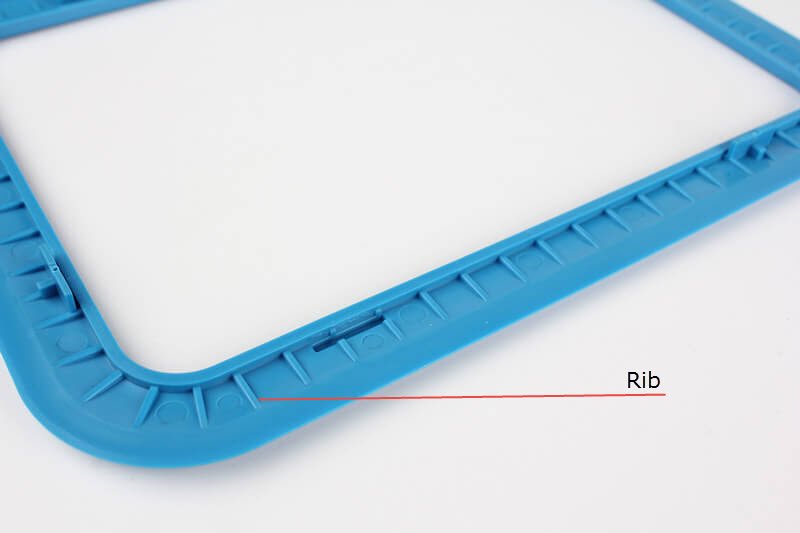
Injection molding rib design refers to the engineering process of creating raised support features on plastic components. Ribs are usually thin wall sections added to the back or inside surface of a part. Their purpose is to increase structural strength while keeping the overall weight and material cost low.
In plastic manufacturing, increasing the entire wall thickness can make a component stronger, but it often creates problems during cooling. Thick areas cool unevenly and may cause shrinkage defects. Ribs provide a better solution because they add reinforcement without creating large material sections.
Professional manufacturers such as Lewei Precision use proper design rules during the molding process to ensure ribs improve performance without affecting surface appearance or production efficiency.
Why Rib Design Matters in Injection Molding
A well designed rib can significantly improve the mechanical performance of a plastic component. Many everyday products including electronic housings, automotive parts, medical devices, and industrial components use ribs for additional support.
Poor rib design can create several manufacturing problems:
- Sink marks on visible surfaces
- Uneven cooling
- Increased cycle time
- Material waste
- Weak structural performance
- Difficulty during mold filling
Following proper injection molding rib design guidelines helps engineers balance strength, appearance, and manufacturability.
Key Injection Molding Rib Design Guidelines
Rib design requires careful consideration of thickness, height, spacing, and draft angle. A rib should support the part without becoming a thick section that traps excess plastic.
The following table explains the main rib design factors:
| Rib Design Factor | Recommended Guideline | Objetivo |
| Rib Thickness | Around 40% to 60% of main wall thickness | Reduces sink marks and shrinkage |
| Rib Height | Usually up to 3 times rib thickness | Provides enough reinforcement |
| Rib Spacing | Maintain proper distance between ribs | Improves cooling and filling |
| Rib Draft Angle | Add draft on rib sides | Helps easy mold removal |
| Rib Base Radius | Use smooth transitions | Reduces stress concentration |
These guidelines may change depending on material type, part size, mold design, and performance requirements.
Rib Thickness for Injection Molding
One of the most important factors in injection molded rib design is rib thickness. If ribs are too thick, they create concentrated areas of plastic that cool slowly. This can lead to visible sink marks on the opposite surface.
The general recommendation is that rib thickness should remain between 40% and 60% of the nominal wall thickness.
For example, if the main wall thickness of a part is 2 mm, the rib thickness should usually be around 0.8 mm to 1.2 mm.
Different materials react differently during molding. Materials with higher shrinkage rates may require thinner ribs, while stronger engineering plastics may allow slightly different dimensions.
Common Rib Design Problems and Solutions
| Problem | Main Cause | Solução |
| Sink Marks | Rib is too thick | Reduce rib thickness |
| Weak Rib Structure | Rib is too thin or short | Increase height or optimize shape |
| Warping | Uneven cooling | Improve rib placement |
| Difficult Ejection | No draft angle | Add proper draft |
| Stress Cracking | Sharp corners | Add radius at rib base |
Working with experienced manufacturers helps avoid these problems before mold production begins. Lewei Precision provides professional serviços de moldagem por injeção with design support for complex plastic components.
How Rib Placement Affects Part Performance
The position of ribs has a direct effect on how a component handles stress. Engineers should place ribs along areas where the part experiences bending forces or mechanical loads.
Randomly adding more ribs does not always improve strength. Too many ribs can increase material consumption, extend molding time, and create cooling problems.
Effective rib placement focuses on:
- Supporting weak areas of the component
- Maintaining uniform wall thickness
- Avoiding unnecessary material buildup
- Improving overall stiffness
During product development, manufacturers often review CAD models before production to identify possible design improvements. Services like CNC machining prototyping can also help test part designs before final injection molding production.
Rib Height and Spacing Considerations
Rib height affects the stiffness of a component. Taller ribs generally provide more support, but excessive height may create filling issues or require deeper molds.
A common design approach is keeping rib height within three times the rib thickness. However, this depends on the application and material properties.
Spacing between ribs is also important. Closely packed ribs may restrict plastic flow during injection, while widely spaced ribs may not provide enough reinforcement.
A balanced design creates strong parts while maintaining smooth mold filling and efficient cooling.
Materials and Their Impact on Rib Design
Different plastics have different shrinkage rates, strength levels, and flow characteristics. Rib dimensions should always consider the selected material.
For example:
- ABS is commonly used for strong consumer products and allows reliable rib structures.
- Polypropylene requires attention because of higher shrinkage behavior.
- Nylon provides excellent strength but may require moisture control before molding.
- Polycarbonate supports strong structural applications.
Material selection and rib design should be evaluated together to achieve consistent production results.
Rib Design and Mold Manufacturing
Rib features directly affect mold complexity. Deep or complicated ribs may require special machining methods and careful ejection planning.
A mold designer must consider:
- Core and cavity design
- Ejection system placement
- Cooling channel layout
- Draft requirements
- Manufacturing limitations
Using professional mold design and manufacturing services helps ensure that rib features can be produced accurately and consistently.
Best Practices for Injection Molded Rib Design
Good rib design follows a balance between strength and manufacturability. Designers should avoid adding ribs only for extra thickness. Each rib should have a clear structural purpose.
Important practices include:
Use consistent wall thickness throughout the part.
Avoid sharp corners that increase stress.
Add draft angles for easier ejection.
Keep ribs thinner than surrounding walls.
Test designs before mass production.
Modern manufacturers often use CAD analysis and simulation tools to identify potential problems before creating molds. This reduces production costs and improves final product quality.
Injection Molding Rib Design for Different Industries
Ribs are used across many industries because they provide lightweight reinforcement.
In automotive manufacturing, ribs strengthen dashboards, interior panels, and structural covers.
In electronics, ribs support device housings and prevent deformation.
In medical products, ribs improve durability while maintaining precise dimensions.
Industrial equipment also uses rib structures to create strong but lightweight components.
Companies looking for complete product development support can combine rapid prototyping services with injection molding production to test designs efficiently.
How Professional Manufacturers Improve Rib Design
Experienced injection molding companies review multiple design factors before production starts. Engineers evaluate CAD models, material selection, mold requirements, and final application needs.
A professional design review can identify:
- Areas where ribs are needed
- Possible sink mark locations
- Cooling challenges
- Mold release problems
- Structural improvements
This approach saves time and reduces expensive mold modifications after production begins.
Considerações finais
Injection molding rib design plays an important role in creating strong, lightweight, and cost effective plastic parts. Proper rib thickness, height, spacing, and placement allow manufacturers to improve product performance while avoiding common molding defects.
Following proven injection molding rib design guidelines helps designers create parts that are easier to manufacture and more reliable in real world applications. Working with an experienced manufacturing partner ensures that rib designs are optimized from prototype development to final production.
Perguntas mais frequentes
What is the ideal rib thickness for injection molding?
The recommended rib thickness is usually around 40% to 60% of the main wall thickness. This range provides reinforcement while reducing the risk of sink marks and uneven cooling. The exact value depends on material and part requirements.
Why are ribs used in injection molded parts?
Ribs increase the strength and stiffness of plastic components without making the entire part thicker. They help reduce material usage while maintaining structural performance and improving product durability.
What happens if injection molding ribs are too thick?
Thick ribs create areas with extra plastic mass that cool slowly. This can cause sink marks, warping, longer cycle times, and poor surface quality on finished parts.
How high should ribs be in injection molding?
Rib height is commonly designed up to three times the rib thickness. However, the final height depends on the part function, material characteristics, and mold design limitations.
Can rib design affect injection molding costs?
Yes, poor rib design can increase production costs by creating mold issues, longer cooling times, and higher material consumption. Optimized rib structures help reduce manufacturing problems and improve efficiency.
 English
  简体中文
简体中文  Español
  Deutsch (Sie)
  日本語
日本語  Português