
Introdução
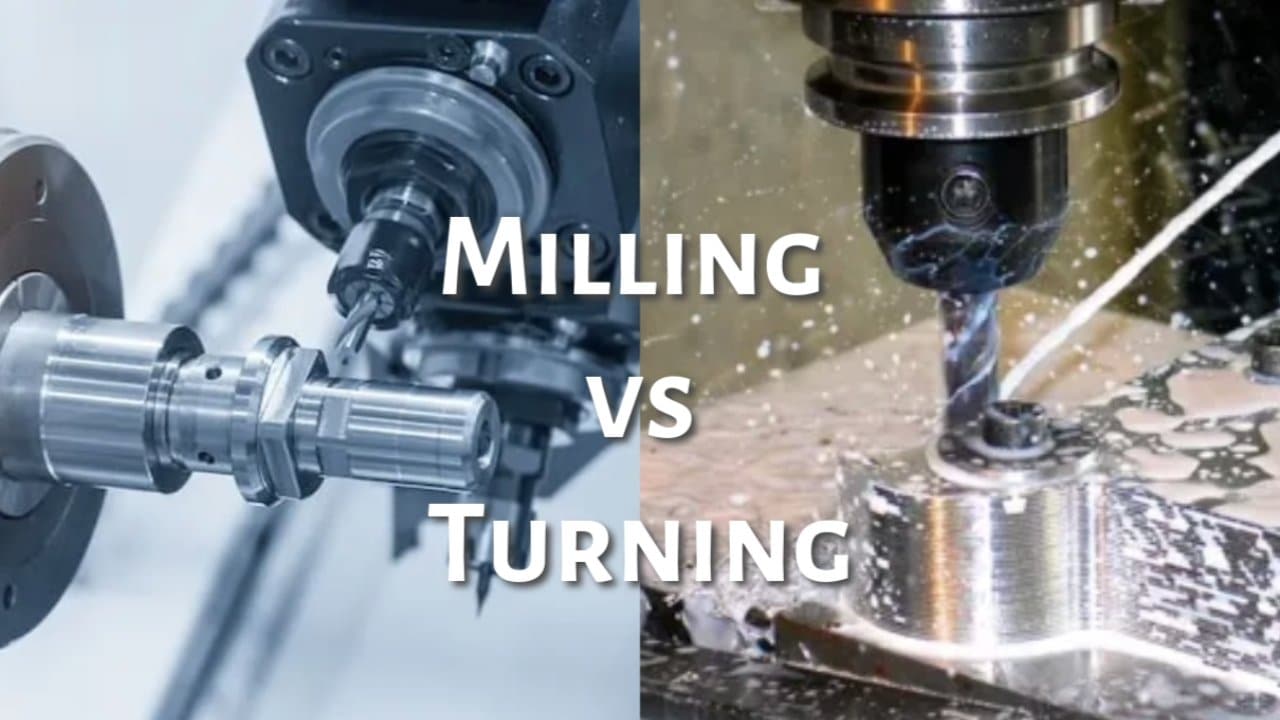
You face a tough choice in manufacturing. Should you use Fresagem CNC ou Torneamento CNC for your parts? This decision affects quality, cost, and time. Many makers waste money by picking the wrong process.
In this post, you learn the basics of each method. We cover how they work, their strengths, and real examples. You see why milling suits complex shapes while turning excels at rounds.
This matters because the global Máquina CNC market hit $101.22 billion in 2025 and will reach $108.58 billion in 2026. Right choices cut costs by 20-40%. For your Serviço de fresagem CNC ou Serviço de torneamento CNC needs, understand these to succeed. Industries like aerospace industry and automotive industry rely on them daily. Our Serviço de fresagem CNC e Serviço de torneamento CNC handle projects in sector médico and electronics industry too.
O que é a fresagem CNC?
Fresagem CNC shapes parts by removing material. A computer guides the tool. You get precise cuts from a block.
Como funciona a fresagem CNC
The workpiece stays fixed. A rotating cutter moves along axes. Software controls paths for accuracy.
Tipos de fresadoras CNC
3-axis mills move in X, Y, Z. They handle basic jobs. 5-axis add rotations for complex angles.
Common Tools and Operations
End mills cut flats. Ball mills make curves. Operations include facing, slotting, and drilling.
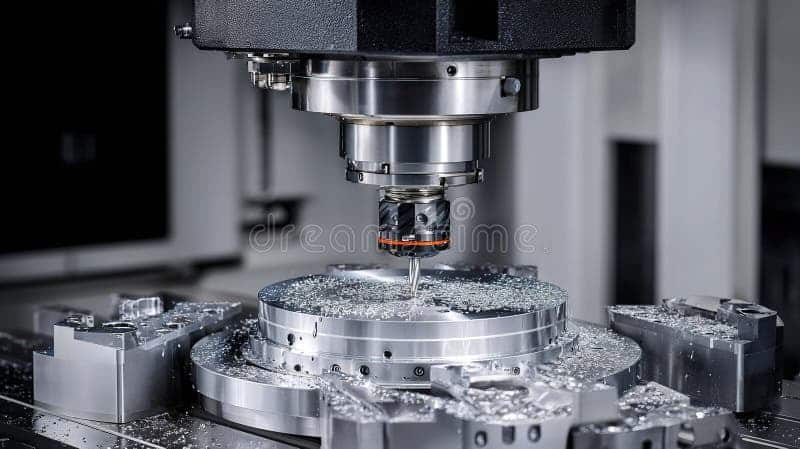
Máquina CNC Cuts Metal Part in Workshop with Metal Shavings Around, Showing Precise Manufacturing Process in Action Stock Photo – Image of component, steel: 436719490
What is CNC Turning?
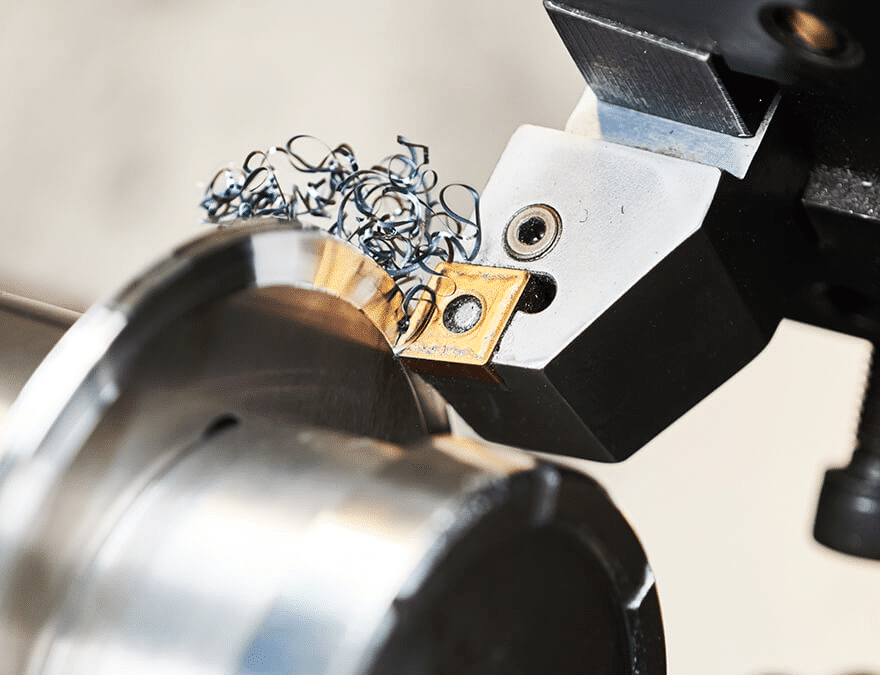
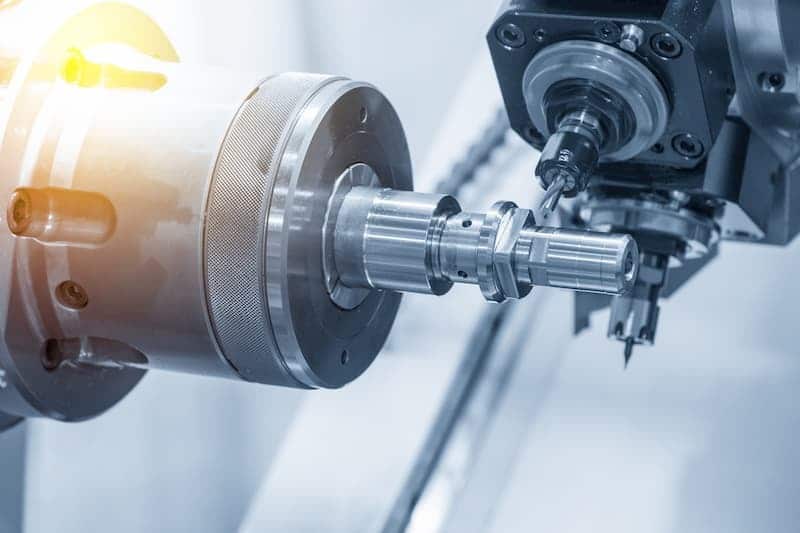
Torneamento CNC is a machining process used to create round parts by rotating a workpiece while a ferramenta de corte shapes it. This process is ideal for creating parts with symmetrical shapes, tais como shafts, bolts, pistonse cylinders. Torneamento CNC is known for its efficiency and ability to produce smooth finishes quickly, making it a go-to option for high-volume production of rotational parts.
How CNC Turning Works
- Workpiece Setup: O material, often in the form of a metal bar or rod, is held securely in a chuck (a type of clamp).
- Rotation: The chuck spins the material at high speeds, allowing the cutting tool to remove material from the surface as the workpiece turns.
- Movimento da ferramenta: Fixed cutting tools shave off excess material to shape the part. The tools are carefully controlled to create precise cuts, including diameters, taperse grooves.
Types of CNC Turning Machines
- Basic Lathes: These machines use two axes (X and Z) to move the cutting tool in linear motions. They are often used for simple operations such as cutting diameters e facing.
- Swiss Lathes: These are designed for high-precision work, particularly for small parts with tiny details. Swiss lathes offer better accuracy and are used for micro-machining ou small-batch production.
- Multi-Axis Lathes: These advanced lathes add milling capabilities to the turning process, allowing for more complex geometries e features (e.g., flat surfaces, slots, and holes) to be produced without switching machines.
Common Tools and Operations in CNC Turning
- Insert Tools: These tools are used to cut diameters e create shapes como tapers. They are essential for shaping cylindrical features.
- Boring Bars: Boring bars are used to enlarge holes or create internal features with high precision. They are typically used for operations that require greater internal diameter tolerances.
- Enfiamento: Máquinas de torneamento CNC can be equipped to cut threads with high precision, making them ideal for creating parts like bolts ou screws.
- Grooving: Grooving operations are used to create grooves or channels in the material, which can be used for functions like sealing ou interfacing with other components.
- De frente para: The facing operation is performed to create a flat surface at the end of the workpiece. This is typically the first operation done in CNC turning.
Key Differences Between CNC Milling and CNC Turning
These processes vary in motion and output. Milling offers versatility. Turning provides speed for symmetry.
Mechanics and Motion
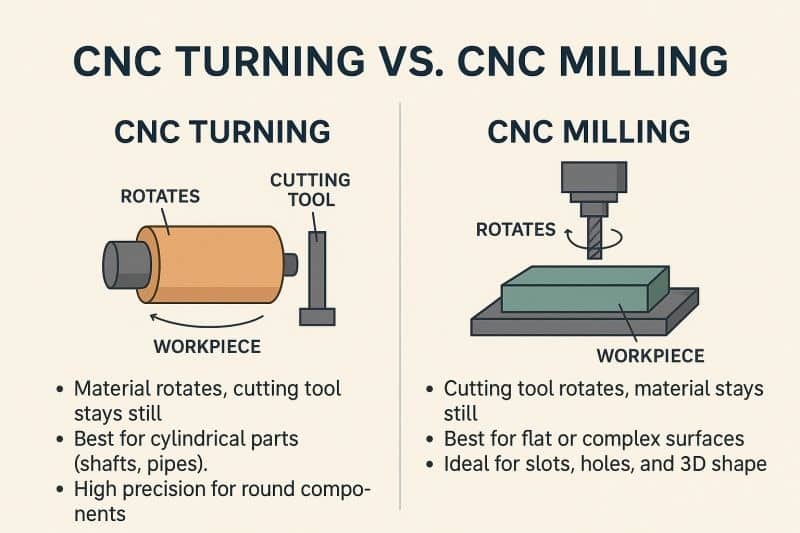
Milling: Tool spins, part fixed. Turning: Part spins, tool fixed. This changes cutting dynamics.
Part Shapes and Complexity
Milling creates 3D contours and flats. Turning limits to cylinders and tapers. Pick based on design.
Speed and Efficiency
Turning finishes rounds quicker. Milling takes time for details. Volume impacts choice.
Materials and Tolerances
Both handle metals like aluminum. Milling ±0.005 inches typical. Turning achieves better concentricity.
Acabamentos de superfície
Turning gives smoother rounds. Milling needs extra steps for shine.
| Difference | Fresagem CNC | Torneamento CNC |
| Motion | Tool rotates, part stationary | Part rotates, tool stationary |
| Shapes | Complex 3D, flats, pockets | Cylindrical, symmetrical |
| Axes | 3-5+ | 2- multi |
| Velocidade | Slower for intricate | Faster for rounds |
| Tolerâncias | ±0.005 in general | ±0.001 for diameters |
| Resíduos | Higher from blocks | Lower from bars |
Torneamento CNC vs Fresagem: What’s the Difference? | M Manikandan posted on the topic | LinkedIn
Pros and Cons of CNC Milling
CNC Milling vs. CNC Turning: A Comprehensive Breakdown
In modern manufacturing, both Fresagem CNC e Torneamento CNC are widely used for different types of parts and applications. Each method has distinct advantages and disadvantages, and understanding their pros and cons can help determine the best approach for a given task. Let’s take a deeper dive into both processes to help you make an informed choice.
CNC Milling: Freedom in Design with More Setup
Fresagem CNC is a versatile and powerful machining process that allows manufacturers to create complex and detailed parts. Milling works by rotating the cutting tool and feeding it into a stationary workpiece, allowing for the creation of intricate shapes, pocketse slots.
Vantagens:
- Flexibilidade de conceção: Fresagem CNC provides tremendous freedom in design, allowing you to create detailed features that would be difficult to achieve with other processes.
- Versatilidade de materiais: It is highly effective at working with hard materials, including metals like aço inoxidável, titânioe alloys, making it ideal for high-performance applications.
- Multi-Axis Milling: The ability to use multi-axis milling significantly reduces repositions and allows for greater precision. For example, with 5-axis milling, you can approach the workpiece from multiple angles in a single setup, reducing setup time and improving part accuracy.
Desvantagens:
- Higher Costs for Simple Parts: While milling excels at creating detailed parts, it tends to be more expensive para simple geometries because of the need for more setups, tooling, and longer machining times.
- More Chips, More Cleanup: Milling produces a significant amount of chips and waste material, which requires constant cleanup to maintain a clean workspace and avoid operational interference.
- Slower for Basic Parts: Fresagem CNC can be slower than turning para basic operations like creating simple cylindrical shapes or features, making it less efficient for straightforward parts.
Dica profissional:
Para aerospace parts, where precision and complexity are critical, using 5-axis milling can help reduce setups by as much as 50%, improving efficiency while maintaining high precision.
CNC Turning: Efficient and Fast for Rotational Parts
Torneamento CNC is a process best suited for rotational parts, tais como shafts e cylindrical features. In this process, the workpiece is rotated while a stationary tool removes material, creating parts with round or cylindrical shapes.
Vantagens:
- Fast Cycle Times: Torneamento CNC offers quick cycle times, making it ideal for producing high volumes of parts quickly, which saves money in production.
- Threading Excellence: Torneamento CNC is particularly effective at creating threads with high precision, making it the go-to process for parts that require threaded features.
- Reduced Waste: The process is efficient and often results in less waste compared to other machining methods, contributing to improved sustainability in production.
Desvantagens:
- Limited for Non-Rotational Parts: While Torneamento CNC is excellent for creating rotational parts, it has limitations when it comes to making parts with flat surfaces ou non-circular features. Without additional operations or tools, turning can’t produce parts with complex geometries.
- Slower with Tool Changes: For more complex jobs, tool changes can slow down the process, especially in applications that require a variety of tool types for different cuts.
- Limited to Rotational Parts: Torneamento CNC is inherently limited to rotating objects—meaning parts with features that do not rotate or are non-cylindrical may not be suitable for turning without adding additional machining operations.
Conselhos de especialistas:
For parts that require holes e complex features, adding live tooling (tools that rotate) to the Máquina de torneamento CNC can allow you to complete these features in one go, trimming machining time by up to 30% and improving efficiency.
When to Choose CNC Milling
Select milling for variety. It fits parts with multiple faces.
Ideal Applications
Use for brackets with slots. Or housings with pockets. Milling handles 3D curves well.
Exemplos do sector
Aerospace industry mills turbine blades for precision. Automotive industry crafts engine blocks. Medical industry shapes custom implants.
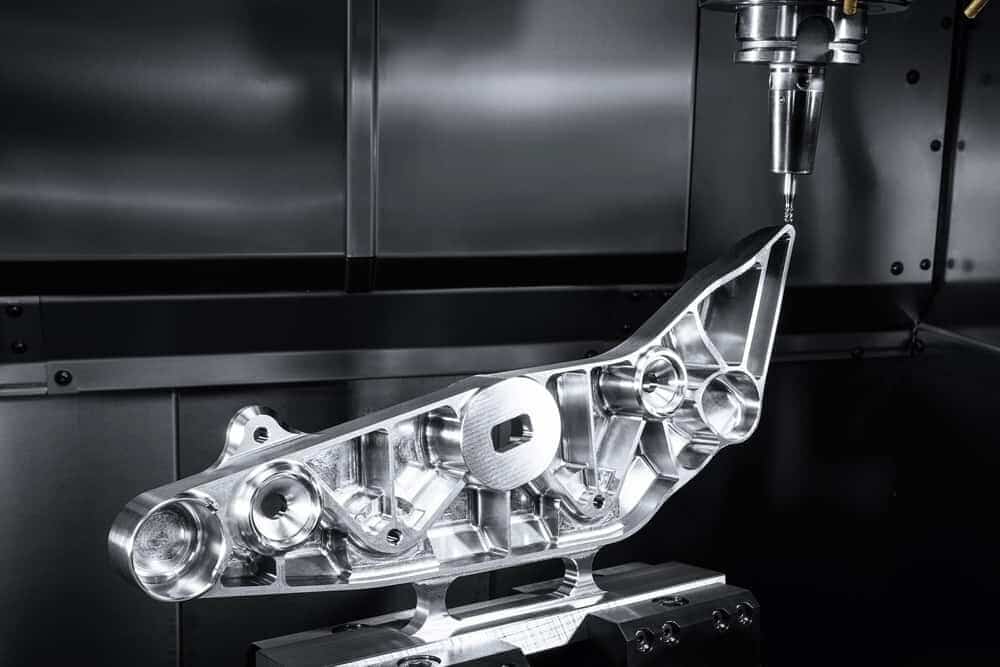
The Ultimate Guide to Maquinação CNC Aerospace Parts – AN-Prototype
When to Choose CNC Turning
CNC Turning vs. Mill-Turn: Choosing the Right Approach for Precision Manufacturing
No mundo do Maquinação CNC, two methods that stand out for creating precise and efficient parts are Torneamento CNC e CNC mill-turning. Each has its specific use cases and advantages, depending on the shape and complexity of the part being produced. Below, we will explore the benefits of Torneamento CNC for round parts and how CNC mill-turn combines the best of both worlds to streamline complex production.
CNC Turning: Efficiency for Round, Symmetrical Parts
Torneamento CNC is the go-to method for producing parts with rotational symmetry—that is, parts that are designed to be round or cylindrical. In turning, the workpiece rotates while the cutting tool remains stationary, shaping the part by removing material from around its surface.
Advantages of CNC Turning:
- Fast Cycle Times for Round Parts: Torneamento CNC is ideal for producing parts with round features tais como grooves, diameterse tapers. The process is very efficient when dealing with symmetrical shapes, which can be produced quickly and accurately.
- High Precision on Symmetrical Items: The accuracy of Torneamento CNC ensures that round parts like shafts, pistonse bolts meet strict tolerance requirements, which is essential for ensuring part functionality.
Ideal Applications for CNC Turning:
- Indústria automóvel: Crankshafts, which are essential components of internal combustion engines, are commonly produced using CNC turning. The process is ideal for creating the cylindrical shape of crankshafts, which require high accuracy and speed.
- Indústria aeroespacial: Pins e rotationally symmetric components are commonly produced with Torneamento CNC, as the process can meet the high standards required in the aerospace sector for performance and durability.
- Medical Industry: Torneamento CNC is often used to create medical tools, tais como surgical instruments ou implants, which require precision and cleanliness. The ability to create parts with exacting tolerances is critical in médico aplicações.
Enquanto Torneamento CNC excels at creating round, symmetrical parts, it is not as effective when the part requires non-circular features como flats ou complex geometries. For these kinds of parts, a hybrid approach or other methods might be necessary.
CNC Mill-Turn: Combining Milling and Turning for Complex Parts
CNC mill-turn machines combine the best of Fresagem CNC e Torneamento CNC in a single machine. This hybrid approach allows manufacturers to take advantage of both machining methods without needing to switch between machines or setups. Mill-turning machines integrate live tooling, meaning that the machine has the ability to mill while it turns the workpiece.
What is Mill-Turn?
- Mill-Turn Machines: These machines have live tools that are capable of rotating independently of the workpiece. This enables the machine to perform operações de moagem (such as drilling, tapping, and contouring) while simultaneously carrying out the turning operation on the workpiece.
- No Need for Part Transfers: One of the key advantages of mill-turn machines is that they reduce the need for part transfers between different machines. This integrated approach saves time and minimizes errors that could occur during handling or repositioning.
Benefits of Mill-Turn:
- Reduced Errors from Handling: Handling and transferring parts between different machines can introduce errors due to misalignment or handling issues. Mill-turning eliminates these risks by keeping the entire process in one machine, leading to more consistent results.
- Shorter Lead Times: Since the machine can perform both turning and milling operations in a single setup, it cuts lead times by up to 40%. This is especially beneficial for parts that require both round and flat features, which would otherwise need separate operations.
- Complex Shaft Production: Mill-turn machines are perfect for producing complex shafts, which may require both round features (from turning) and flat or drilled features (from milling). The ability to handle both in one operation streamlines production and improves accuracy.
When to Use Mill-Turn?
Mill-turning is ideal for parts that require both rotational e non-rotational features. Some examples of parts that benefit from the mill-turn process include:
- Automotive valves: These parts typically have both round sections (for the stem) and flat features (such as sealing faces or threaded portions), making them an excellent candidate for the mill-turn process.
- Aerospace components: Complex parts in aerospace often require both turning and milling operations. Using a mill-turn machine allows manufacturers to produce these parts with greater efficiency e precisão, which is crucial in the aerospace industry.
Conselhos de especialistas:
If your production involves high-mix, low-volume parts, investing in a mill-turn machine can pay off in the long run. These machines are highly versatile and can handle a variety of part types and sizes, reducing the need for multiple setups and increasing production efficiency. The combination of both turning and milling operations in one machine is especially beneficial when you need high precision e quick turnaround times para complex parts.
Cost Comparison: CNC Milling vs CNC Turning
Costs depend on setup and runtime. Turning often wins for simples.
Factors Affecting Costs
Material: Titanium hikes prices. Volume: Batches lower per-piece. Complexity: More axes add fees.
Typical Price Ranges
3-axis milling: $50-100/hour. Turning: $30-50/hour. 5-axis milling reaches $100-150/hour.
Ways to Save Money
Design simply. Batch orders. Use DFM to avoid reclamps.
| Fator de custo | Fresagem | Virar |
| Taxa horária | $50-150 | $30-50 |
| Setup | Higher for multi-axis | Lower for basics |
| Per Part (Small Batch) | $20-100 | $10-50 |
| Waste Impact | Mais | Less |
Common Mistakes to Avoid When Choosing Between Milling and Turning
Escolher entre Fresagem CNC e Torneamento CNC is not a decision to rush. Each process has its strengths, and using the right one for the right part is essential for cost efficiency e part accuracy. Below are the common mistakes to avoid when selecting between the two.
1. Treating Milling and Turning as Interchangeable
Mistake: Some manufacturers assume that fresagem e viragem are interchangeable processes for any part. However, each has its strengths and weaknesses, and they are not suited for all types of parts.
- Fresagem is best for parts with complex geometries, non-rotational features, or multi-axis cuts.
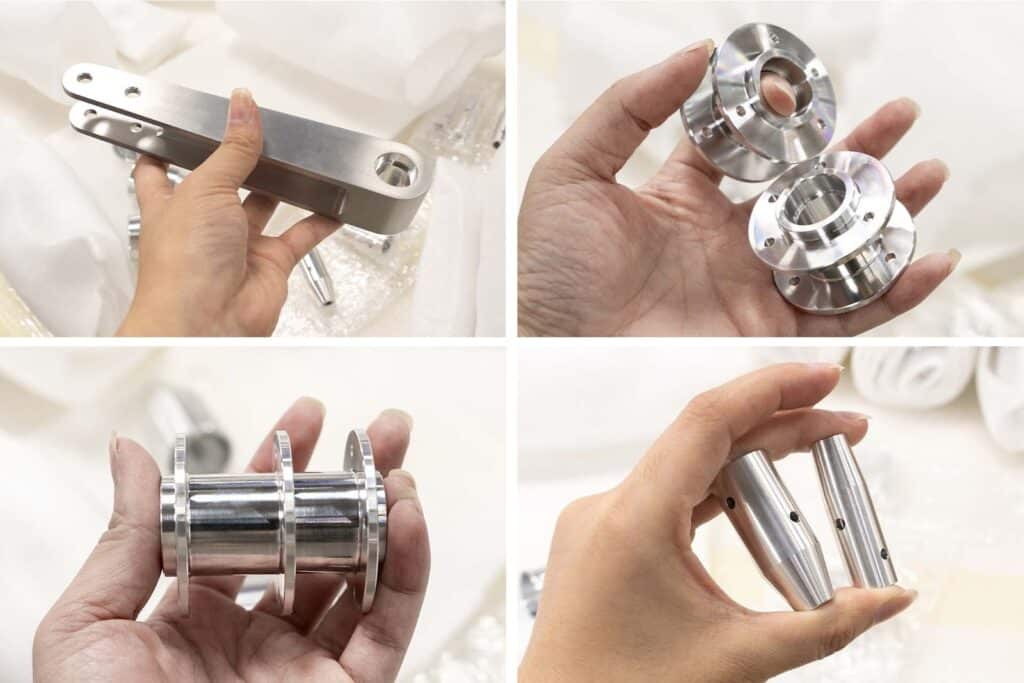
- Virar is ideal for producing round parts or parts with rotational symmetry, tais como shafts, pistonse bolts. It’s efficient and cost-effective for cylindrical shapes.
Solução: Always match the process to the part’s shape. For example, don’t use milling for round features if turning can get the job done more efficiently.
2. Ignoring Part Geometry
Mistake: Another common error is not considering the geometry of the part before deciding on the machining method. For example, using fresagem for cylindrical or round parts, where viragem is much more efficient.
- Virar excels at machining cylindrical parts e rotational geometries, making it a faster and more cost-effective option for such parts.
- Fresagem may be required for parts with flat surfaces, complex features, ou non-round shapes, but it can be slower and more costly for simpler cylindrical parts.
Solução: Use viragem para cylindrical shapes e fresagem for more complex geometries. Always evaluate the geometry to select the best process.
3. Overlooking Materials
Mistake: Not considering the material when choosing between milling and turning can lead to machining inefficiencies e increased costs. For example, harder materiais tais como titânio ou aço inoxidável require more precise cutting speeds e tooling, which can vary between milling and turning processes.
- Mais difícil materiais may require different speeds and feeds. If machining hard metals on the wrong machine or with incorrect parameters, the tool life can decrease significantly, and machining time can increase.
Solução: Choose the right process based on both part geometry e o material being used. Fresagem e viragem have different requirements for materiais, and understanding these requirements can help avoid costly mistakes.
4. Skipping Design for Manufacturability (DFM)
Mistake: Skipping Design for Manufacturability (DFM) principles when designing parts can result in design flaws that are costly to correct later. DFM ensures that the part is designed with ease of manufacturing in mind, avoiding unnecessary complications that would make either milling or turning more expensive.
- Not considering acesso a ferramentas, tolerancese machining constraints can lead to redesigns and delays if the part is not feasible to machine with the chosen process.
Solução: Integrate DFM principles early in the design phase. This ensures that the part can be produced efficiently and cost-effectively without requiring frequent adjustments.
5. Rushing Setup Time
Mistake: Rushing the setup process can lead to misalignment, errorse poor-quality parts. Proper setup time ensures that the machine is correctly aligned, the tooling is in place, and the part is fixtured securely. Hasty setups increase the likelihood of scrapped parts e rework.
- Especially with multi-axis fresagem or parts requiring live tooling, improper setup can drastically impact the accuracy of the final product.
Solução: Take the time to carefully set up the machine and part before starting the operation. A proper setup prevents errors e delays down the line and improves overall machining efficiency.
How to Choose the Right CNC Process for Your Project
Follow this guide. It simplifies selection.
- Review part shape.
- List features needed.
- Check tolerances and finishes.
- Estimate quantity and budget.
- Consider hybrids if mixed.
- Get expert quotes.
Lista de verificação de referência rápida:
- Round and simple? Turning.
- Complex with flats? Milling.
- Tight tolerances? Check machine axes.
- Low cost? Optimize design.
Real-World Applications and Case Studies
See these in action. Companies gain big wins.
In aerospace, a supplier used milling for brackets. This improved tolerances, cutting failures by 20%.
Automotive firm switched to turning for shafts. Production rose 25%, waste fell.
Medical device maker adopted mill-turn. Assembly time dropped 30% for implants.
Future Trends in CNC Machining
CNC evolves fast. AI optimizes paths. Market grows to $251.61 billion by 2034.
Hybrids rise. Sustainable practices cut waste. Watch 6-axis for more flexibility.
Principais conclusões
- Milling for complex, 3D parts.
- Turning for fast, round production.
- Hybrids combine best of both.
- Costs: Turning cheaper for simples.
- Avoid mistakes like poor setup.
- Industries: Aerospace, automotive, médico benefit.
- Market booms with tech advances.
Conclusão
CNC milling and turning power modern making. Milling offers detail; turning delivers speed. Choose wisely for your needs.
Use our guides and checklists. This ensures success in projects. Trends like hybrids will shape the future.
Perguntas frequentes
What is the main difference between CNC milling and CNC turning?
Milling rotates a cutting tool while the part stays still → great for complex shapes, flats, pockets, and 3D features.
Turning spins the part while a fixed tool cuts → perfect for round, symmetrical parts like shafts, bolts, and threads with excellent concentricity.
When should I use CNC milling over turning?
Choose milling when your part has flats, holes on multiple faces, slots, pockets, or complex 3D curves (e.g., aerospace blades, medical implants, engine housings).
If it’s mostly round and simple → turning is faster and cheaper.
Is CNC turning cheaper than milling?
Yes — usually 30–60% cheaper for cylindrical parts thanks to faster cycle times, less waste, and lower shop rates ($35–75/hr vs $50–150/hr for milling in 2026).
Milling can be more economical for very complex or low-volume parts that need lots of features anyway.
Can I combine CNC milling and turning?
Yes — mill-turn (or turn-mill) machines do both in one setup using live tooling.
This saves 40–60% on time, reduces errors, and is ideal for parts that need turned diameters + milled flats/holes (e.g., valves, bone screws).
What materials work best with these processes?
Both handle aluminum, steel, stainless, titanium, brass, and most plastics well.
Turning loves softer/ductile materials for clean chips and smooth finishes; milling handles harder/tougher alloys better for complex shapes without chatter.
How do I find a reliable CNC service?
Look for ISO/AS9100 certification, experience in your industry, modern multi-axis machines, and fast quoting.
Upload your drawing to 3–5 shops, check real tolerances they’ve achieved, start with a small prototype order, and pick the one with clear communication and good reviews.

 English
  简体中文
简体中文  Español
  Deutsch (Sie)
  日本語
日本語  Português