
By Lewei Precision Engineering Team | Updated July 2026 | 10 min read
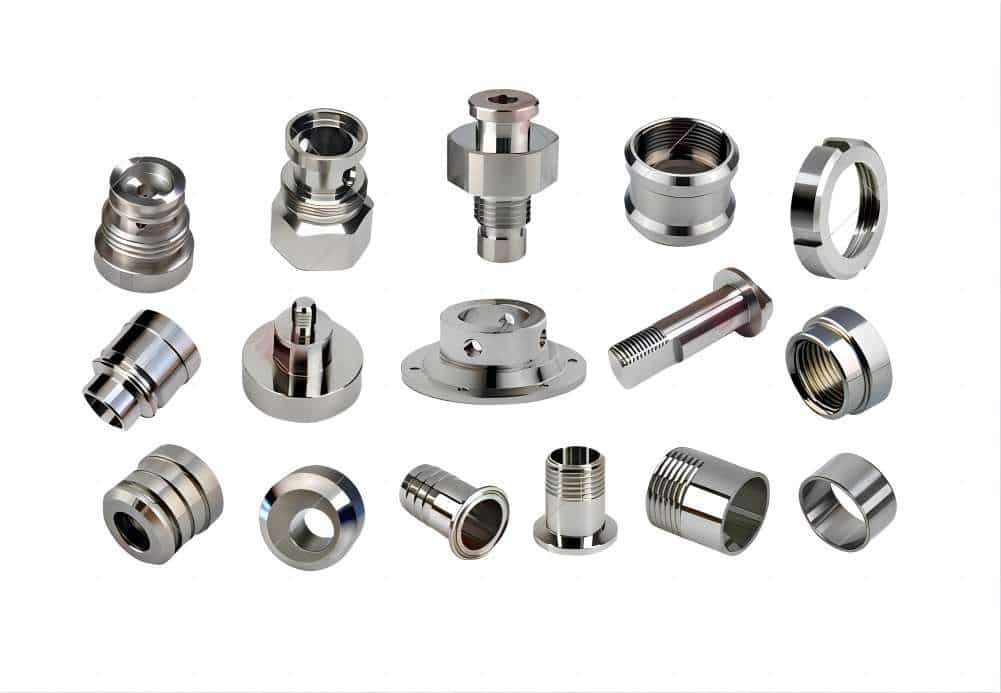
The right surface finish for a CNC machined part does more than change how it looks. It controls corrosion resistance, wear, electrical properties, and how the part feels in the hand. This guide walks through the finishes we run most often, what each one does, which materials it suits, and how to choose, so you specify a finish that matches the job instead of guessing from a dropdown menu.
| QUICK ANSWERThe most common CNC surface finishes are as-machined, bead blasting, anodizing (Type II and Type III hardcoat), powder coating, brushing, polishing, electropolishing, passivation, black oxide, and electroplating. Anodizing suits aluminum, passivation and electropolishing suit stainless, and powder coating works across most metals for a durable colored finish. |
As-machined and blasted: the starting points
As-machined
The default finish, with visible tool marks and a standard surface roughness around 3.2 micrometers Ra. It is the fastest and cheapest option and is fine for internal or non-cosmetic parts. Tighter roughness values can be specified, but each step down adds machining time and cost.
Bead blasting
A stream of glass beads or media gives the part a uniform matte texture that hides tool marks. It is a cosmetic finish with light deburring benefit, popular on aluminum and stainless prototypes and consumer housings. Blasting is often used as a base step before anodizing or painting.
Anodizing: the aluminum standard
Anodizing grows a hard, corrosion-resistant oxide layer on aluminum through an electrochemical process, and it accepts dye for color. It is the most requested finish for aluminum parts because it improves durability without adding meaningful thickness. Two types cover most needs, and both pair naturally with our aluminum machining work.
- Type II (standard anodizing): a thin decorative and protective layer available in many colors. Ideal for consumer electronics, enclosures, and cosmetic aluminum parts.
- Type III (hardcoat anodizing): a thicker, much harder layer for wear resistance on functional parts like pistons, gears, and sliding components. Usually black or dark gray.
Anodizing looks best on grades that finish cleanly, which is one reason 6061 and 6063 are popular. See our note on aluminum grades for how alloy choice affects the final look.
Coatings: powder coat and paint
Powder coating
A dry powder is applied electrostatically and cured under heat into a tough, uniform colored layer. It is more impact and chip resistant than paint, works on most metals, and comes in a huge color and texture range. The trade-off is a thicker build-up than anodizing, so it is less suited to parts with tight fits.
Painting and wet coatings
Spray or wet paint gives maximum color flexibility and specialty options such as textured or high-temperature coatings. It is common where an exact color match or a specialty coating is required, though it is generally less durable than powder coating for handling and wear.
Stainless steel finishes: passivation and electropolishing
Passivation
A chemical treatment that removes free iron from a stainless surface and restores the passive chromium-oxide layer, boosting corrosion resistance without changing appearance. It is standard for medical, food, and marine stainless parts and is often a specification rather than an option.
Electropolishing
An electrochemical process that removes a thin surface layer to leave a bright, ultra-smooth, easy-to-clean finish. It improves corrosion resistance and is common on medical and food-grade stainless where a hygienic surface matters.
Cosmetic and functional finishes
- Brushing: a directional satin grain applied with abrasive belts or pads, common on consumer product faces and stainless trim.
- Polishing: progressive abrasives produce a mirror surface for cosmetic or optical parts.
- Black oxide: a conversion coating that gives steel a black finish with mild corrosion and glare resistance and almost no dimensional change, common on tooling and fasteners.
- Electroplating: a metal layer such as nickel, chrome, or zinc deposited for wear resistance, corrosion protection, conductivity, or appearance.
- Chromate conversion (Alodine): a thin coating on aluminum that adds corrosion resistance while preserving electrical conductivity, often used in aerospace and electronics.
Surface finish comparison
| Finish | Best materials | Main benefit |
| Anodizing (Type II/III) | Aluminum | Corrosion and wear resistance, color |
| Powder coating | Most metals | Durable colored, impact resistant |
| Bead blasting | Aluminum, stainless | Uniform matte, hides tool marks |
| Passivation | Stainless steel | Restores corrosion resistance |
| Electropolishing | Stainless steel | Bright, smooth, hygienic surface |
| Black oxide | Steel | Black finish, glare and mild corrosion resistance |
| Electroplating | Metals | Wear, corrosion, conductivity, or looks |
We offer more than 30 finishing options in total. You can browse the full menu of surface finishing options and pair any of them with our CNC machining and sheet metal fabrication work.
How to choose the right finish
- Define the priority. Is corrosion resistance, wear, appearance, or conductivity the main goal? Start there.
- Match to the material. Anodizing for aluminum, passivation or electropolishing for stainless, black oxide for steel.
- Respect the tolerances. Coatings add thickness. On tight-fit features, favor anodizing or as-machined over powder coat.
- Weigh cost and lead time. As-machined is cheapest; multi-step or specialty finishes add days and dollars.
- Confirm the standard. Regulated parts may require a specific finish spec, such as passivation for medical stainless.
Frequently Asked Questions
What are the most common surface finishes for CNC parts?
The most common CNC surface finishes are as-machined, bead blasting, anodizing, powder coating, brushing, polishing, electropolishing, passivation, black oxide, and electroplating. Anodizing is the standard for aluminum, while passivation and electropolishing are standard for stainless steel.
What is the difference between anodizing and powder coating?
Anodizing grows a thin, hard oxide layer into aluminum and is dimensionally minimal, making it ideal for tight-tolerance aluminum parts. Powder coating applies a thicker, tough colored layer over most metals with better impact resistance but more build-up, so it suits durable colored finishes rather than precise fits.
Which finish is best for corrosion resistance?
For aluminum, anodizing or chromate conversion. For stainless steel, passivation and electropolishing. For broad protection across metals, powder coating or electroplating with nickel or zinc. The best choice depends on the base material and service environment.
Does surface finish affect part tolerance?
Yes. Coatings such as powder coat and plating add measurable thickness, so they can affect tight fits. Anodizing adds very little, and as-machined adds none. Account for finish thickness on critical dimensions during design.
What is the default finish if I do not specify one?
The default is as-machined, which leaves visible tool marks at a standard roughness around 3.2 micrometers Ra. It is the fastest and cheapest option and is appropriate for internal or non-cosmetic parts.
| ABOUT THE AUTHOR Lewei Precision Engineering Team — Manufacturing engineers at Lewei PrecisionThe Lewei Precision engineering team has spent more than 21 years machining and molding parts for aerospace, medical, automotive, and semiconductor customers across 120-plus countries. Our factory runs 3-axis through 5-axis CNC machining, turning, injection molding, and sheet metal fabrication under ISO 9001:2015, ISO 13485, ISO 14001, and IATF 16949 quality systems. The guidance here reflects what we see on real production floors and in customer DFM reviews every week, not textbook theory. Have a part in front of you? Send us the CAD file and we will tell you exactly how we would make it. |
| Need help pairing a finish to your part and material? Upload your CAD file to Lewei Precision and we will recommend the right finish with your quote. |

 English
  简体中文
简体中文  Español
  Deutsch (Sie)
  日本語
日本語  Português