 Skip to content
Custom Die Casting Services
Get precision die-cast metal components of prototype and high volume production with quick delivery. Our high level technologies of die casting will provide you with the best quality parts and hence the best solution to your manufacturing requirements.
- Fast Turnaround: Quick prototypes and production runs.
- Precision: Tight tolerances for accurate, high-quality parts.
- Certified Quality: ISO 9001:2015, IATF 16949, ISO 13485 certified.

Die Casting Capabilities Overview
Lewei Precision has a variety of die casting services that aim to serve different industries. Manufacturing quality production components, as well as the fast-prototyping process, our abilities will guarantee the high quality, long-lasting, and high-performance components, where each of them performs exactly according to your needs.

Hot chamber die casting is ideal in metals with low melting points like zinc and magnesium and therefore it has a high rate of cycles and wasted material is minimized hence is ideal in large production volumes.

It is applied to high-melting-point metals such as aluminum that offer the required strength and accuracy to components that must be able to endure stressful environments such as aerospace and automotive components.
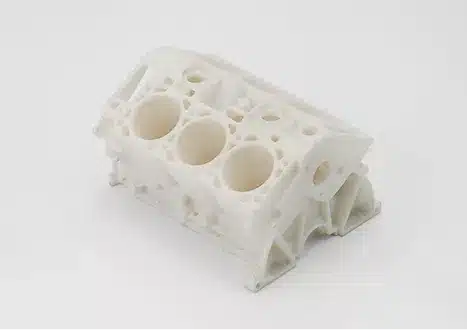
Semi-solid die casting gives high strength and low porosity components with enhanced surface finish, which would be suitable in the automotive and aerospace industries, where part wear and performance are vital.
SLM applies laser to liquefy metal powders to create metal components with high strength. This method is perfect in aerospace, medical and industrial applications because it is long-lasting and precise to use under harsh conditions.
Available Die Casting Finishes
Lewei Precision has a range of die cast finishes to meet your parts needs; functional, aesthetic, and lasting requirements. To achieve a polished appearance, better corrosion resistance, or even better performance, we offer you the choices that suit your requirements.

The as-cast finish is a perfect choice where aesthetics are less important as it preserves the raw texture of the part and it is used when the part is an internal part or prototype.

A bead blasted finish produces a textured finish with a matte look, which enhances the life of the part, and gives it a consistent look, which is ideal in parts that are subject to wear and environmental elements.

Anodizing provides a protective coating of aluminum parts improving their corrosion resistance and wear. It is also customizable in terms of colors, thus it is an excellent product in terms of both protection and aesthetics.

In powder coating, we use a smooth coating which is long lasting and provides a lot of protection against chemicals, abrasion, and the elements. Perfect in components that require heavy and durable cover.

Wet painting enhances appearance of parts besides providing a protective layer. It is a perfect selection of functional and aesthetics components that have a variety of colors to fit your design requirements.

Plating is a coating of the surface to parts with a thin layer of metal to improve characteristics such as corrosion resistance, conductivity, and surface finish, so it is suitable in electronic parts or heavy-duty applications.
Die Casting Materials
Our die casting services use non-ferrous alloys specifically designed for high-pressure mold filling and repeatable mass production.
All materials listed below are purpose-built die casting alloys, not general machining grades.

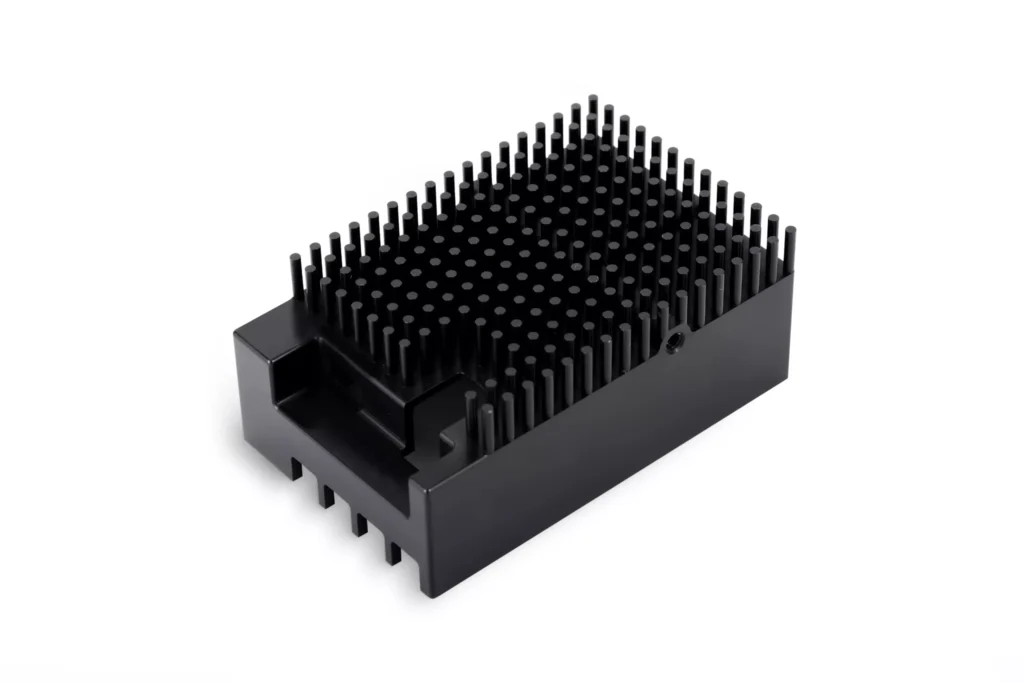
Lightweight, corrosion-resistant, and the most widely used die casting material for structural and automotive parts.
Grades
A380
ADC12
A360
AlSi9Cu3
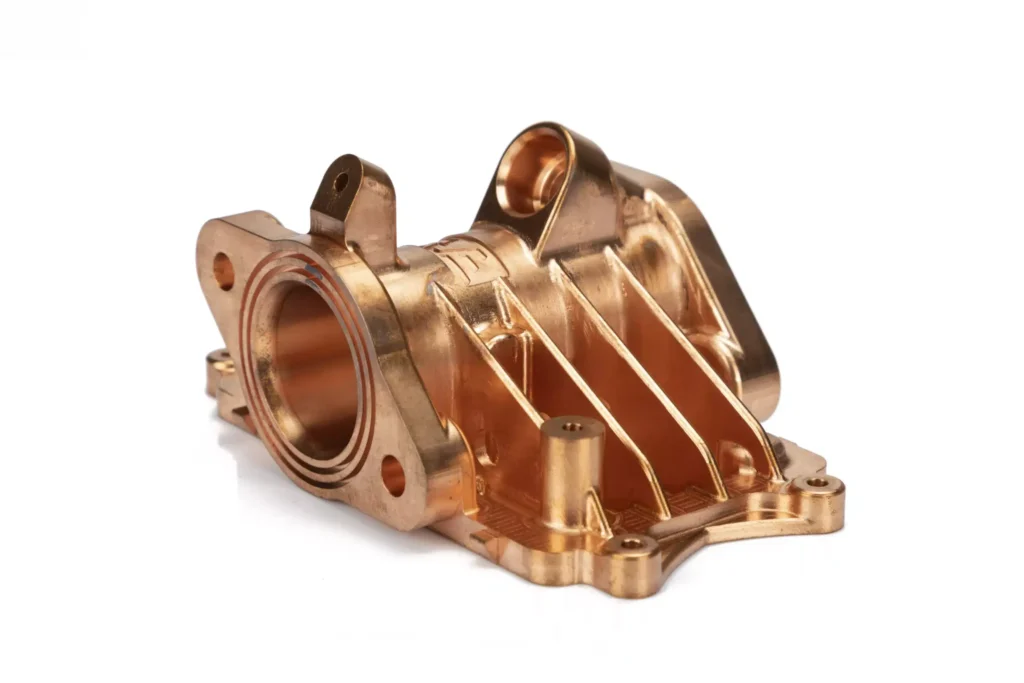
Excellent fluidity and dimensional accuracy for thin-wall and high-detail components.
Grades
Zamak 3
Zamak 5
Zamak 7
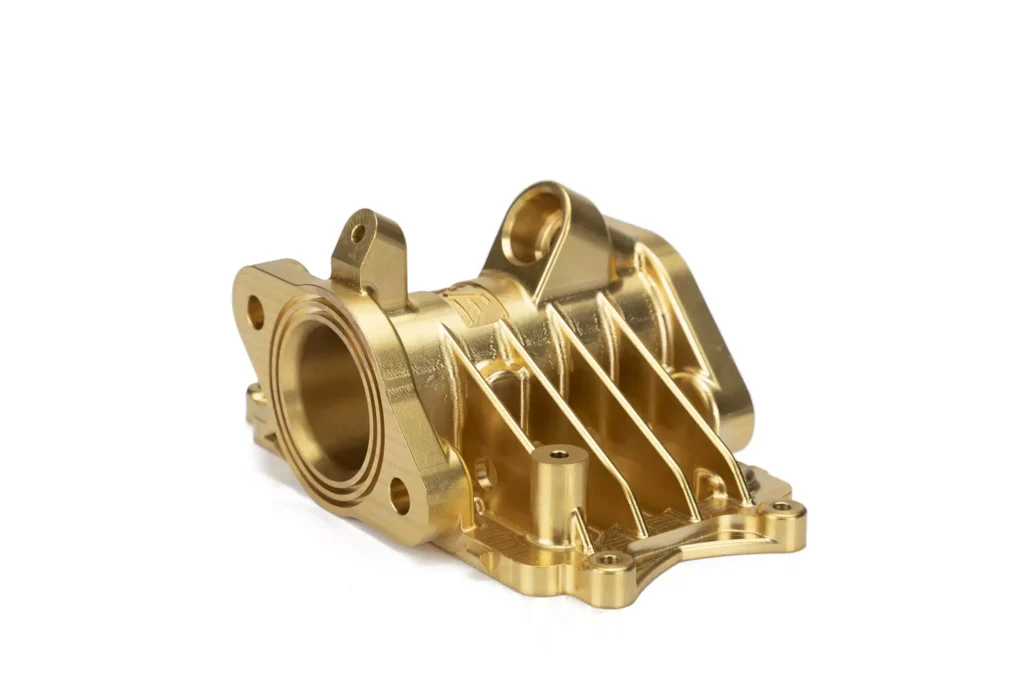
Ultra-lightweight alloy used for weight-critical and high-strength components.
Grades
AZ91D
AM60B
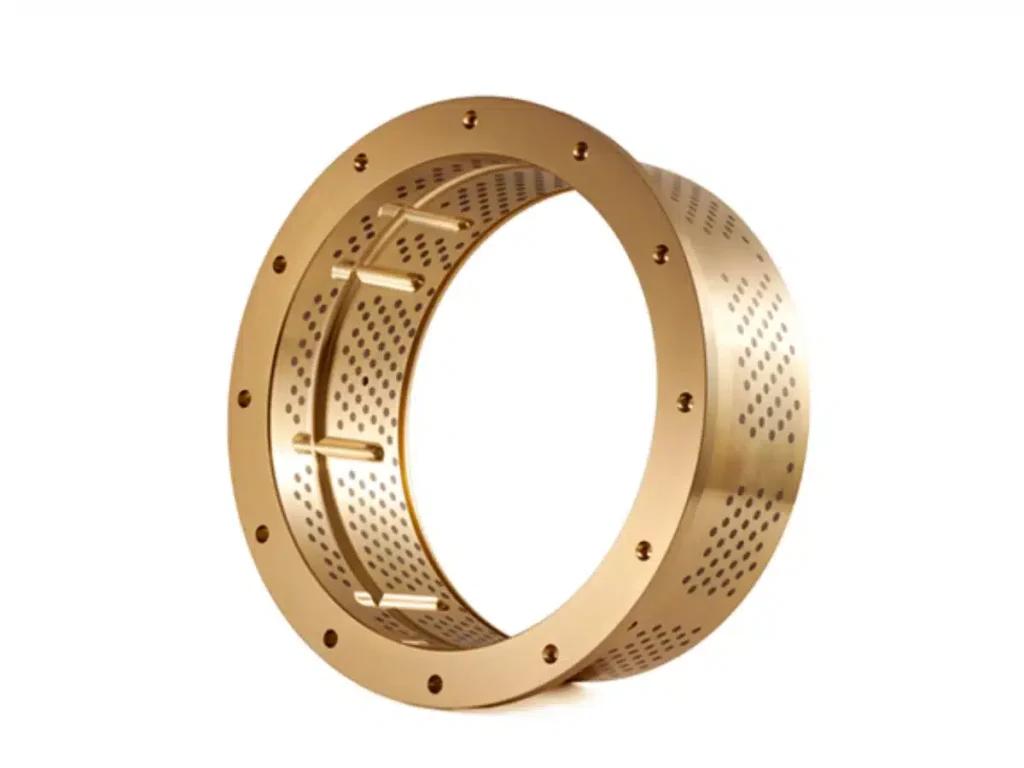
Used in limited die casting applications where higher strength is required.
Grades
Copper-Based Die Casting Alloys
Die Casting Tolerances
| Parameter | Specification |
|---|---|
| General Tolerances | ±0.01 mm for metals / ±0.05 mm for plastics |
| Tight Tolerance | ±0.005 mm |
| Surface Finish | Ra 3.2–0.8 μm |
| Maximum Build Size | Up to 1200 mm |
Quality Assurance & Inspection Capabilities


At Lewei Precision we guarantee the best quality assurance of all the parts we manufacture. Our full inspection services are provided through the use of sophisticated equipment such as CMM (Coordinate Measuring Machines), optical scanners and digital micrometers to provide dimensional accuracy to tightest of tolerances. Every segment is carefully checked at every level and it is made to meet the specifications strictly in functionality and functionality.
We have high standards of geometric accuracy and employ GD&T ( Geometric Dimensioning and Tolerancing ) techniques and test parts to ISO 2768-mK and ASME Y14.5 standards. The quality of surface is also evaluated with a high degree of test like the roughness in form of measurements in the range of Ra 3.2-0.8 μm and confirmation of the coating thickness to a uniform finish. Additionally, we provide full traceability with documentation such as material certificates (MTRs), FAI reports, and CMM data sheets, ensuring complete transparency and peace of mind for our customers.
Die Casting Services for Diverse Industries
Lewei Precision specializes in offering die cast services of the highest quality in the various industries. In aerospace, automotive, medical devices, robotics or consumer products, we can provide custom die castings to suit the specific requirements of each industry. Our state of die casting also enables us to manufacture accuracy parts in high durability and strength.


Die Casting Workflow (How We Work)
Lewei Precision’s die casting process ensures efficiency, quality, and transparency at every step, delivering high-quality parts to meet your needs.
Engineering Review
Upload your design for a manufacturability analysis to ensure it’s optimized for the die casting process.
Tooling & Mold Design
Our engineers create precise tooling and molds based on your specifications for accurate part production.
Die Casting Process
Molten metal is injected into the mold to form the part, followed by necessary post-processing steps for finishing.
Inspection & Delivery
The final part undergoes thorough inspection, and we provide all required documentation before shipping.
Production Volume Options
Lewei Precision has flexible volume production which can meet the different project needs, including a quick prototype, or high-volume production.
3D Printing
Ideal in low-volume testing and validation. Get prototypes that are of high quality and in a short period of time to test and proof your designs.
- Lead time: 5–7 Days

Vacuum Casting
Regular quality with smaller production batches of 50 to 500 parts, best suited with first production or testing in the market.
- Lead time: 7–10 Days

Injection Molding
Large-volume production with automated die casting, which guarantees high quality and efficiency in the delivery of large volumes of parts.
- Lead time:3–4 Weeks

Lewei Precision Die Casting Factory and Equipment


Lewei Precision Die Casting Capabilities
Specification | Details |
Tolerance | Secondary machining required for high-precision parts. Achieves accuracy up to ±0.01mm. |
Minimum Wall Thickness | Aluminum: 1.5mm recommended; Zinc: can go down to 0.8mm. |
Wall Thickness Ratio | Keep within 1:3 ratio to prevent uneven filling. |
Hole Diameter | Round holes <3mm in aluminum require secondary drilling. Threaded holes formed via secondary machining. |
Draft Angle | Minimum 0.5° to avoid demolding issues. |
Maximum Die Life | Zinc: 1,000,000 cycles; Magnesium & Aluminum: 100,000 cycles. |
MOQ | 500–1000 pieces. |
Lead Time | 20–25 days, depending on mold type and product complexity. |
Die Casting Parts We Manufacture


Types of Die Casting Processes at Lewei Precision
To meet diverse project requirements, Lewei Precision offers three types of die casting machines, optimized for various materials and design complexities. We mainly use hot and cold chamber casting. For parts requiring tight tolerances and enhanced structural strength, we provide advanced methods such as semi-solid casting.
Types of Die Casting Processes at Lewei Precision
To meet diverse project requirements, Lewei Precision offers three types of die casting machines, optimized for various materials and design complexities. We mainly use hot and cold chamber casting. For parts requiring tight tolerances and enhanced structural strength, we provide advanced methods such as semi-solid casting.

Semi-solid Die Casting
Semi-solid Die Casting

Hot Chamber Die Casting
Semi-solid Die Casting

Cold Chamber Die Casting
Semi-solid Die Casting
Why Choose Lewei Precision for Die Casting?
Lewei Precision provides high precision Diecasting Services suitable to your complex production requirements. With our high level of technology, rapid turnaround, and quality focus, we make sure that your parts are produced to the highest standards.
Precision at Every Stage
Lewei Precision ensures a very high level of accuracy with only a very narrow tolerance of -0.01mm and that all your parts are produced to your specifications all the way through.
Lewei Precision promises to deliver prototypes and production parts within 20-25 days, enabling you to maintain on schedule and meet essential project deadlines.
We have the expertise that is used to generate complex geometries and shapes that can be produced to your unique needs with high strength-to-weight ratios.
Die Casting Materials & Finish
Die-cast tooling uses hardened steel to withstand high temperatures and pressure. Non-ferrous metals are preferred for die-casting due to their fluidity and low melting points. Ferrous metals are used in some cases but are less common.
Choose from a wide range of polyurethane resins and silicone mold options that closely replicate the look, feel, and performance of end-use parts. Custom requests are welcome.
Strong at high heat. Tough and crack-resistant. Stays hard when hot. Good for aluminum and magnesium casting.

Handles heat changes well. Tougher than H13 steel. Conducts heat better and lasts longer. Good for heavy-duty casting work.

Strong at high heat. Resists cracking from heat cycles. Easy to machine and polish. European steel grade for detailed parts.

Lightweight, corrosion-resistant, good strength-to-weight ratio. Used for complex, thin-walled car parts, airplane parts, and electronics.
- ADC10
- A380
- ADC12
- Pure Aluminum
- HA6
- HA4
- 6063

High strength, good machinability, and EMI shielding. Often used in electronics, automotive components, and handheld device housings.
- AM50A
- AM60B
- AZ91D

Flows well in molds and holds tight tolerances. A good choice for small, detailed parts. Often used in electronics, connectors, locks, and everyday hardware for its strength and low cost.
- ZAMAK5
- ZAMAK3
- ZAMAK2

Die-cast components, especially zinc and aluminum parts, naturally have smooth surfaces. To improve aesthetics, durability, or corrosion resistance, explore the surface finishes Lewei Precision offers. For special requests, feel free to contact us.
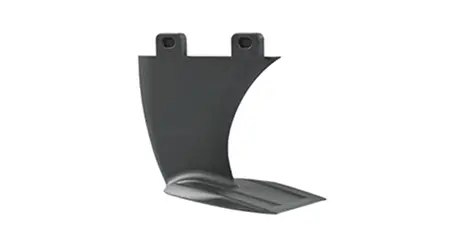
Abrasive blasting that removes surface impurities and gives a uniform, matte texture. It also improves paint or coating adhesion.

Adds color and improves appearance while offering additional protection against corrosion and wear. Often used for branding or meeting specific design requirements.

Provides a basic, functional finish for die-casting products with relatively smooth surfaces and minor tool marks, suitable for non-cosmetic applications.
Pros and Cons of Die Casting
High strength-to-weight ratio reduces overall load
Natural oxide layer protects against rust and degradation
100% recyclable material supports sustainability goals
T-slot compatibility and simple joining methods
Complex profiles possible in a single extrusion process
Lower machining costs compared to solid aluminum blocks
Die manufacturing requires upfront investment
Die manufacturing requires upfront Extrusion lines may need finishing or polishing
Design changes need new tooling
Design changes need new tooling
Setup and trimming create scrap material
Press capacity limits maximum profile dimensions
Pros and Cons of Die Casting
Die cast components have a high strength-weight ratio which means that the total load is minimized without compromising on durability. This makes them suit the automotive and aerospace industries where weight and strength are critical.
The die-cast metals are ideal in harsh or outdoor environment applications because of the natural oxide that forms on them which helps them to resist rust and degradation.
Die-cast metals are recyclable with 100% and this will be helpful in fulfilling sustainability as it reduces waste and makes them environmental friendly.
Die- cast Parts are compatible with T-slot and can be quickly assembled with straightforward joining techniques which aids in saving on production time and costs.
Die casting is capable of producing compound outlines in one extrusion, and it provides design freedom that is best in components with complicated designs.
Lower machining costs compared to solid aluminum blocks, making it a more affordable option for high-volume production runs.
Initial cost of tooling and molds may be expensive. The price, however, is compensated by the efficiency and savings in large volume production runs..
Die-cast components may contain surface run-offs and may need a finish or polishing. This may introduce more time and expense particularly on parts whose surface is visible.
The die cast process can be influenced by design modifications and this may need new tooling to ensure quality; this will incur unnecessary additional cost and time..
Once tooling is made, shape modifications can be difficult. Significant design changes may require new tooling, which increases the overall cost.
Setup and trimming create scrap material, leading to some waste, though this can be minimized with optimized designs and processes.
Die casting press capacity limits the maximum part dimensions that can be produced. Larger parts may need additional processes or different methods.
FAQs
What is die cast minimum order quantity (MOQ)?
Our orders are taken in quantities of 500 and above and can accommodate thousands of parts in large scale production.
What are the die casting processes that you have to offer?
Our specialization is in the hot chamber, cold chamber and semi-solid die casting procedures to satisfy various project demands.
What is the material you can use to die cast?
We have aluminum, zinc, magnesium and custom alloys that can be used in different ways, so we can find you the correct material to use in your project.
What is the lead time of the die casting project?
The standard lead times are 20 -25 days and this determines the complexity of the design and the quantity of the order.
Are you able to cope with intricate part geometries?
Yes, we are experts in the manufacturing of components with complex geometry and tight tolerances, which give accuracy to complicated designs.
What industries do you serve?
Our industries include automotive, aerospace, medical, robotics, and others with a custom-made solution to each industry.
Are die-cast components environmental friendly?
Yes, die-cast metals can be 100 percent recyclable which helps in the sustainability efforts and mitigating environmental effects.
What do you do to control the quality?
CMM ( Coordinate Measuring Machines ) are used, optical scanners and micrometers are used to ascertain the dimensional accuracy and high-quality standards.
Is it possible to present prototypes prior to mass production?
Yes, we do provide rapid prototyping services that we use to test designs and functionality before commencing large scale production.
What is the benefit of die casting compared to other production processes?
Die casting provides high accuracy, multifaceted production of parts, cost effectiveness in high volume and high level of corrosion and is thus suitable in highly demanding applications.
 English
  简体中文
简体中文  Español
  Deutsch (Sie)
  日本語
日本語  Português