
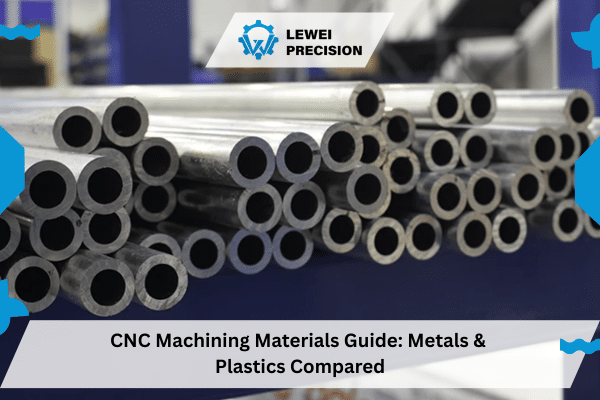
The wrong selection of CNC machining material makes great designs costly breakdowns. Having gone through thousands of parts in aerospace, medical and automotive elements, a component selection is the most crucial part to be considered in project success.
The guide assists the engineers in choosing the best materials to use in their machining requirements.
What are the Factors That Affect The Choice of CNC Machining Materials?
Seven factors determine material selection. The material selection process requires evaluating each factor against project requirements.
Purpose
Application requirements drive material choice. Aerospace components demand lightweight strength—aluminum alloy 7075 excels here. Chemical processing valves need corrosion-resistant alloys like Hastelloy. Match material properties to exact functional demands.
Stress Load
Stress calculations reveal minimum material requirements. Testing showed ABS plastic handling 50N loads adequately but failing at 75N—switching to aluminum solved the issue. Materials with high tensile strength prevent failure under operational loads.
Machinability
Machinability directly impacts production costs. Aluminum 6061 averages 12 minutes per part versus 28 minutes for stainless steel 316—identical geometry, significantly longer machining times. Easier to machine materials reduce tool wear and cycle time. Softer materials generally machine faster than harder materials.
Temperature Range
Operating temperature defines material boundaries. Standard ABS works to 85°C, but automotive under-hood temperatures reach 110°C. Glass-filled nylon handles 180°C continuously. Materials used in high temperatures must resist thermal deformation.
Corrosion Resistance
Environment determines material longevity. Marine-grade aluminum 5083 lasts 15+ years in saltwater—standard aluminum corrodes within 24 months. According to NACE’s 2024 study, improper material choice costs industries $8.2 billion annually in corrosion damage.
Durability and Strength
Three mechanical properties matter most:
- Tensile Strength: Load capacity before breaking
- Wear Resistance: Surface durability under friction
- Impact Resistance: Shock absorption capability
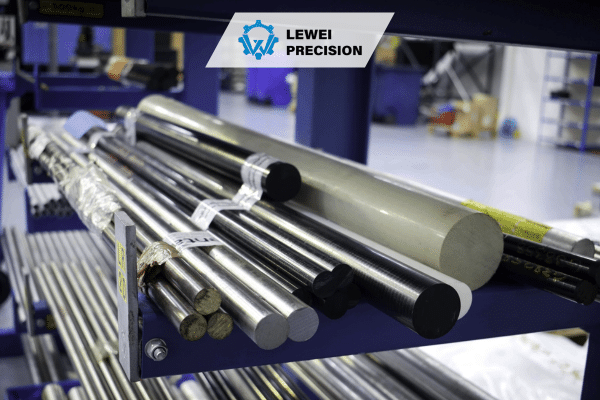
Raw Material Cost
Budget reality shapes decisions. This comparison reflects 2025 pricing:
| Material Type | Cost ($/kg) | Lead Time | Best Applications |
| Aluminum | $3-8 | 1-3 days | General manufacturing, prototypes |
| Steel Alloys | $2-15 | 2-5 days | Structural parts, tooling |
| Stainless Steel | $4-20 | 3-7 days | Medical, food equipment |
| Engineering Plastics | $5-25 | 1-2 weeks | High-volume production |
| Titanium | $25-50 | 4-8 weeks | Aerospace, implants |
Pricing based on Q1 2025 industrial suppliers for 25kg+ orders.
What are the Different Material Options for a CNC Machining Project?
CNC machining materials span metals, plastics, woods, foams, ceramics, and composites. Each category serves distinct industrial applications.
Metals
Metal parts deliver precision when performance cannot be compromised. Common materials used in CNC machining include aluminum, steel, stainless steel, brass, titanium, and copper.
Aluminum
Aluminum dominates modern manufacturing—38% of all CNC machined parts per Gardner’s 2024 survey. This metal for CNC machining offers excellent strength-to-weight ratios at one-third steel’s density.
Production grades:
- 6061-T6: Workhorse alloy, 310 MPa tensile strength, excellent weldability
- 7075-T6: Often used in aerospace applications, 572 MPa strength
- 5083-H116: Marine applications, superior corrosion resistance
Applications:
- Electronics (thermal conductivity 205 W/m·K)
- Surgical instruments (autoclave-safe)
- Aircraft components (FAA certified)
- EV battery enclosures
Case study: An EV startup reduced battery pack weight by 18kg using aluminum 6061—extending range 12 miles without compromising crash ratings.
Steel
Alloy steel varieties serve diverse needs. Carbon content determines properties—higher carbon increases hardness but reduces weldability. Commonly used mild steel alloy 1018 offers excellent machinability.
Common grades:
- Mild Steel 1018 (0.18% carbon)
- Free-machining 12L14 (lead-added)
- Carbon Steel 1045 (heat-treatable to 60 HRC)
Applications:
- Transmission gears
- Industrial dies
- Structural brackets
- Heavy equipment shafts
Stainless Steel
Stainless steel contains 10.5%+ chromium providing signature corrosion resistance. The material maintains strength from cryogenic to 870°C.
Industry grades:
- 303: Best machinability for machine parts
- 304: Food-grade, 18% chromium/8% nickel
- 316/316L: Marine-grade, molybdenum-enhanced
- 416: Magnetic, free-machining
Applications:
- Orthopedic implants (MRI-safe)
- Pharmaceutical vessels (electropolished)
- Subsea components (NORSOK certified)
- Kitchen equipment (NSF certified)
Test data: 316L loses only 0.02mm after 5,000 hours in 3.5% salt spray—aluminum 6061 lost 0.8mm under identical conditions.
Brass
Brass combines copper and zinc, offering natural antimicrobial properties and exceptional machinability. The metal produces mirror finishes without secondary operations.
Types:
- C360 (Free-cutting brass, best chip formation)
- C3604 (Lead brass, international standard)
Applications:
- Pneumatic fittings
- Watch movements
- Marine propellers
- Electrical terminals
Titanium
Titanium Grade 5 costs 8-10x more than aluminum but delivers unmatched strength-to-weight performance. This metal resists corrosion better than stainless steel while remaining 45% lighter.
Applications:
- Aircraft landing gear (Boeing/Airbus certified)
- Spinal implants (osseointegration-compatible)
- Racing frames
- Offshore drilling equipment
Copper
Electrical conductivity drives copper selection—60% better than aluminum. Thermal conductivity (401 W/m·K) makes copper essential in heat management applications. Used in electrical components requiring high conductivity.
Applications:
- Data center busbars
- Induction heating coils
- Radar waveguides
- Cryogenic equipment
Other Metals and Alloys
Specialized metals include bronze (bearing surfaces), magnesium (ultra-lightweight), tungsten (radiation shielding, density 19.3 g/cm³), and Inconel 625 (oxidation-resistant to 1000°C).
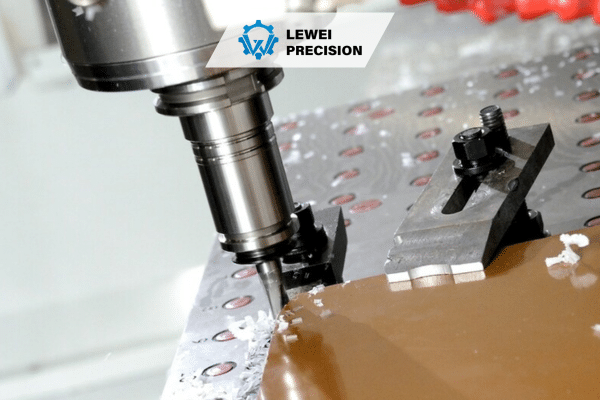
Plastics
Engineering plastics challenge metals where weight, cost, or chemical resistance matter. Materials for CNC machining increasingly include high-performance polymers.
Acrylonitrile Butadiene Styrene (ABS)
ABS dominates prototyping—priced at $4-6/kg with excellent dimensional stability. Impact resistance remains consistent from -20°C to 80°C. Often used for functional prototypes.
Applications:
- Electronic housings
- Automotive dashboards
- Medical equipment
- Rapid prototypes
Cost advantage: Switching from aluminum to ABS reduced material costs 73% while meeting drop-test requirements.
Polyvinyl Chloride (PVC)
PVC combines chemical resistance with affordability. The material withstands acids and bases that dissolve metals within minutes.
Applications:
- Chemical piping
- Medical tubing
- Electrical boxes
- Ventilation ducts
Acetal – Delrin (POM)
Delrin polyoxymethylene sets standards for precision plastic parts. Coefficient of friction (0.20) approaches Teflon while maintaining superior wear resistance.
Applications:
- Surgical mechanisms
- Conveyor gears
- Fuel system components
- Electronic mechanisms
Engineering note: Delrin maintains ±0.05mm tolerances over 100,000+ cycles.
Acrylic (PMMA)
Light transmission of 92% surpasses glass. Acrylic weighs half as much with impact resistance 17x higher.
Applications:
- LED diffusers
- Architectural glazing
- Display cases
- Medical windows
Polycarbonate (PC)
Impact resistance 200x greater than glass makes polycarbonate ideal for safety applications. Material maintains clarity from -40°C to 120°C.
Applications:
- Safety glasses
- Machine guards
- Headlight lenses
- Outdoor signage
Other Plastics
Noryl (PPO): Dimensional stability, moisture absorption <0.1%
Polypropylene (PP): Chemical resistance, $2-3/kg
Teflon (PTFE): Friction coefficient 0.05-0.10
HDPE: Impact strength at -40°C
UHMWPE: Wear resistance 10-15x steel
Nylon: Versatile properties, oil-lubricated variants
PEEK: Handles 260°C continuously, aerospace-grade
Woods
CNC machine operations on wood focus on furniture and architectural millwork. Modern machines handle hardwoods and engineered materials efficiently.
Applications:
- Custom cabinetry
- Architectural trim
- Display fixtures
- Design mockups
Foams
Rigid foams serve specialized roles. CNC machining can produce parts with geometries impossible through molding.
Applications:
- Protective packaging
- Architectural models
- Composite tooling
- Special effects props
Ceramics
Technical ceramics handle extreme temperatures. Alumina maintains properties to 1600°C with 10 kV/mm dielectric strength.
Applications:
- Furnace components
- Electrical insulators
- Biomedical implants
- Armor plating
Composites
Carbon fiber provides strength-to-weight ratios unmatched by metals. Properly designed parts weigh 40-60% less than aluminum equivalents while maintaining stiffness.
Applications:
- Aircraft structures (Boeing 787 is 50% composite)
- Racing chassis
- Wind turbine blades
- Sporting equipment
Reality check: Carbon fiber drone frames weigh 280g versus 750g aluminum—payload capacity more than doubles.
Tips for Optimizing Material Selection for CNC Machining
Engineers go to metal unnecessarily. One medical producer saved 52% by replacing aluminum with polycarbonate in housings- no change in specification. Think of using material that is based on the real needs and not on the custom. Metal or plastic choices are to be made in terms of corrosion resistance, electrical insulation, weight load, volume of production and budget.
The choice of grades among material families is important. The price of aluminum 7075 is 40 percent higher than that of 6061 yet it gives 85 percent more strength. The grade of material used is not over-engineered on the basis of selection of the right material grade.
Composites have respirable particles produced in machining. OSHA regulations said that the ventilation should be appropriate- the facilities that lack the ability to filter sufficiently should incur fines of 15,625 penalties per violation in 2025.
Which is the Best Material For a CNC Machining Project?
No universal best material exists. Select the right material by evaluating application requirements, operating environment, mechanical loads, and budget constraints. Aluminum 6061 serves as the industry default for general CNC machining projects.
Material Properties Comparison
| Material | Tensile Strength (MPa) | Density (g/cm³) | Max Temp (°C) | Machinability | Cost Factor |
| Aluminum 6061-T6 | 310 | 2.7 | 200 | Excellent | 1.0x |
| Stainless 304 | 505 | 8 | 870 | Good | 2.3x |
| Titanium Ti-6Al-4V | 895 | 4.43 | 400 | Fair | 9.5x |
| ABS Plastic | 40 | 1.05 | 85 | Excellent | 0.5x |
| PEEK | 100 | 1.32 | 260 | Good | 5.2x |
| Carbon Fiber | 600 | 1.55 | 150 | Fair | 7.0x |
Data from 2024-2025 production across aerospace, medical, and automotive projects.
Conclusion
The selection of the CNC material is a determining factor of the project success. CNC machining materials should be absolutely correct in accordance with the demands of the applications, over-engineering is a waste, and under-specification leads to failures.
Aluminum 6061, which is a common CNC machining material, has been kept as a base. The advantage of specialized applications is that the materials used in the specific application would be optimized in as far as corrosion resistance stainless steel, aerospace applications titanium, cost efficiency engineering, plastics, weight reduction composites.
Outsource machining services at early stages of design to choose materials that are easy to machine and which satisfy the performance needs.
Which material should I use CNC machining- metal or plastic?
Metals are applicable in high-stress processes and high temperatures (>150C). Plastics are the most effective in corrosive conditions, electrical insulation, and the production that is cost-sensitive. Actual stress loads are calculated to know whether metal strength is required or not thus selecting a material.
Is it possible to work with various materials in one project on CNC machines?
Yes, though each material has to be set up separately. Multi-material assemblies are most effective when assembly of components is done after machining through CNC machining. Reconfigurations make them more expensive – only cost-effective in small volumes.
Which materials are to be used in the prototype development or final production?
The rapid machining and cost control of prototypes is usually done with aluminum or ABS. Selection of material used in production is equivalent to final requirements. A lot of products are also prototyped using ABS and then changed to glass filled nylon or aluminum as permanent products.
What is the impact of the material selection on CNC costs and lead times?
Stronger materials make the cycle time 50-200% longer and speed up the tool life. Titanium is 8-10 times more expensive than aluminum in combination of raw material and time of machining. Exotic alloys take 4-8 weeks to be procured as compared to 1-2 days of common materials that are used in CNC operations.
Do CNC machining materials have environmentally friendly materials?
Aluminum that has been recycled consumes 95% less energy to produce as compared to virgin production and has the same properties. The bio-based plastics are applicable in non-structural application. In 2025, a variety of manufacturers provide a renewable-energy-based and offset carbon-neutral machining services.
References
- Gardner Business Media. (2024). Modern Machine Shop 2024 CNC Machining Survey: Material Usage Trends in North American Manufacturing. Gardner Intelligence Division. https://www.gardnerweb.com
- NACE International. (2024). International Measures of Prevention, Application, and Economics of Corrosion Technologies Study. NACE International. https://www.nace.org
- ASM International. (2025). ASM Handbook Volume 2: Properties and Selection of Metals and Alloys. ASM International. https://www.asminternational.org
- U.S. Occupational Safety and Health Administration. (2025). OSHA Standards 29 CFR 1910.1000 – Air Contaminants and Ventilation Requirements. U.S. Department of Labor. https://www.osha.gov/laws-regs/regulations/standardnumber/1910/1910.1000
- MatWeb, LLC. (2025). Material Property Database: Technical Data Sheets for Engineering Materials. MatWeb Online Materials Resource. https://www.matweb.com
- Freedonia Group. (2024). World Plastics to 2028: Industry Study with Forecasts. The Freedonia Group. https://www.freedoniagroup.com

 English
  简体中文
简体中文  Español
  Deutsch (Sie)
  日本語
日本語  Português